ECO-5389 · REV Z · effective September 30, 2026
Automation & RoboticsRELEASEDEngineering notice
BMW Moves to Deploy Humanoid Robots on Factory Floor
BMW confirms plans to deploy humanoid robots, joining automakers moving bipedal machines from demo videos toward real production work.
Scope of change
- BMW has confirmed it will deploy humanoid robots, Assembly Magazine reports.
- The announcement specifies no plant, unit count or deployment timeline.
- BMW joins Tesla, Figure and Agility in the race to put humanoids into automotive production.
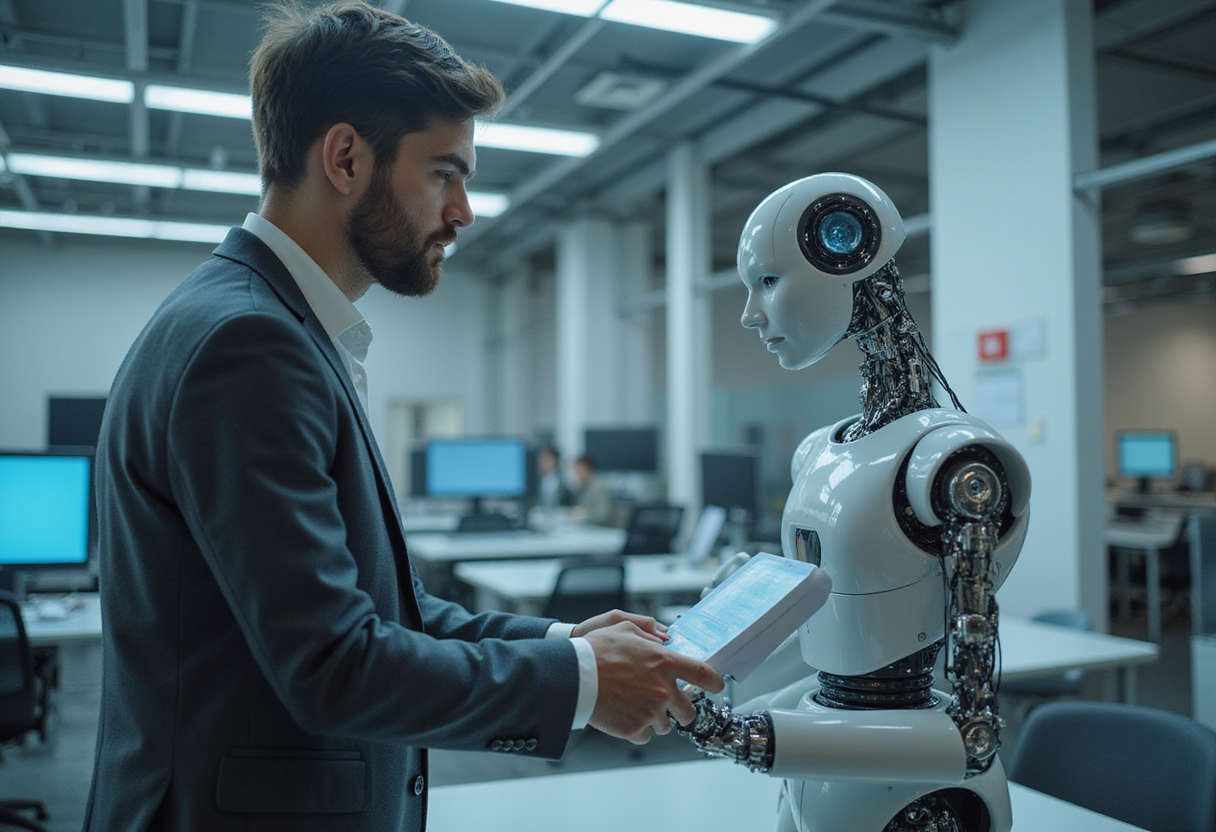
BMW has confirmed it will deploy humanoid robots, according to a report from Assembly Magazine. The automaker is the latest OEM to move bipedal, general-purpose machines out of the lab and onto the shop floor — a shift that, until recently, most manufacturers treated as a five-year-out proposition.
The headline claim is concrete: BMW intends to put humanoid robots to work. What the announcement does not yet specify is equally important for plant planners watching this space. The report contains no confirmed unit count, no named plant, no production cell assignments and no timeline for full-scale deployment. Until BMW discloses those parameters, the program sits in the category of announced intention rather than confirmed capacity planning.
That distinction matters. Automotive manufacturing has a long record of robotics announcements that shrink on contact with reality — pilot cells that never scale, collaborative robot rollouts confined to a single line, exoskeleton programs that quietly end. Humanoid robots face a harder production test than any of those. A six-axis arm bolted to a fixture has to do one thing repeatably. A humanoid has to walk to a station, orient itself, handle variable parts and do so at cycle times that compete with purpose-built automation or a trained operator.
For BMW specifically, the deployment signals where the automaker sees its labor and flexibility pressure points. Its global plant network — including Spartanburg in South Carolina, Dingolfing and Regensburg in Bavaria, and the Debrecen site in Hungary — already runs extensive conventional automation in body and paint shops. Final assembly remains the least automated zone at virtually every OEM, and it is the environment humanoids are built to address: cluttered floors, mixed tasks, infrastructure designed for human proportions.
The competitive context is moving fast. Tesla is building the Optimus program around its own factories. Figure AI has run humanoid pilots with U.S. automakers. Agility Robotics' Digit has handled tote-moving trials in logistics settings. Apptronik, Sanctuary AI and others are all chasing the same automotive pilot deals, because automotive offers the volume, the capital discipline and the safety-engineering culture that can turn a demo into a deployment.
BMW's entry into that field, even at the announcement stage, carries more weight than a startup pilot. OEMs set the adoption curve for factory robotics. When a premium manufacturer with BMW's automation track record commits to a form factor, suppliers of the underlying components — actuators, dexterous grippers, torque sensors, vision systems — start retooling their automotive-tier roadmaps around it.
But the verification standard for this story is production data, not press releases. The milestones that would confirm a real program are specific: a named BMW plant, a defined task scope, published cycle-time and uptime figures from a production line rather than a demonstration video, and eventually a purchase order volume that exceeds a pilot fleet. None of those exists yet in the public record on this deployment.
Tier-one suppliers should also read this as a demand signal. If humanoids take on material handling and in-line logistics at BMW plants, the interface requirements — charging stations, safety zones, task-management software integrated into MES — become new sourcing categories.
What to watch next: which BMW plant gets the first units, how many robots the initial deployment involves, and whether the automaker publishes throughput data from the trial. A confirmed plant assignment with a date would move this from intention to program.
via Google News: Automotive assembly automation (Source)
More from Sophie Lindqvist
Show full bio
Correspondent covering business strategy at Autoplant Brief.
97 articles