ECO-4005 · REV D · effective September 30, 2026
Automation & RoboticsRELEASEDEngineering notice
Humanoid robots reach BMW's European production lines
BMW has deployed humanoid robots on European production lines, extending trials from Spartanburg into its home network. Uptime data, not enthusiasm, will decide whether the program scales.
Scope of change
- BMW has deployed humanoid robots on production lines at its European plants
- The OEM previously trialed humanoid robots with Figure AI at its Spartanburg plant in South Carolina
- No uptime, cycle-time or unit-count figures for the European deployment have been published
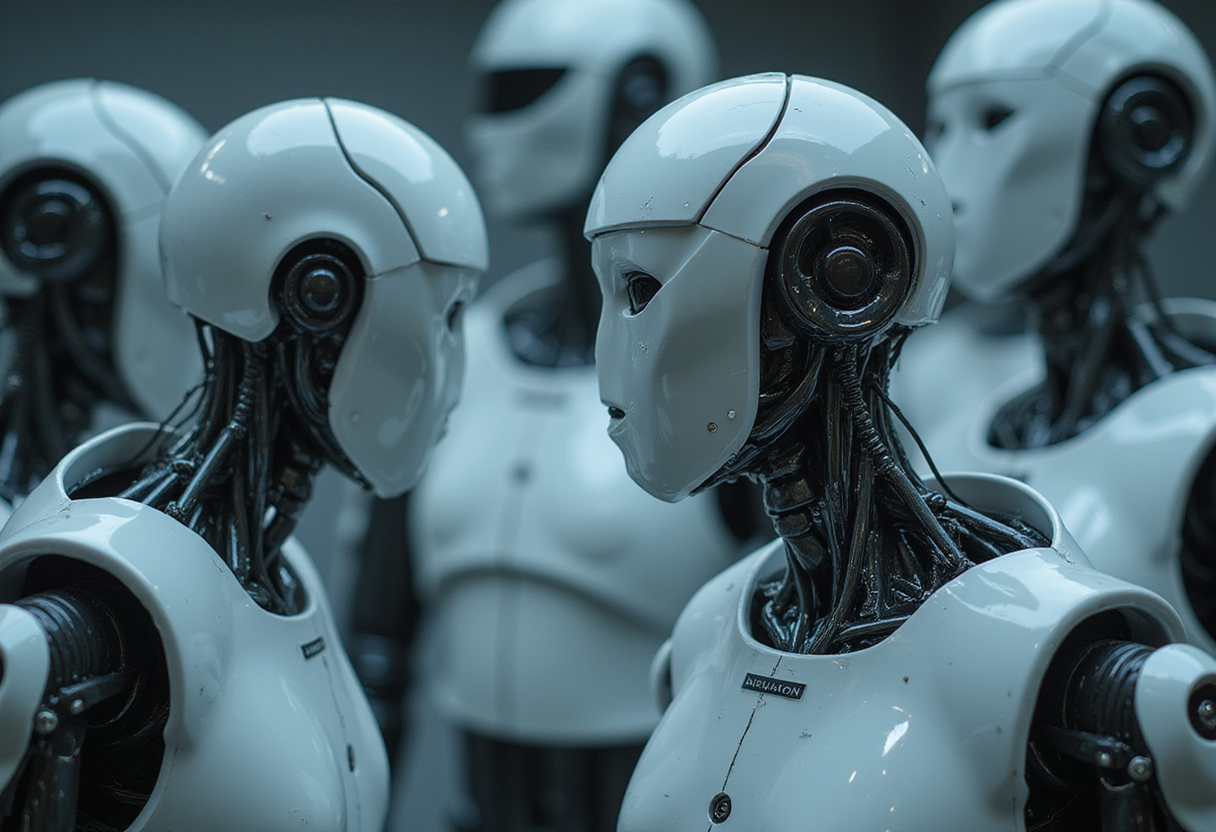
BMW has put humanoid robots to work on production lines in Europe, moving the general-purpose machine category one step closer to the core of automotive manufacturing.
The deployment marks a shift in how automakers evaluate robotics. Traditional industrial arms remain fixed, caged and task-specific. Humanoids promise the opposite: mobile machines with human-like reach that can slot into workstations, cells and logistics loops originally designed around people. That flexibility explains why a premium OEM with high-mix, low-volume European plants finds the technology attractive.
Automotive Manufacturing Solutions, which reported the deployment, describes rising excitement around the program — a word choice that itself signals where this project sits on the maturity curve. Excitement is what precedes validated production data.
From pilots to the line
BMW has been among the most visible Western OEMs testing humanoid platforms. The company has previously run real-world trials of humanoid robots at its Spartanburg plant in South Carolina, working with California-based Figure AI. Those trials placed the machines in body shop environments, testing tasks such as bin picking and part handling under production conditions rather than lab conditions.
Now the technology has crossed onto BMW's European lines. That geographic extension matters. European plants carry higher labor costs, tighter ergonomics regulation and denser union involvement than their US counterparts. A humanoid deployment that survives works-council scrutiny and EU safety review is a stronger signal of intent than any North American pilot.
What humanoids must prove
The open question is not capability but reliability at cycle time. Automotive body shops already run above 95 percent availability with conventional automation. A humanoid that matches a caged arm on repetitive fastening will lose on cost. The business case rests on tasks conventional automation cannot reach economically: awkward interior trim insertion, in-vehicle work through apertures designed for human arms, and flexible material handling between mixed-model stations.
Cycle time, mean time between failures and integration cost per workstation will decide whether the current enthusiasm converts into fleet orders. None of those numbers has been published for the European deployment.
A supplier story to verify
Robotics vendors have strong incentives to announce OEM deployments early and often. Headlines naming a major automaker move valuations and order books. Trade-press discipline applies: an OEM confirming machines are on the line is one thing; a vendor claiming "deployment" can mean anything from a two-week pilot to a multi-year program.
BMW's own statements about the European deployment have been characteristically measured. The company has framed its humanoid work as part of a broader digitalization and ergonomics strategy — reducing physically taxing tasks for human workers rather than replacing them outright. That framing plays well with European works councils, whose cooperation any scaled rollout will require.
Why premium plants go first
BMW's European network — including Dingolfing, Regensburg and the Leipzig plant, plus Spartanburg abroad — builds complex, high-value vehicles with frequent model changeovers. Humanoids that handle short-run, high-variety tasks fit that profile better than they fit a high-volume single-model line. Expect other premium OEMs running comparable plant architectures to watch BMW's results closely before committing their own capital.
The labor equation sharpens the interest. European manufacturers face persistent skilled-labor shortages in physically demanding roles. A humanoid that absorbs ergonomically punishing tasks addresses a real, documented constraint rather than a speculative one.
What to watch next
Three signals will separate substance from spectacle. First, whether BMW names the European plants and the humanoid platform involved — confirmation that turns a deployment report into a program. Second, the first published uptime or cycle-time figures from the European lines; without them, the machines remain a demonstration. Third, whether BMW exercises an option to expand the fleet beyond initial units, which would indicate the reliability data cleared internal hurdles.
Until those milestones land, the correct read is cautious: humanoids are on BMW's European lines, they are generating genuine interest inside the company, and the production data that would justify the excitement has not yet been made public.
via Google News: Automotive assembly automation (Source)
More from Marcus Bennett
Show full bio
News editor covering marketplaces and e-commerce at Autoplant Brief.
86 articles