ECO-2949 · REV Z · effective October 9, 2026
Automation & RoboticsRELEASEDEngineering notice
Humanoid Robots Complete Trial Run at BMW Assembly Plant
BMW has finished a humanoid-robot trial project at an assembly plant. The OEM has not confirmed a production deployment, plant location or unit count.
Scope of change
- BMW completed a trial project using humanoid robots at an assembly plant
- The plant location, robot count and trial duration were not disclosed in the report
- BMW has not confirmed any production deployment or fleet order following the trial
- Final assembly is a target because its workstations are designed around human proportions
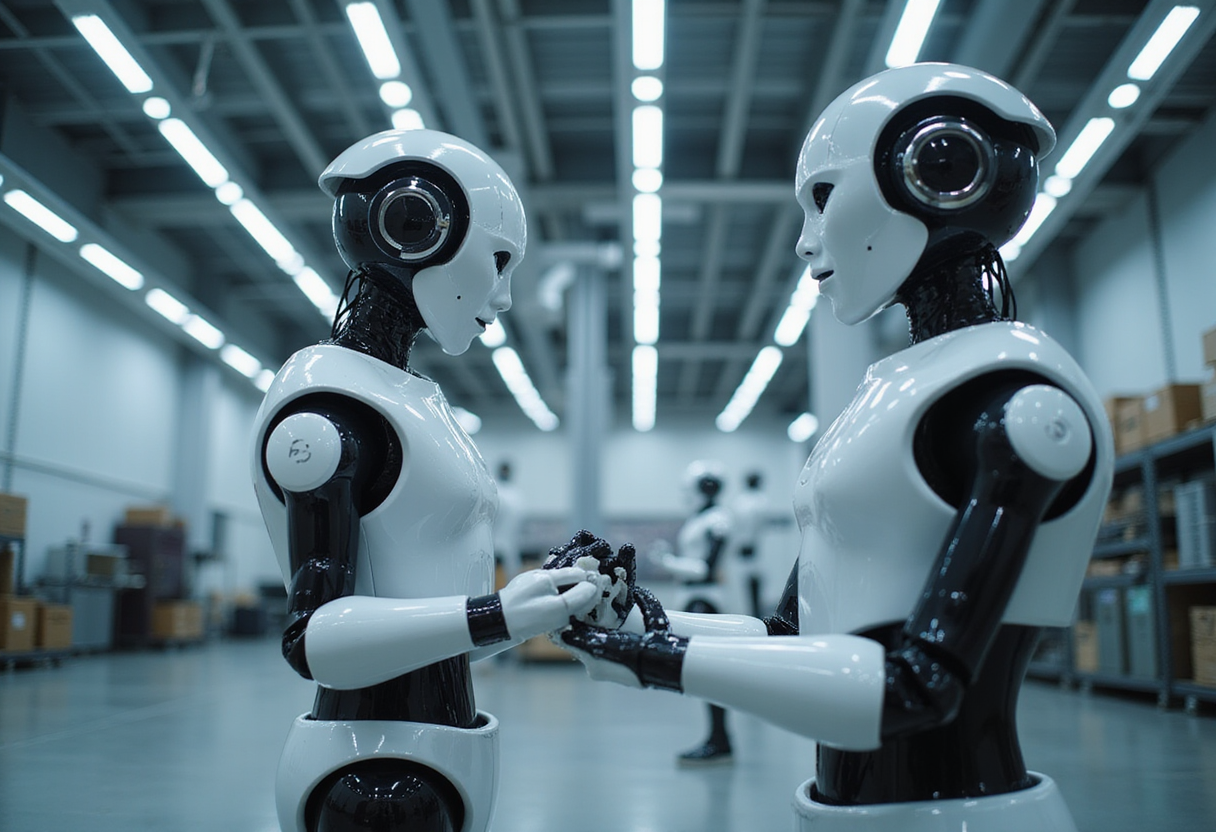
BMW has completed a trial project that put humanoid robots to work inside one of its assembly plants, the trade publication Assembly Magazine reports. The trial's conclusion marks one of the furthest-advanced tests yet by a major OEM of general-purpose humanoids on a real automotive assembly line rather than in a lab.
The report does not specify which BMW plant hosted the trial, how many robot units took part, or how long the deployment ran. Those gaps matter. In automotive manufacturing, a completed pilot says little until the OEM confirms duration, cycle times, task allocation and — above all — whether the machines will stay on the line. BMW has not, on the face of the report, committed to a production deployment, and Assembly Magazine's account should be read as a milestone in an ongoing evaluation, not a confirmed capacity or staffing change.
Why humanoids are showing up on assembly lines
Automakers have spent decades automating welding, painting and body shop operations with caged six-axis arms. Final assembly has resisted that automation because its tasks — reaching into vehicle interiors, handling flexible trim parts, working alongside people in tight cells — were built around human proportions. Humanoid robots, with two arms, two legs and roughly human reach envelopes, promise to slot into workstations designed for people without re-engineering the line.
That promise is precisely what trials like BMW's are built to test. The hard questions for any OEM evaluation are standard:
- Can the robot sustain production cycle times across a full shift?
- What is the mean time between failures on repetitive assembly tasks?
- How much re-teaching does each new variant or model changeover require?
- Does the unit economics case work against the labor and ergonomics cost of the task it replaces?
None of these figures appears in the reported account, which is typical of early-stage humanoid deployments across the industry. Suppliers and robotics developers in this segment routinely announce pilot completions without publishing uptime, throughput or cost data — claims that production planners should treat as directional until an OEM validates them against line-level metrics.
What the trial's completion does and does not mean
A concluded pilot at a BMW plant signals that the hardware survived real plant conditions — floor traffic, safety boundaries, shift rhythms and the variable quality of incoming parts. That is a genuine hurdle. Many humanoid programs stall before ever leaving the supplier's test cell.
But a completed trial is not a rollout. BMW has not, per the available reporting, announced a fleet order, a plant-by-plant deployment schedule or headcount implications. Any suggestion that the trial points to near-term job displacement at BMW assembly operations would run ahead of what the company has put on the record.
For tier-one and tier-two suppliers, the signal is different. If BMW and its peers move humanoid trials into repeat deployments, workstation design standards, safety certification paths and maintenance skill requirements will shift down the supply chain. Suppliers that build final-assembly fixtures, material handling systems and line-side logistics would be among the first to feel it.
What to watch next
The next concrete markers will tell the real story. Watch for BMW naming the plant and the robot supplier publicly, publishing task-level results from the trial, or — the decisive step — ordering units for a named production line with a start date. Also worth tracking: whether the automaker extends the trial to a second site, which historically signals an internal business case rather than a technology demonstration. Until one of those steps happens, this is a completed experiment, not a manufacturing decision.
via Google News: Automotive assembly automation (Source)
More from Marcus Bennett
Show full bio
News editor covering marketplaces and e-commerce at Autoplant Brief.
148 articles