ECO-8560 · REV S · effective October 9, 2026
Automation & RoboticsAPPROVEDEngineering notice
Toyota Pegs Automation Push at 400,000 Robots, $6.4B a Year
Toyota estimates a network-wide automation overhaul could need 400,000 robots and roughly $6.4 billion per year from 2028, but has not committed to the spending.
Scope of change
- Toyota estimates about 400,000 robots could be needed to modernize its factory network
- Estimated cost is roughly $6.4 billion per year beginning in 2028
- The figure covers Toyota, its group companies and major suppliers and includes both humanoid and non-humanoid robots
- Toyota has not committed to the investment and has not named the robot suppliers or plants in scope
- Hyundai Motor Group plans to deploy humanoid robots at its Georgia plant starting in 2028
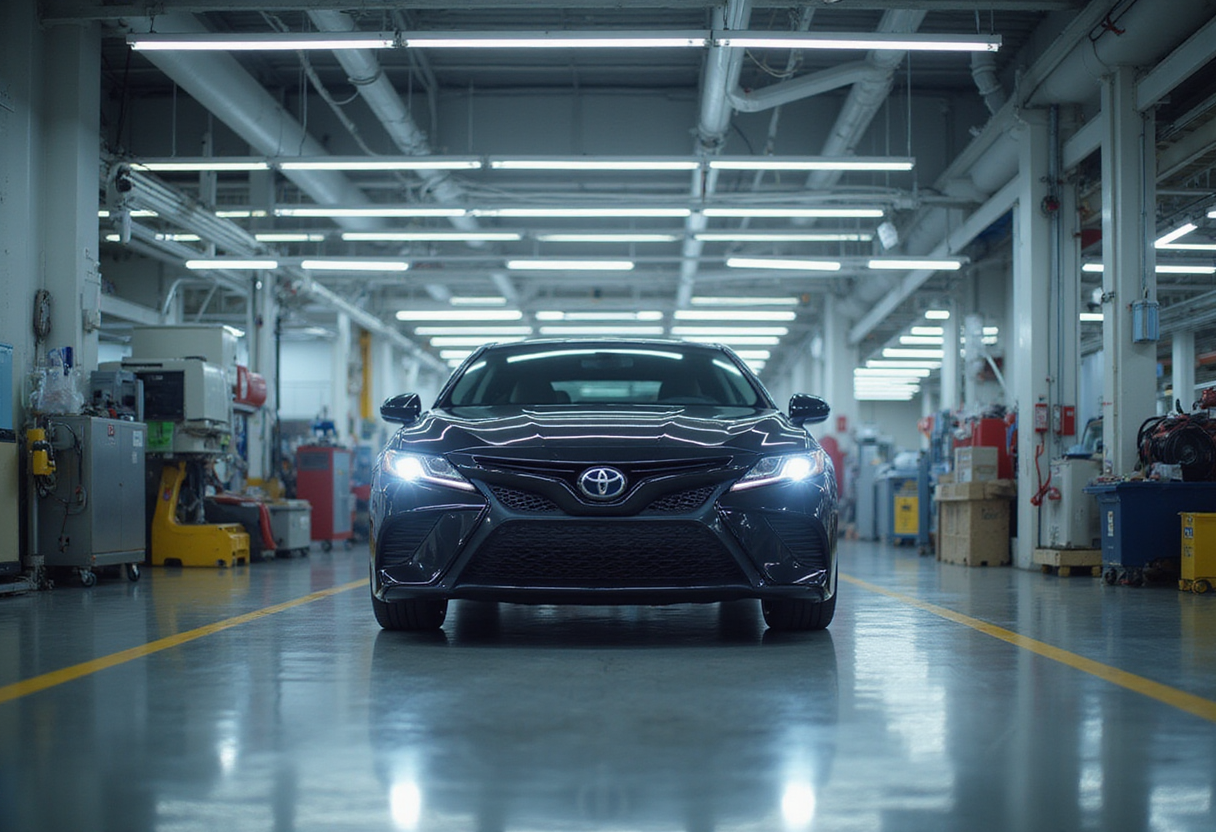
Toyota Motor Corp. estimates that modernizing factories across its global manufacturing network could require approximately 400,000 robots and cost about $6.4 billion per year beginning in 2028, according to a Reuters report.
The figure covers Toyota, its group companies and major suppliers, and bundles replacements for existing equipment with new installations. The total combines humanoid and non-humanoid robots, the report said.
What has Toyota actually committed to?
Nothing yet. The automaker discussed the estimate with investors earlier this month but has neither approved the spending nor specified how many years the outlays could continue. The estimate sits firmly in the category of announced intentions, not confirmed capacity plans. Until line-item capex figures appear in Toyota's annual forecasts, suppliers should treat the 400,000-robot number as a planning range, not an order book.
How the money would be spent
The potential investment spans industrial robots, automated material handling and future applications involving human-robot collaboration on the factory floor. Toyota's investor briefing cited three pressures behind the modernization push: persistent labor shortages, aging factory infrastructure and rising production costs. All three have driven most major automakers to step up automation spending since the pandemic.
How does this compare with peers?
Toyota is not alone in sizing up humanoid robots for the assembly line. Hyundai Motor Group, which owns Boston Dynamics, has said it plans to deploy humanoid robots at its Georgia manufacturing plant beginning in 2028. The two programs together signal that human-form automation is moving from research pilots into scheduled production environments, at least on paper. Toyota's Japanese competitors — including Honda Motor Co. and Nissan Motor Co. — have run narrower robotics pilots but have not published comparable network-wide estimates.
Where the estimate is soft
Several elements remain unverified. Reuters did not break out how the 400,000-robot figure splits between Toyota-operated plants and supplier facilities. The cost figure is annualized; the cumulative spend — and therefore the per-robot installed cost — depends entirely on how long the modernization runs. Toyota also has not named the robot suppliers, the specific plants in scope, or the share of humanoids in the mix.
The framing matters because Japanese automakers have a history of publicizing long-horizon automation targets well before they translate into contracts with suppliers such as Fanuc Corp., Yaskawa Electric Corp., Kawasaki Heavy Industries Ltd. or ABB Ltd. Watch those four order books, not Toyota's headlines, to gauge actual capex.
What to watch next
- Toyota's next investor briefing, where the 400,000-robot estimate is likely to be refined with timeline detail.
- 2028, the year Toyota's annualized spending figure begins and the year Hyundai says its humanoid deployment starts at its Georgia plant.
- Order intake at Japan's four major industrial-robot makers, which historically lead global supply cycles and would surface any acceleration in Toyota's capex well before formal contract announcements.
- Wage and labor-availability data from Aichi Prefecture and other Japanese regions hosting Toyota plants, since labor-cost pressure is one of the explicit drivers cited for the modernization push.
- Hyundai's Georgia timeline, which provides a public benchmark for how quickly a humanoid pilot scales into recurring production deployment.
via bnpmedia.com (Original)
More from Amara Osei
Also circulated
- Toyota Estimates 400,000 Robots Needed for Factory Automation
- Hyundai Aims at $20,000 Humanoid Robots, Recruits 200 Suppliers
- Global Factory Robot Population Passes 5 Million Units, IFR Says
- US Auto Plants Ramp Up Robot Spending, Assembly Magazine Reports
- Toyota Plans Humanoid Robot Deployment at Canadian Plant