ECO-9548 · REV G · effective September 30, 2026
Automation & RoboticsAPPROVEDEngineering notice
BMW Prepares to Deploy Humanoid Robots at German Assembly Plant
BMW is moving humanoid robots from pilot trials toward deployment at a German assembly plant, with the location, unit count and production timeline still unconfirmed.
Scope of change
- BMW is preparing to deploy humanoid robots at an assembly plant in Germany
- The specific plant, number of units and deployment timeline have not been disclosed
- Deployment follows earlier pilot trials of humanoid robots on BMW factory floors
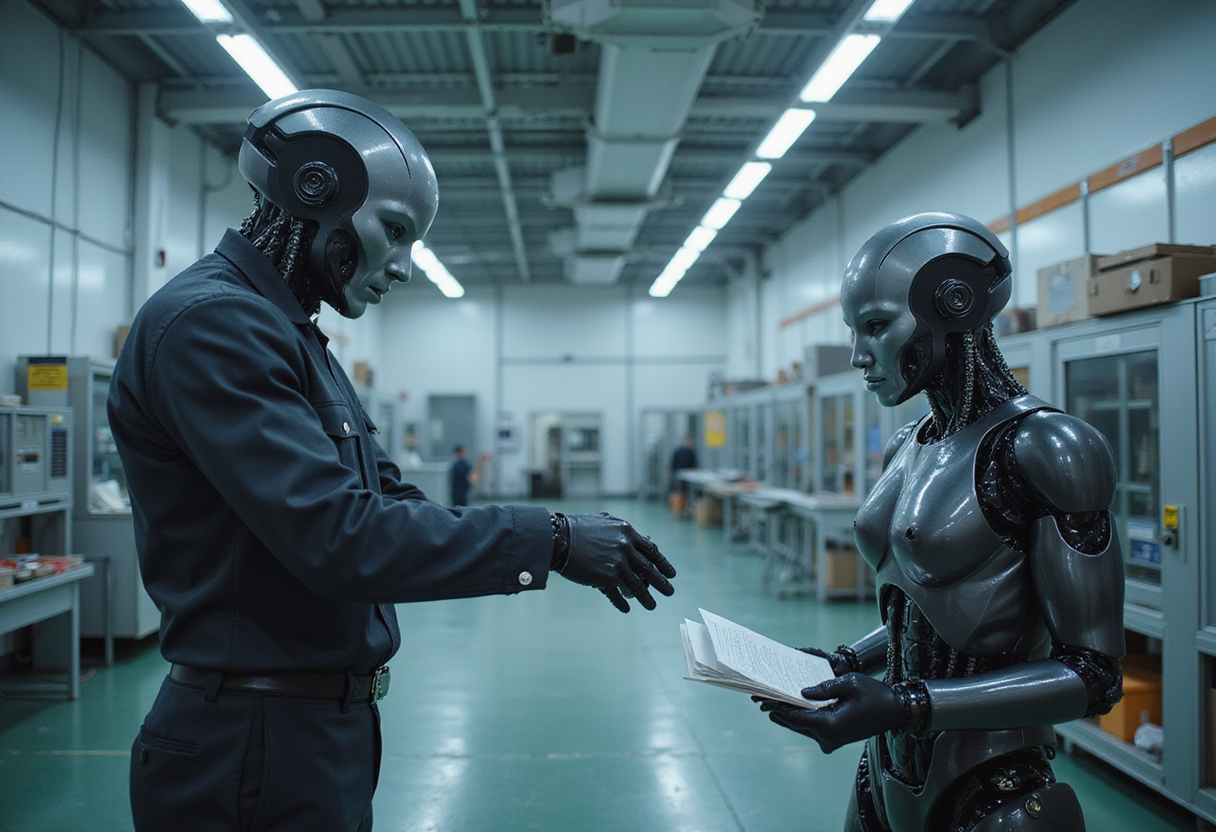
BMW is preparing to deploy humanoid robots at an assembly plant in Germany, Assembly Magazine reports, extending the automaker's push into general-purpose robotic labor beyond the fixed, caged automation that has long defined body-in-white and paint shop operations.
The report does not specify which of BMW's German plants will receive the machines first, how many units the automaker intends to field, or the timeline for full deployment. BMW operates major assembly sites at Dingolfing, Regensburg, Munich, Leipzig and Landshut, and the company has not publicly tied the deployment to a specific location or model program.
The move follows a trajectory BMW has charted for more than a year. The automaker has tested humanoid robots on its factory floors as part of a broader effort to assess whether bipedal, general-purpose machines can take on material handling, tote transport and other logistics tasks that conventional fixed automation cannot reach economically. Humanoids matter to automakers precisely because they can work in environments built for people — without the plant redesign that traditional robotics demands.
For plant engineers, the distinction between a pilot and a deployment is the whole story. Trials answer whether a machine can complete a task; deployments answer whether it can do so at cycle time, at uptime rates that beat a human shift, and under the safety certification regime that governs human-robot collaboration on a moving line. Assembly Magazine's framing — "deploy" rather than "test" — signals BMW believes it has crossed that threshold in at least one application.
BMW is not alone in the race. Figure AI, Agility Robotics, Apptronik and other US-based developers have placed machines with automakers including BMW and Mercedes-Benz, and each pilot program is being watched as a proxy for whether the humanoid category can survive contact with actual production metrics. Suppliers of traditional automation — KUKA, FANUC, ABB — have responded with collaborative arms and mobile platforms of their own, and the German engineering association VDMA has tracked rising interest in flexible automation across the country's Tier 1 base.
What remains unverified: the economics. No automaker has published cost-per-cycle data for a humanoid working a full production shift. Claims of labor flexibility from robot developers remain just that until OEMs release uptime figures, and BMW has not said whether the German deployment will cover logistics tasks only, or extend into assembly operations where takt time tolerance is measured in seconds.
For BMW's supplier network, the deployment question is practical. If humanoids prove out at the OEM level, Tier 1s running legacy plants designed decades ago — plants too costly to retool for fixed automation — become the natural second market. That is the bet robot developers are making, and BMW's German plants are now the test bed.
What to watch next: confirmation of which plant and which tasks the humanoids will take on, headcount of robots ordered versus trialed, and the first production-uptime data BMW is willing to put its name behind.
via Google News: Automotive assembly automation (Source)