ECO-2430 · REV C · effective September 26, 2026
Automation & RoboticsAPPROVEDEngineering notice
Humanoid robots reach factory floors at BMW, Tesla and Mercedes
BMW, Tesla and Mercedes-Benz are running AI-powered humanoid robots in their plants, moving androids from demos to trials — but no OEM has yet quantified fleet size or serial-line tasks.
Scope of change
- BMW, Tesla and Mercedes-Benz are deploying AI-powered humanoid robots in auto manufacturing, per Automotive Manufacturing Solutions
- Unlike fixed industrial arms, the AI-driven humanoids combine mobility with task learning, fitting workstations built for people
- No OEM has yet disclosed fleet sizes, host plants or serial-line task shares — deployments remain at trial rather than confirmed capacity stage
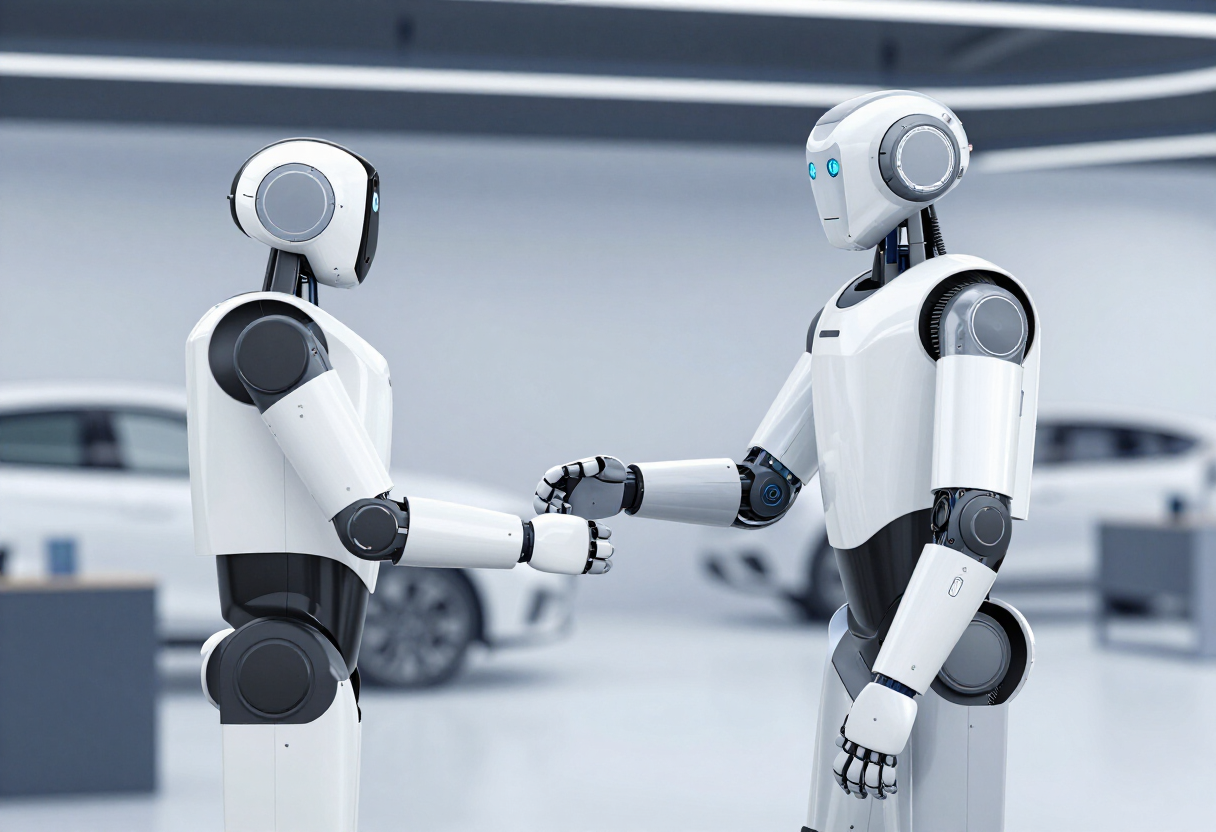
BMW, Tesla and Mercedes-Benz are deploying AI-powered humanoid robots on their production lines, according to a report by Automotive Manufacturing Solutions — a shift that moves general-purpose androids from conference demonstrations into live manufacturing trials at three of the world's largest carmakers.
The report names the three OEMs as the current focal points of humanoid adoption in auto manufacturing. What separates this wave from earlier factory robotics is generality: traditional industrial arms perform one fixed task inside a safety cage, while the new machines combine bipedal mobility with AI-driven perception and manipulation, allowing them to work alongside human operators on tasks robots previously could not handle.
For an industry that has spent four decades optimizing fixed automation, the appeal is straightforward. Humanoid form factors fit into workstations, tools and facility layouts designed for people — a plant does not need to be rebuilt around them. That matters as OEMs retool lines repeatedly for new electric models, where hard automation becomes a stranded cost each time a model changes.
The Automotive Manufacturing Solutions account frames the deployments as an early-stage shift rather than a completed one. The piece describes how AI models now let these machines learn tasks — picking, placing, inspecting, shuttling parts — without bespoke programming for every motion, which was the barrier that kept earlier humanoid prototypes out of serial production.
Claims against production data
As with any supplier- and vendor-driven technology narrative, the deployment claims deserve scrutiny against actual line rates and cycle times. Automakers routinely trial emerging robotics under pilot agreements, and a robot present in a plant is not the same as a robot takt-ing on a serial line. Neither BMW, Tesla nor Mercedes-Benz has, in the source material, quantified how many units are in service, which plants host them, or what share of tasks they have taken over.
The absence of those numbers is itself informative. Mature plant technology announcements arrive with capacity figures, launch dates and named facilities. Humanoid deployments so far have not, which places them closer to the evaluation phase than to confirmed capacity plans.
Why the OEMs differ
The three carmakers approach the technology from different positions. Tesla is developing its own humanoid platform in-house, tying its robotics program to its AI software stack — an approach that keeps the technology proprietary but concentrates development risk. BMW and Mercedes-Benz, by contrast, work with external robotics developers, integrating third-party machines into existing plants through partnership arrangements.
Each route tests a different bet. In-house development gambles that software capability, not manufacturing integration, is the bottleneck. Partnership deployment gambles that integrators can deliver machines reliable enough for factory duty while the OEM concentrates on process redesign.
What to watch
The credible milestones will be quantitative. The first signals worth tracking: a named plant publicly confirming humanoids on a serial production line with a stated task and cycle time; an OEM disclosing fleet size inside a single factory; and unit-economics figures showing cost per task hour against human labor or fixed automation.
The policy dimension will follow. Works councils in Germany — where BMW and Mercedes build the bulk of their vehicles — will want clarity on task allocation between humanoids and the represented workforce, and any deployment at scale will require negotiated agreements.
Until those markers appear, the operative reading is this: three major OEMs are running serious trials of AI-driven humanoid robots, the technology has moved past pure demonstration, and nobody has yet committed production capacity to it. The next twelve months of plant-level announcements will determine which of those two facts changes first.
via Google News: Automotive assembly automation (Source)