ECO-8898 · REV Y · effective September 30, 2026
Automation & RoboticsAPPROVEDEngineering notice
Autonomique puts semi-humanoid robots to work at Canadian Tier 1
Autonomique says it has installed semi-humanoid robots and AI at a Canadian Tier 1 supplier. No volumes, timing or customer name disclosed — verification data pending.
Scope of change
- Autonomique has deployed semi-humanoid robots and AI at a Canadian Tier 1 automotive supplier.
- The announcement discloses no unit counts, plant capacity, program timing or customer identity.
- Performance and production data that would verify the deployment claim have not been published.
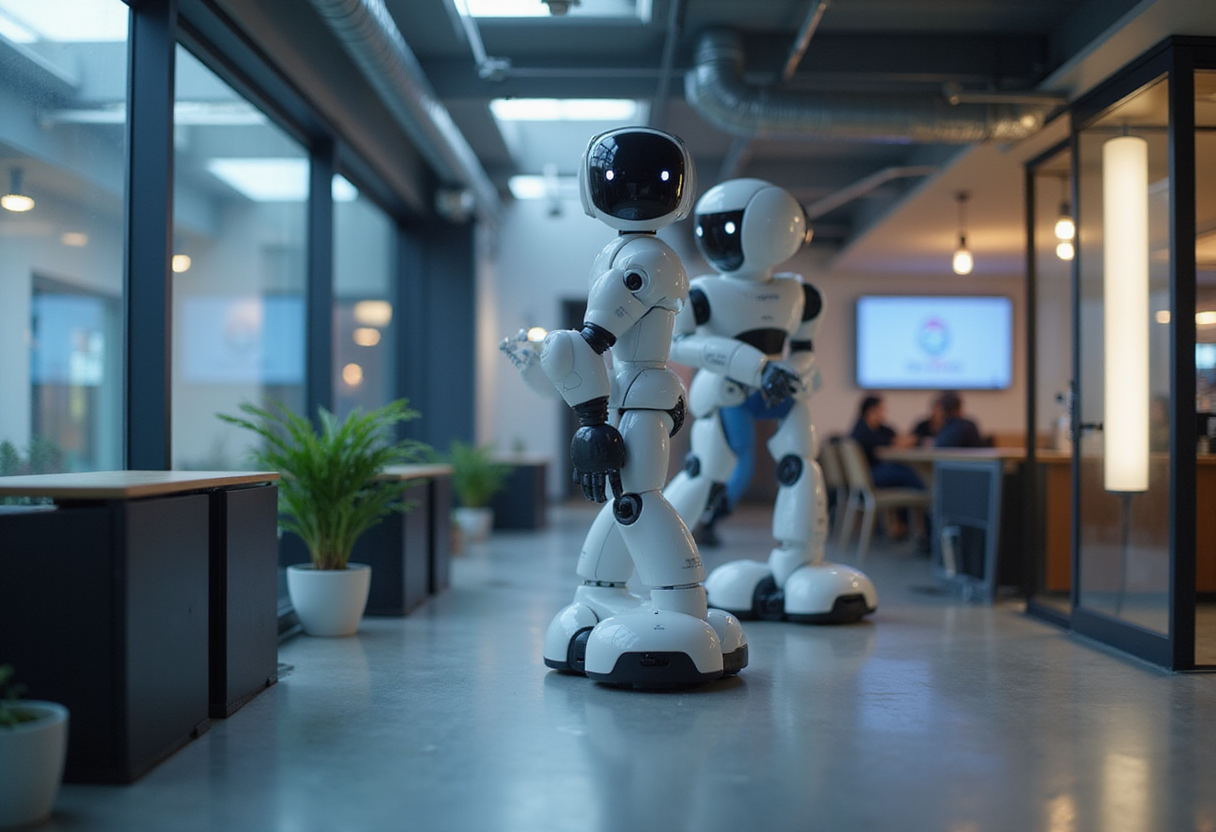
Autonomique has deployed semi-humanoid robots and artificial intelligence at a Canadian Tier 1 automotive supplier, the company's announcement, reported by The Robot Report, confirms.
The deployment puts a new class of machines — robots built to approximate human form and work alongside people on factory floors — into a production environment at a supplier that sells directly to vehicle manufacturers. That placement matters. Tier 1 plants face the tightest cycle-time and quality demands in the supply chain, and they rarely serve as test beds for unproven hardware. Any automation that runs there has to hold tolerances, keep pace and not stop the line.
The announcement names no volumes, no plant capacity figures and no program timing. Autonomique has also not disclosed the identity of the Tier 1 customer, the number of robots installed, the specific processes the machines perform, or the financial terms of the deal. Until those details surface, the deployment sits in the category of announced intentions rather than verified production data — a distinction that matters when suppliers pitch automation claims to OEM procurement teams.
What the announcement does establish is the direction. Semi-humanoid robots occupy a middle ground between fixed industrial arms and the fully humanoid machines that companies such as Tesla and Figure have promoted. The pitch is flexibility: machines that can step into workstations, cells and material-handling tasks designed around human bodies, without the retooling that conventional automation demands. For Tier 1 suppliers running high-mix, low-volume programs — increasingly common as OEMs fragment platforms across trim levels and powertrains — that flexibility carries real economic weight.
Pairing the hardware with AI is the other half of the claim. Modern deployment models rely on AI to handle perception, task adaptation and fleet learning, so that one robot's experience propagates across the installed base. Autonomique's announcement follows that pattern, though the company has not published performance metrics — uptime, cycle time, defect rates or labor displacement figures — that would let a plant engineer evaluate the claim against existing automation options.
The Canadian location adds a policy dimension. Suppliers in Ontario's auto belt have spent the past several years navigating production shifts toward EV and battery programs, with federal and provincial governments subsidizing retooling. Labor markets in the region remain tight, and Tier 1s there have shown growing appetite for automation that fills gaps rather than replaces entire departments. Whether Autonomique's machines fit that gap depends on data the company has not yet released.
For plant managers and manufacturing engineers, the right posture is verification. Ask for the cycle-time data. Ask which stations the robots run, what the takt requirement is, and how the machines performed during the pilot phase. A Tier 1 deployment is a strong signal, but the automaking supply chain has a long history of robotics announcements that did not survive contact with production reality.
What to watch next: the identity of the Tier 1 customer, the number of units deployed and the processes they cover, and whether Autonomique releases performance data or a capacity milestone tied to the installation. A follow-on order — or a publicized expansion to additional plants — would move this from a single-site claim toward a scalable automation program.
via Google News: Automotive suppliers and Tier-1s (Source)
More from Grace Kim
Show full bio
Staff writer covering industry trends and analytics at Autoplant Brief.
82 articles
Also circulated
- Sanctuary AI Reports Physical AI Validation at Tier 1 Auto Supplier
- Humanoid robots reach factory floors at BMW, Tesla and Mercedes
- Agility Humanoid Robots Enter Toyota's Production Operations
- Mitsubishi to Build Humanoid Robots at Former Engine Plant
- BMW Moves to Deploy Humanoid Robots on Factory Floor