ECO-5886 · REV O · effective October 9, 2026
Auto Industry PolicyAPPROVEDEngineering notice
Trump's Auto Plant Tariff Numbers Don't Add Up, AP Finds
An AP fact-check published by the Bozeman Daily Chronicle finds President Trump's claim that US tariffs have brought more auto factories does not match plant-tracking data.
Scope of change
- Headline verdict from the Bozeman Daily Chronicle-syndicated AP fact-check: 'His numbers are off'
- Standard greenfield auto plant lead time from groundbreaking to Job One: 24 to 36 months
- BLS NAICS codes used for cross-checking auto employment: 3361 (motor vehicles) and 3363 (motor vehicle parts)
- Q4 BLS data on motor vehicle and parts employment due in early 2026
- AP 'FACT FOCUS' is the wire service's branded fact-check label
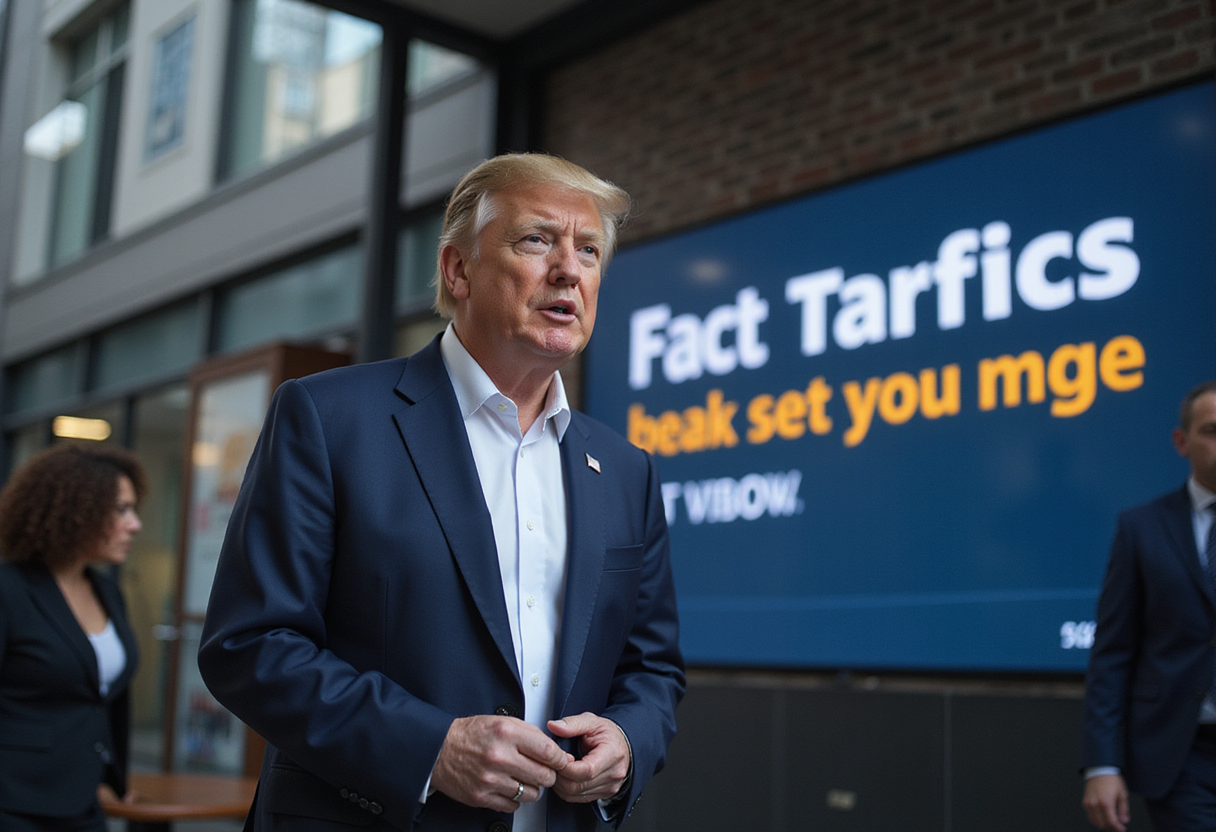
President Donald Trump's claim that US tariffs have brought more auto factories to American soil does not match plant-tracking data, according to an Associated Press fact-check published by the Bozeman Daily Chronicle under the wire service's "FACT FOCUS" brand.
The headline verdict — "His numbers are off" — flags that the count of new or returning plants does not corroborate the President's framing of import duties as the engine of US auto manufacturing revival.
What claim is being audited?
Trump has publicly tied tariffs to a domestic auto manufacturing resurgence, presenting new factory announcements as direct evidence that the policy is reshaping the US industrial base. The AP review, distributed through the Bozeman Daily Chronicle, examines those specific plant-count figures.
How are factory counts typically verified?
For an auto industry claim, the standard audit trail runs through state and local economic development filings, OEM 10-K and 10-Q disclosures, county-level construction permits, and Bureau of Labor Statistics employment series covering NAICS 3361 (motor vehicles) and 3363 (motor vehicle parts). Tier 1 supplier announcements, when present, are cross-checked against SEC filings.
Announced capacity is not operating capacity. A press release, a memorandum of understanding, or a state subsidy agreement can produce a "factory" headline without any on-the-ground activity. Greenfield auto plants typically run 24 to 36 months from groundbreaking to Job One. Several projects announced in recent years have slipped their timing, scaled back capacity, or been quietly cancelled.
What tariff policy actually changes
Tariffs can shift the cost math on existing US operations by making imported vehicles and components less competitive. They do not by themselves create new plants. New capacity requires site selection, utility upgrades, stamping and paint shop construction, and a trained workforce — measured in years, not policy cycles.
What trade-press readers should watch
The fact-check does not foreclose the possibility that announced projects will eventually reach production. Several OEMs have signaled intent to expand their US footprint, and Tier 1 suppliers continue to add EV-component capacity in the Southeast and Midwest. The next test will be whether the administration can name a specific plant that broke ground under the current tariff regime and has since begun production — not just one that has been announced.
Plant-trackers should monitor:
- OEM earnings calls for confirmed Job One timing on announced US projects
- State incentive filings for renegotiated or rescinded package terms
- Q4 BLS data on motor vehicle and parts employment, due in early 2026
The launch date, the capacity milestone, and any revised plant-count claim from the administration are the three signals worth watching.
via Google News: Auto industry policy (Source)
More from Amara Osei
Also circulated
- AP Fact-Check Finds Trump's Tariff Claims on US Auto Factories Overstate the Record
- Trump Claims Tariffs Saved US Auto Industry. The Production Data Will Judge
- Fact-check finds Trump's US auto factory numbers 'off'
- Trump Defends Tariffs, Claims Auto Industry Revival
- Trump Claims Tariffs Saved U.S. Auto Industry. Data Disagrees