ECO-4879 · REV N · effective September 28, 2026
Industry Analysis & MarketsRELEASEDEngineering notice
Nissan targets 80% US-built sales by 2030, kills Rogue PHEV
Nissan says 80% of US sales will be US-built by 2030, up from 65%, as tariffs add up to US$3,000 per Mexican-built budget car. Rogue PHEV axed; e-Power comes from Japan.
Scope of change
- Nissan targets 80% US-built share of US sales by end of 2030, up from 65% today and 40% pre-tariffs
- 25% duties on non-compliant Mexican content added US$2,500–US$3,000 per unit to Sentra and Kicks
- Rogue PHEV production halted in North America; imported e-Power Rogue arrives in November, US production possible in 2028
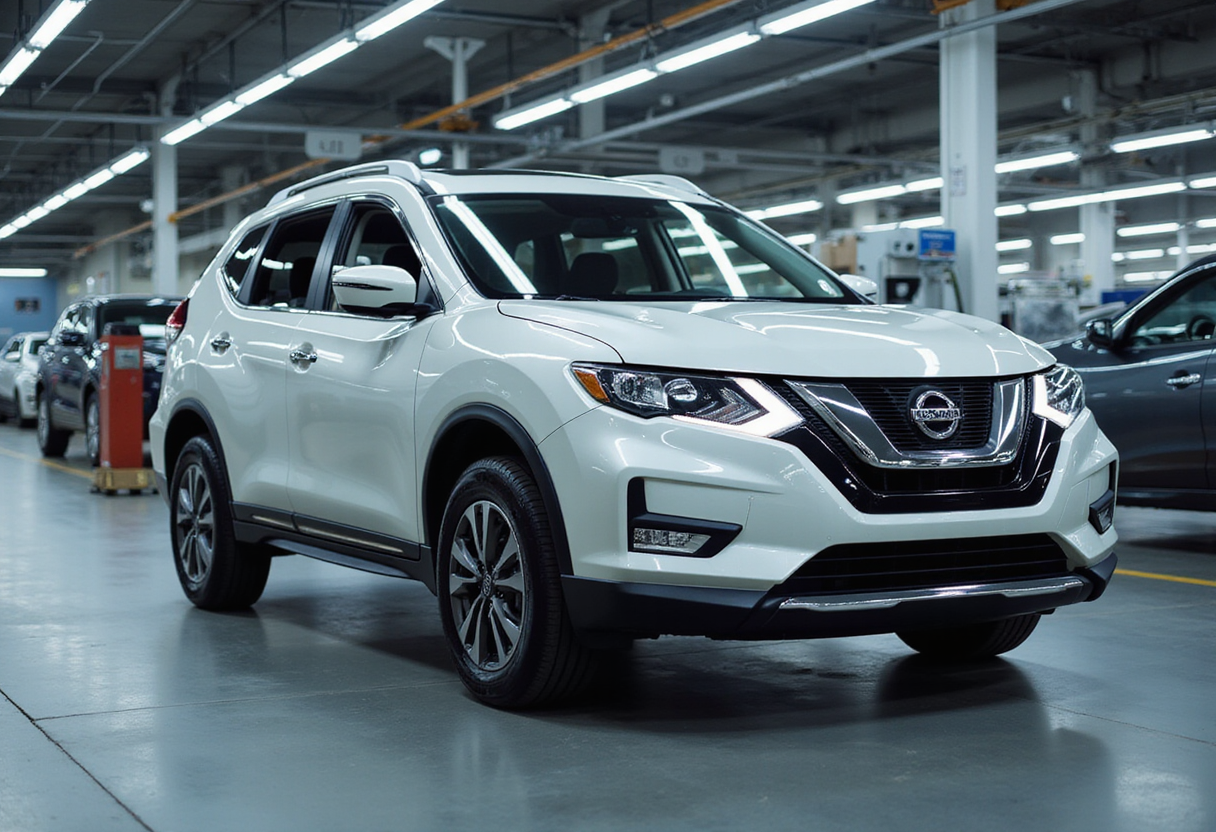
Nissan wants 80% of the vehicles it sells in the US to be built there by the end of 2030, up from 65% today and 40% before President Donald Trump imposed Japan-specific tariffs. The company disclosed the target at a media roundtable in Yokohama on 28 September — and in the same breath confirmed it has halted North American production of the Rogue plug-in hybrid, months after launch, leaving its US electrification case resting on an e-Power hybrid that will be imported from Japan.
"In April of last year, we had significant headwinds from the tariffs […] we pivoted toward building more U.S. cars and localizing all the cars and the parts," said Christian Meunier, Chairperson of the Management Committee for Nissan Americas. "The goal is to continue to increase this towards 80% in the future."
Mexico accounts for much of the remaining gap. Plants in Aguascalientes and the now-closed CIVAC site once supplied more than a third of Nissan's US sales. Duties of 25% on non-compliant content added US$2,500 to US$3,000 per unit to budget models such as the Sentra and Kicks — enough to erase margins on cars priced near US$25,000. With Japanese imports capped at a lower 15% rate, the final 15 points of localisation will mean relocating cheap, low-margin cars rather than profitable SUVs.
What becomes of Aguascalientes remains unresolved. Reports earlier in 2026 said Nissan was looking to sell the plant to a major Chinese automaker, with BYD and Geely the frontrunners and negotiations at an advanced stage. Vietnamese EV maker VinFast was also reported to be among the bidders. That was in February. No update has followed.
For now, the strategy rests on three US-built nameplates. The Rogue, Pathfinder and Frontier account for 55% of Nissan's US sales, and Meunier says the automaker is putting all its resources behind them after its long-held 6% to 7% retail share was nearly cut in half. "I would say the company had lost its fighting spirit, at least in the American region, especially in the U.S. I think there was not the same appetite for selling cars," he said.
The Rogue PHEV is the first casualty of that discipline. "Plug-in hybrid in the U.S. has almost disappeared because the incentives are gone from the government," Meunier noted. Its effective successor, an e-Power Rogue due in November, will ship in from Japan. US production could follow in 2028 depending on performance — a timeline that sits uneasily beside Nissan's insistence it will localise "all the cars and the parts."
Nissan is not the only automaker building closer to its US customers under the second Trump administration. Honda is reportedly finalising plans for a US$2.5bn hybrid plant, and Toyota intends to spend US$1bn on electrified vehicles for North America. The difference is starting position. Nissan is localising from weakness, midway through its Re:Nissan restructuring and leaning on the Honda partnership announced last month, alongside others, to find scale it lacks alone.
The US recovery, as currently configured, runs on internal combustion trucks and SUVs, with electrification deferred and imported in the meantime. The 80% target reads less as a growth plan than as a defence against tariff costs that Nissan's thin margins cannot absorb.
Watch 2028. A US-built e-Power Rogue would give Nissan a localised hybrid to set against Toyota and Honda; further delay would leave it competing with three nameplates while its rivals electrify on US soil. The next visible milestone comes sooner: the imported e-Power Rogue launches in November, and any word on the Aguascalientes sale — dormant since February — would clarify how Nissan plans to close the last 15 points of localisation.
via Automotive World (Source)
More from Grace Kim
Show full bio
Staff writer covering industry trends and analytics at Autoplant Brief.
82 articles
Also circulated
- Nissan targets 80% US-built vehicles by 2030, up from 65%
- Nissan weighs e-Power hybrid output at Decherd, Tenn., engine plant
- Nissan Targets 80% of US Sales From Domestic Production by 2030
- Nissan chairman: Chinese automakers to build in North America within 2-3 years
- Mexico Pushes to Cut Auto Tariffs in USMCA Talks