ECO-4943 · REV D · effective September 30, 2026
Vehicle Plants & ProductionRELEASEDEngineering notice
Nissan targets 80% US-built vehicles by 2030, up from 65%
Nissan aims to lift US local production from 65% to 80% by end-2030, Christian Meunier told Nikkei Asia, as tariffs push Japanese OEMs toward North American capacity.
Scope of change
- Nissan targets 80% US-local production of US-sold vehicles by end-2030, up from 65% today and 40% pre-tariffs
- Rogue, Pathfinder and Frontier account for 55% of Nissan's US sales across six plants in the US, Mexico and Brazil
- Rogue e-Power launches in November imported from Japan; US production could begin in 2028
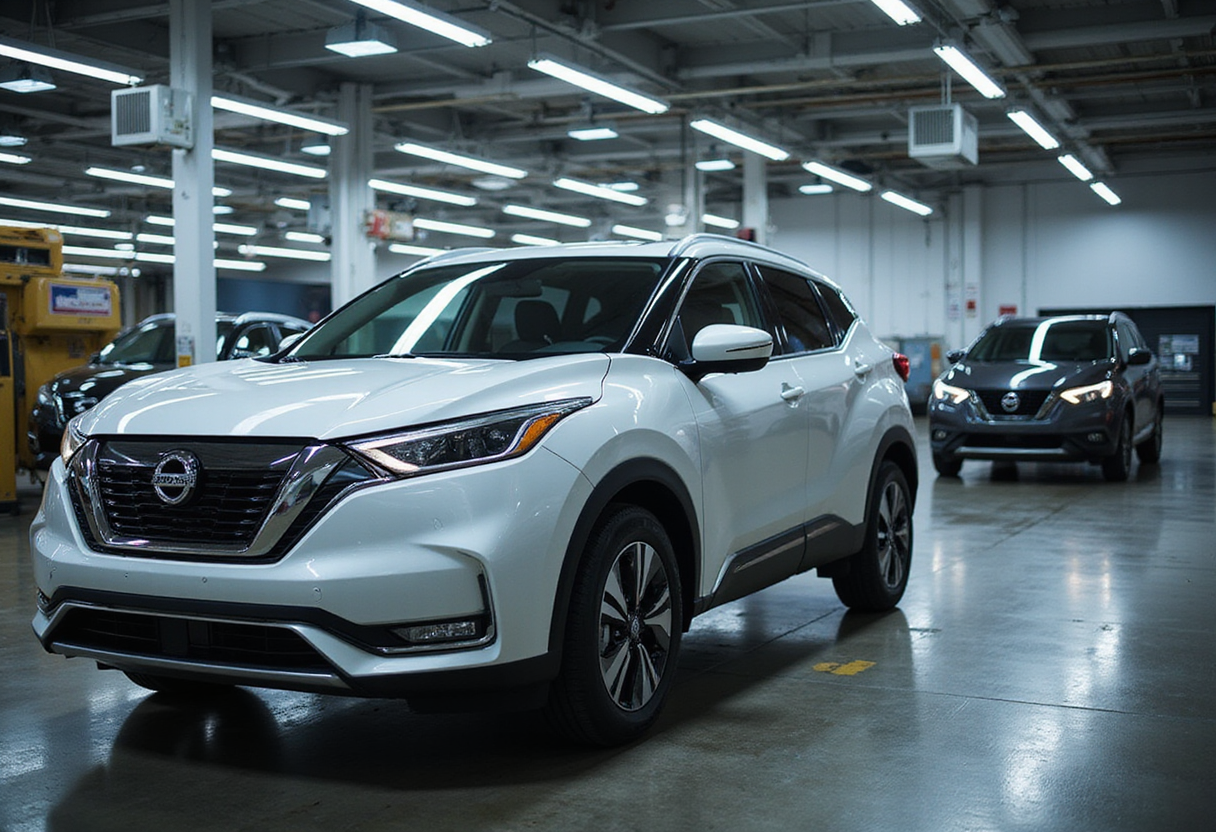
Nissan Motor aims to build 80% of the vehicles it sells in the US locally by the end of 2030. The target, disclosed by Nissan Americas management committee chairperson Christian Meunier in an interview with Nikkei Asia, compares with 65% local production today and 40% before the Trump administration imposed its tariffs.
"In April of last year, we had significant headwinds from the tariffs, we pivoted toward building more US cars and localising all the cars and the parts," Meunier said at a media roundtable.
The localisation drive concentrates on three models built in the Americas: the Rogue and Pathfinder SUVs and the Frontier pickup. Together they account for 55% of Nissan's US sales. The company operates six vehicle and engine manufacturing sites across the US, Mexico and Brazil.
The target is an announced intention rather than a confirmed capacity plan, and Meunier did not detail which plants would add volume or on what timeline. Investors and suppliers will need to watch for capital expenditure announcements tied to specific lines before treating the 80% figure as committed capacity.
Commercial backdrop
Nissan is executing its Re:Nissan restructuring plan after weak US profitability deepened wider business difficulties. Meunier said US retail market share has fallen from a historical 6-7% to roughly half that level.
"I would say the company had lost its fighting spirit, at least in the American region, especially in the US I think there was not the same appetite for selling cars," he told Nikkei Asia.
The product plan is shifting as well. Nissan has ended production of the Rogue PHEV, its first plug-in hybrid, which was introduced for the North American market earlier this month. In its place, the company plans to launch US sales of a Rogue using its proprietary e-Power hybrid technology in November. That model will initially be imported from Japan — a notable exception to the localisation push — with US production possibly starting in 2028. Nissan has not confirmed where that assembly would sit.
Sector context
Nissan's target fits a broader shift among Japanese OEMs responding to US trade policy. Honda Motor is in the final stages of talks on a US hybrid vehicle plant estimated to cost $1.8bn-$2.5bn. Toyota Motor plans to invest $1bn in electric and hybrid vehicle production for North America. Both are supplier- and investment-side announcements that remain subject to final board approvals and production scheduling.
For Nissan's tier-one suppliers in Tennessee, Mississippi and Mexico, an increase from 65% to 80% local content implies a meaningful expansion of stamped, moulded and powertrain component volumes across the Rogue, Pathfinder and Frontier programmes. No supplier award announcements tied to the target have been made public.
What to watch next: the November launch of the Japan-built Rogue e-Power, any confirmation of 2028 US production for that model, and whether Nissan commits plant-level investment to back the 80% goal.
via asia.nikkei.com (Original)
More from Daniel Okafor
Show full bio
Senior reporter covering marketplaces and e-commerce at Autoplant Brief.
111 articles
Also circulated
- Nissan targets 80% US-built sales by 2030, kills Rogue PHEV
- Nissan Targets 80% of US Sales From Domestic Production by 2030
- Nissan weighs e-Power hybrid output at Decherd, Tenn., engine plant
- Nissan chairman: Chinese automakers to build in North America within 2-3 years
- Nissan's Decherd Powertrain Plant Passes 20 Million Engines