ECO-9022 · REV K · effective September 29, 2026
Industry Analysis & MarketsAPPROVEDEngineering notice
Nissan Targets 80% of US Sales From Domestic Production by 2030
Nissan reportedly aims to build 80% of its US-sold vehicles domestically by 2030, implying major volume shifts to Smyrna and Canton. Details on models and investment remain unconfirmed.
Scope of change
- Nissan targets 80% of US-sold vehicles built domestically by 2030, per a Yahoo Finance report
- Target implies higher utilization or expansion at Smyrna, Tennessee and Canton, Mississippi plants
- No confirmed details yet on models, investment size, or treatment of Mexican-built vehicles under USMCA
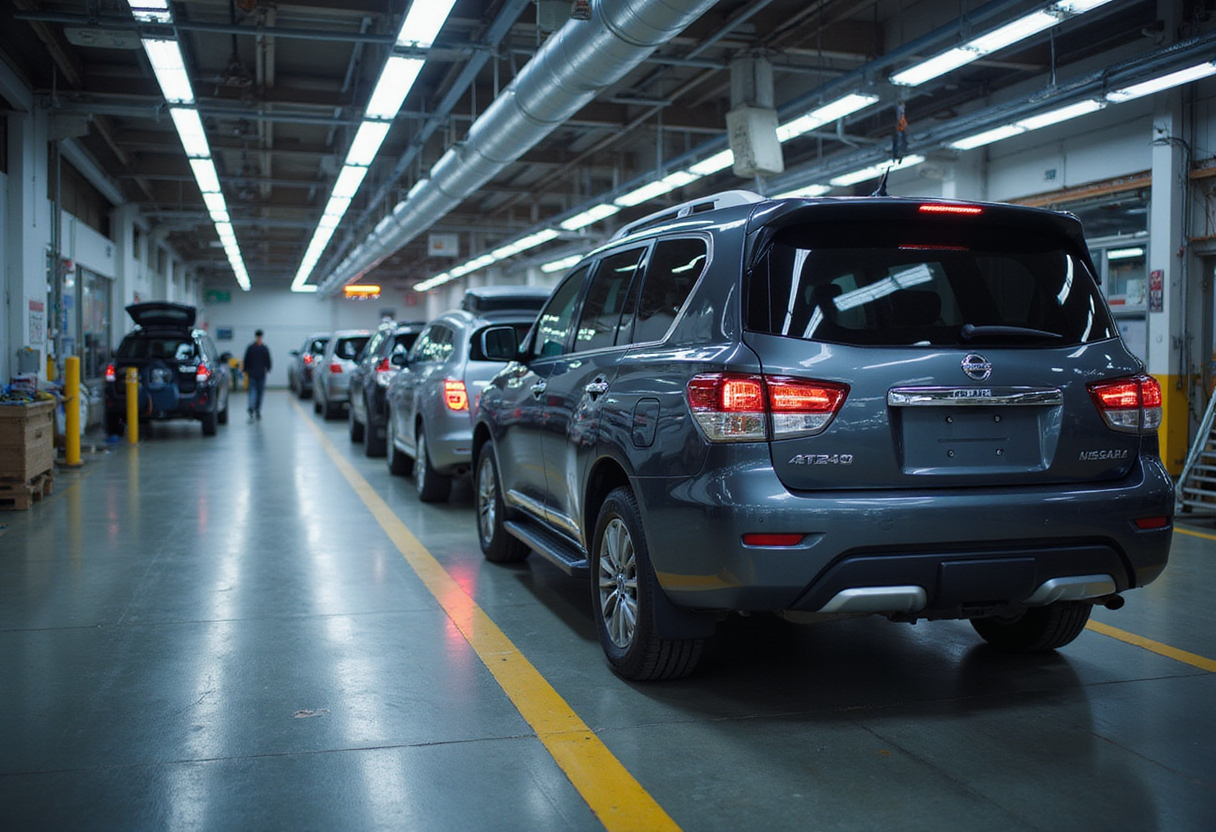
Nissan aims to build 80% of the vehicles it sells in the US at American plants by 2030, according to a report carried by Yahoo Finance. The figure marks a substantial shift for an automaker that has historically leaned on Mexican and Japanese output to supply its largest single market.
The target, as reported, would tie most of Nissan's US sales volume to production inside the country within roughly five years. That is an ambitious timeline for any OEM. Rebalancing a global manufacturing footprint normally requires new tooling, supplier re-sourcing and capacity decisions locked in years before launch — not just a corporate aspiration set at headquarters.
Nissan already assembles vehicles at its Smyrna, Tennessee plant — the largest auto assembly facility in North America by volume when it opened in 1983 — and at its Canton, Mississippi plant, which has built trucks and, more recently, been retooled toward electric models. A push to 80% domestic production would imply significantly higher utilization at those sites, expanded shifts, or new model allocations shifted from export plants.
The report does not specify which models would move to US production, whether Nissan plans capital investment announcements to support the target, or how the company would treat vehicles imported from Mexico under the USMCA framework. Those details matter. An 80% localization figure that counts Mexican-built vehicles as "domestic" under trade rules is a very different proposition from one requiring US-only assembly.
Trade context frames the timing. US tariff policy on imported vehicles and parts has pushed multiple OEMs to announce localization targets in recent quarters. Nissan, which has struggled with thin margins and restructuring in North America, has stronger incentive than most to shift output closer to its customers. But announced intentions and confirmed capacity plans are not the same thing. Until Nissan details plant-by-plant volume shifts, investment figures or hiring, the 80% figure should be read as a strategic goal rather than a production schedule.
For suppliers, the implications run wide. Higher US assembly volumes at Smyrna and Canton would pull tier-one and tier-two demand toward North American sites — stamping, seating, powertrain components and battery supply all follow the assembly footprint. Suppliers to Nissan's current US programs will be watching for capacity expansion signals; those serving Nissan's Mexican plants will watch for volume migrating north.
What to watch next: any formal Nissan statement converting the reported target into a confirmed plan, capital expenditure figures attached to Smyrna and Canton, and model-allocation decisions that show which nameplates shift to US lines first. The first hard test will come in Nissan's next capacity announcement — not in the headline number itself.
via Google News: Auto plant and vehicle production (Source)
More from Marcus Bennett
Show full bio
News editor covering marketplaces and e-commerce at Autoplant Brief.
86 articles
Also circulated
- Nissan targets 80% US-built vehicles by 2030, up from 65%
- Nissan chairman: Chinese automakers to build in North America within 2-3 years
- Nissan's Decherd Powertrain Plant Passes 20 Million Engines
- Nissan's Mississippi Plant Pivots from EVs to Gas Pickups
- Nissan weighs e-Power hybrid output at Decherd, Tenn., engine plant