ECO-9758 · REV C · effective September 28, 2026
Industry Analysis & MarketsAPPROVEDEngineering notice
India Targeting 50 Million Vehicle Output by 2030
Projection reported by Rediff puts India's total vehicle output at 50 million units by 2030 — implying capacity additions of millions of units per year through the decade.
Scope of change
- India's total vehicle production projected to reach 50 million units by 2030 (Rediff)
- Target implies near-doubling of national output versus recent annual volumes
- No specific OEM capital allocation or policy document tied to the figure so far
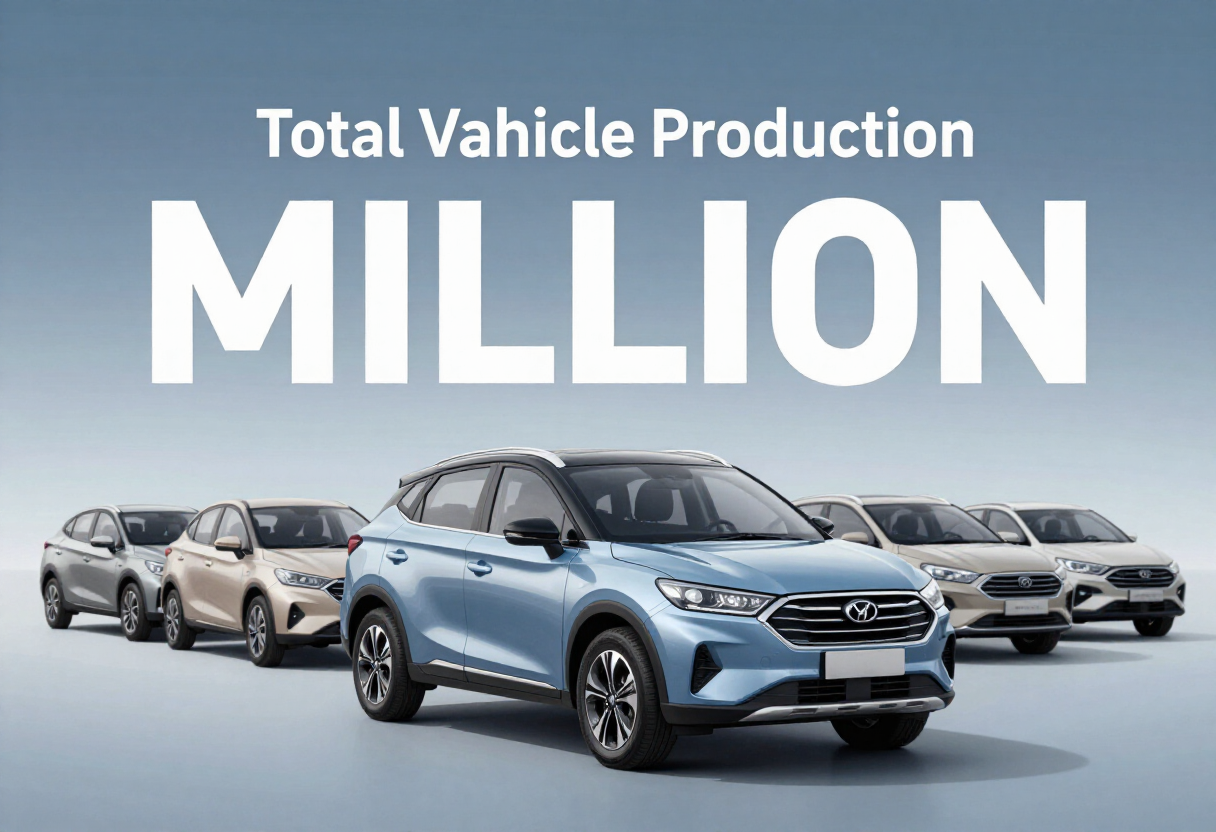
India's total vehicle production will reach 50 million units by 2030, according to a projection reported by Rediff.
The figure, if realized, would represent one of the steepest national output ramps in the global industry. India produced roughly 25–30 million vehicles annually in recent years across passenger vehicles, two-wheelers, three-wheelers and commercial vehicles, counting factories operated by Maruti Suzuki, Tata Motors, Hyundai, Mahindra, Bajaj Auto, Hero MotoCorp and TVS Motor, among others. Hitting 50 million units would require the country's OEM base to add capacity on the order of 3–4 million units per year, every year, through the end of the decade.
That rate of expansion has no clear precedent in India's manufacturing history. The Society of Indian Automobile Manufacturers (SIAM) has previously framed 2030 as the horizon for India's push toward much larger volumes, tied to domestic demand growth, export ambitions and the government's production-linked incentive schemes. Whether the 50-million figure reflects a formal industry forecast or an aspirational target remains the key question for plant planners and suppliers.
For component makers — India's tier supply base spans more than 6,000 registered firms, with Bosch, Uno Minda, Bharat Forge and Motherson among the largest — a doubling of vehicle output would force parallel investment in stamping, castings, powertrain components and increasingly in battery and electronics capacity. Supplier tiering decisions made in the next 12 to 24 months will determine whether the domestic value chain can keep pace or whether OEMs lean harder on imports.
The projection arrives as global OEMs rebalance capacity away from Europe and toward lower-cost production bases, and as India positions itself as an export hub for both compact cars and two-wheelers. Maruti Suzuki's Gujarat expansion, Tata Motors' electrification push and Hyundai's Tamil Nadu capacity additions all point in the same direction: more metal coming out of Indian plants before 2030.
The caveat is the one that always applies to six-year production targets. Announced intentions are not confirmed capacity plans, and the 50-million figure has not been tied to a specific OEM capital allocation or government policy document in the reporting so far. Demand cycles, export headwinds and the pace of electrification in the two-wheeler segment — India's volume backbone — could push the milestone well past 2030.
What to watch: whether SIAM or the Ministry of Heavy Industries formally endorses the 50-million target, which OEMs announce greenfield or brownfield plant investments against it in the next budget cycle, and whether component tier investment follows at the required scale.
via Google News: Auto plant and vehicle production (Source)
More from Grace Kim
Show full bio
Staff writer covering industry trends and analytics at Autoplant Brief.
82 articles