ECO-3463 · REV D · effective September 28, 2026
Vehicle Plants & ProductionRELEASEDEngineering notice
Mitsubishi's L300 Keeps Philippine Commercial Vehicle Line Running
The Manila Times reports Mitsubishi is sustaining Philippine commercial vehicle production through the L300 line — a signal of continuation, not confirmed capacity growth.
Scope of change
- The Manila Times reports Mitsubishi keeps local commercial vehicle production alive in the Philippines through the L300
- The report signals line continuation, not a confirmed capacity increase or new investment program
- No production volumes or plant utilization figures were disclosed in the report
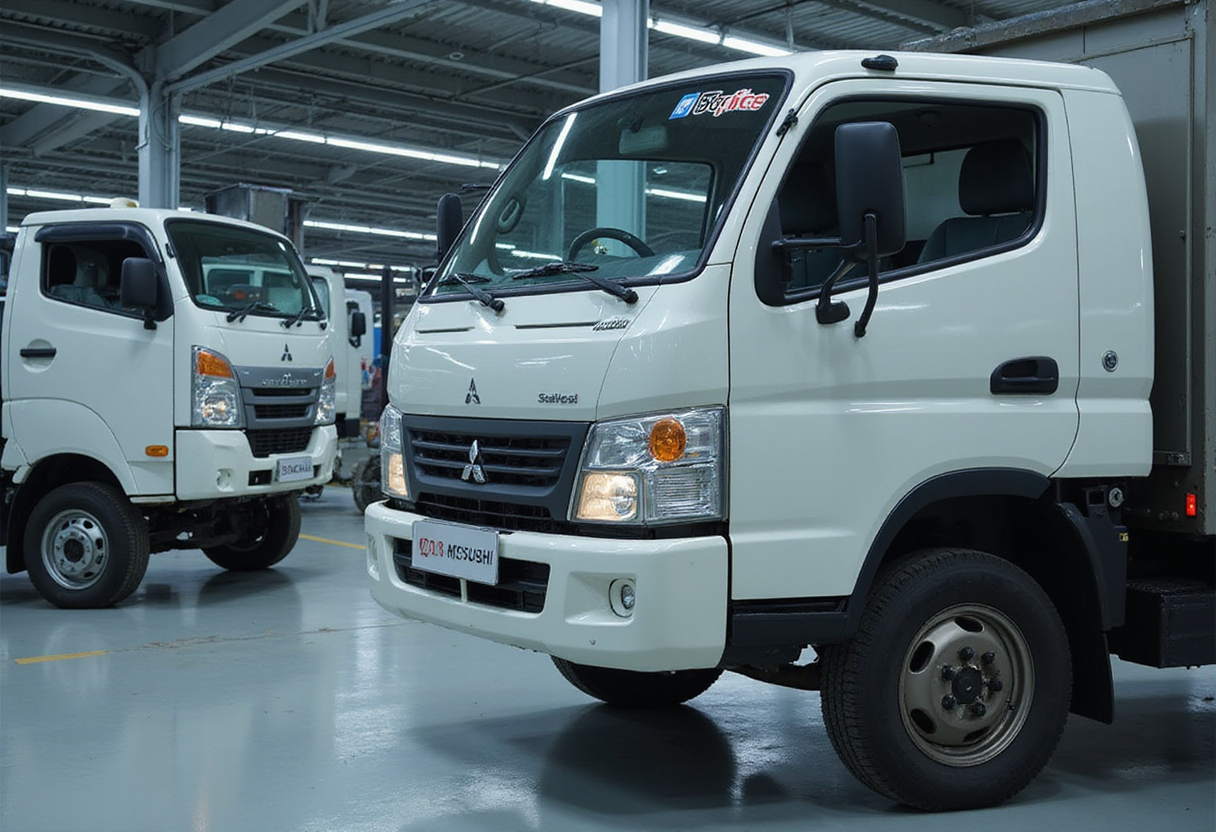
Mitsubishi is keeping local commercial vehicle production alive in the Philippines through the L300, according to a report from The Manila Times. The headline claim matters for one simple reason: the L300 is one of the last commercially produced vehicles still assembled in meaningful volume on Philippine soil, and its continuation signals that Mitsubishi has not — for now — joined the queue of manufacturers pulling assembly out of the market.
The report, surfaced through Google News aggregation, carries a headline that frames the situation plainly: "Mitsubishi keeps local commercial vehicle production alive with L300." No production figures, plant utilization data, or investment commitments appear in the headline itself. That absence is itself part of the story. In a market where several OEMs have shifted to fully imported distribution models, a surviving assembly program — even one anchored to a single legacy nameplate — remains newsworthy.
The L300 is a light commercial vehicle, a cab-over van and utility platform aimed at small-business logistics, shuttle operators, and fleet buyers. That segment has historically been the backbone of what remains of Philippine vehicle assembly. Passenger car assembly in the country effectively collapsed years ago; what survives is commercial-vehicle output, and the L300 sits squarely inside that surviving band.
What the headline does not settle is the question every manufacturing analyst will ask next: at what volume, and for how long? Keeping a line alive is not the same as expanding one. The phrasing suggests continuation rather than a capacity increase, a new program, or a fresh model cycle. Until Mitsubishi's Philippine arm, Mitsubishi Motors Philippines Corp., publishes plant output figures or issues its own confirmation with specifics, the report should be treated as an indication of intent and current status — not a verified capacity plan.
For a supplier audience, the distinction carries real weight. A continuing L300 line means continuing orders for whatever localization content the program carries — stampings, interior trim, wiring harnesses, seats, and regional components tied to the Philippine parts ecosystem. It does not, on the headline's own terms, signal new sourcing opportunities, tooling releases, or tier ramp-ups. Suppliers reading this as a growth signal would be ahead of the evidence.
The Philippine context sharpens the stakes. The government has long pursued a comprehensive automotive resurgence strategy designed to pull assembly volume — and parts manufacturing — back into the country, with fiscal incentives tied to production targets. Programs like that live or die on whether OEMs actually build locally. Every nameplate that stays in local production, such as the L300, gives the policy something to point to. Every one that exits strengthens the case that the market is structurally an import destination.
Mitsubishi's position in the Philippines adds another layer. The company ranks among the top-selling brands in the market, and its local operation has historically paired domestic assembly of select models with imported volume across the rest of the range. A headline singling out the L300 as the model keeping commercial vehicle production alive implies the assembly footprint has narrowed to a short list of nameplates — consistent with the broader regional pattern in Southeast Asia, where volume consolidation into fewer plants has squeezed assembly operations in smaller markets.
Against that pattern, simple survival is the achievement. Regional manufacturing strategy in the 2020s has favored scale: fewer plants, higher per-line volume, and centralized exports from Thailand and Indonesia for most ASEAN programs. A Philippine line producing an older light commercial platform for a domestic buyer base is the kind of operation that gets rationalized in cost reviews. Its continuation, per the report, suggests either sustained demand from Philippine fleet buyers or a strategic calculation by Mitsubishi that local assembly still pays for that model — likely some combination of both.
What to watch next: a formal statement or production disclosure from Mitsubishi Motors Philippines confirming output levels and program timing for the L300; any indication of whether the model line receives a refresh or runs out its current cycle; and, on the policy side, whether Philippine incentive programs adjust to reward exactly this kind of legacy-line retention. If the L300 line survives the next product-cycle decision, local commercial vehicle production in the Philippines has a floor. If it does not, the headline reads differently in hindsight — as an epitaph written in the present tense.
via Google News: Auto plant and vehicle production (Source)
More from Grace Kim
Show full bio
Staff writer covering industry trends and analytics at Autoplant Brief.
82 articles
Also circulated
- UK Vehicle Production Falls to Lowest Level in Generations, IMechE Reports
- Hyundai Partners with MIDA to Strengthen Malaysian Supply Chain
- Mitsubishi to Build Humanoid Robots at Former Engine Plant
- Changan begins vehicle production in Brazil
- Malaysia Positions Itself As Southeast Asia's Next EV Build Hub