ECO-1294 · REV Y · effective November 15, 2026
Auto Industry PolicyAPPROVEDEngineering notice
China and Thailand Sign Eight Cooperation Documents, Auto Industry Upgrading on the List
Eight cooperation documents signed in Bangkok cover autos, agriculture and vocational training, with China and Thailand pledging joint third-market pushes in NEVs, AI and clean energy.
Scope of change
- Eight cooperation documents were exchanged during Li Qiang's October 13–15 visit to Thailand.
- It was the first official visit to Thailand by a Chinese premier in seven years, since 2019.
- The documents cover the automotive industry, vocational training, agriculture, customs, and security and consular affairs.
- The visit follows the 50th anniversary of China–Thailand diplomatic relations in 2025.
- Both sides pledged cooperation on NEVs, AI, clean energy and joint entry into third-country markets.
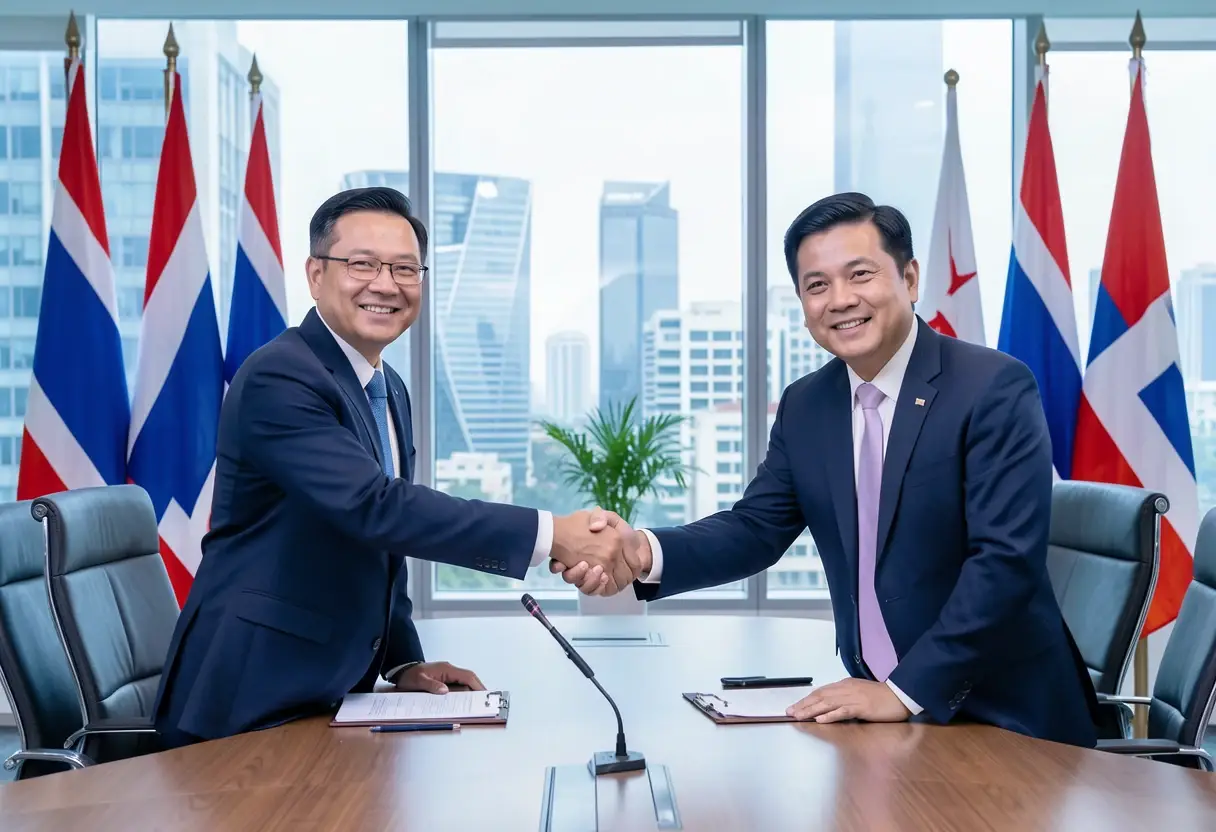
Eight cooperation documents covering automobiles, vocational training, agriculture, customs and security were signed during Chinese Premier Li Qiang's official visit to Thailand on October 13–15, with both governments committing to deepen work on new-energy vehicles, artificial intelligence and clean energy.
Li met King Maha Vajiralongkorn in Bangkok on October 14 and held talks with Prime Minister Anutin Charnvirakul. The trip is Li's first to Thailand since taking office and the first official visit to the country by a Chinese premier in seven years, since Li Keqiang's visit in 2019. It follows the two countries' commemoration of the 50th anniversary of diplomatic relations in 2025.
What does the deal actually cover?
The documents exchanged span five broad areas: the automotive industry, vocational education, agriculture, customs, and security and consular affairs. According to content released by the Thai government, the package includes market access for Thai-grown salak (a tropical fruit) into China, maintenance of durian export markets, upgrading of the automotive industry, and strengthening of vocational training capacity.
The automotive item matters for Thailand's industrial base. The country hosts major vehicle assembly operations serving Southeast Asia, and Chinese brands have been expanding local production of electrified models there for several years. The document signals Beijing's political backing for that localization push, though it is a cooperation agreement rather than a confirmed capacity or investment plan — no production volumes, plant commitments or timelines were announced.
Beyond the signed documents, Li and Anutin discussed cooperation in trade and investment, rail and other connectivity infrastructure, new energy, semiconductors and artificial intelligence, finance, tourism and education. The two sides also agreed to continue cooperation on agriculture, water resource management and countering transnational crime.
Chinese localization and third-market expansion
Li attended a roundtable with business leaders from both countries alongside Anutin on October 14, where he called for Chinese companies to expand their operations in Thailand. He proposed stronger cooperation in emerging fields — artificial intelligence, clean energy and biopharmaceuticals — and suggested the two countries use Thailand's geographic advantages to enter third-country markets together.
The Chinese side identified the China–Thailand railway construction and improved alignment on rules, standards and finance as foundations for expanded business cooperation. Officials also raised the option of using the revised China–ASEAN free trade agreement to support that effort.
Anutin described China as an important trading partner for Thailand and said his government intends to expand cooperation on electric vehicles, agriculture, infrastructure, artificial intelligence and science and technology. The Thai government said it will introduce additional policies to create an environment where Chinese companies can operate locally over the long term and to protect investor rights — a stated intention whose implementing measures remain to be specified.
The diplomatic frame
Li conveyed greetings from President Xi Jinping to the king and described China and Thailand as "as close as one family." He said the two countries should expand cooperation in investment, science and technology innovation and new-energy vehicles, and strengthen people-to-people and cultural exchanges to jointly drive economic and social development. The king said he hoped the visit would deepen traditional friendship and substantive cooperation between the two countries.
China's foreign ministry noted that high-level exchanges have driven the relationship forward, citing the Thai king's state visit to China last year.
What to watch next
For manufacturers and suppliers tracking the Thai automotive corridor, the concrete follow-ups are threefold. Watch for implementing measures under the automotive cooperation document — particularly any Thai policy instruments on investor protection and NEV incentives. Watch the pace of the China–Thailand railway, which Beijing has framed as the physical backbone of expanded industrial cooperation. And watch whether the FTA-revision route converts into tariff or rules-of-origin changes that shift sourcing decisions for Chinese OEMs and their tier-one suppliers building in Thailand for third markets.
via news.jkn.co.kr (Source)
More from Marcus Bennett
Show full bio
News editor covering regulation, policy and their impact on Automotive manufacturing and vehicle production at Autoplant Brief.
321 articles
Also circulated
- Thai Auto Sector Faces Crisis Without EV Policy Overhaul
- Thailand electrified sales jump 47% to 206,000 units in H1 2026
- Malaysia Positions Itself As Southeast Asia's Next EV Build Hub
- Thai Three-Tier EV Tax Plan May Favor Japanese Carmakers
- Thailand to triple BEV import excise tax to 30% from January 2027