ECO-4331 · REV X · effective September 26, 2026
Industry Analysis & MarketsRELEASEDEngineering notice
1.7 Million Vehicles: The Upside Case for Chinese Brands in the US
Mobility Global sees Chinese brands reaching 1.7 million US sales, or 11% of the market, by 2038 — but only if Washington lifts barriers to North American-built vehicles.
Scope of change
- Mobility Global forecasts Chinese automakers could sell 1.7 million vehicles a year in the US by 2038, about 11% of the market, if access restrictions ease.
- Peter Nagle put only a 'low-to-moderate probability' on the US lifting barriers to Chinese-brand vehicles built in North America within 10 years.
- Six major US auto industry groups urged Trump on September 17 to keep Chinese automakers out of the US market, including via local production.
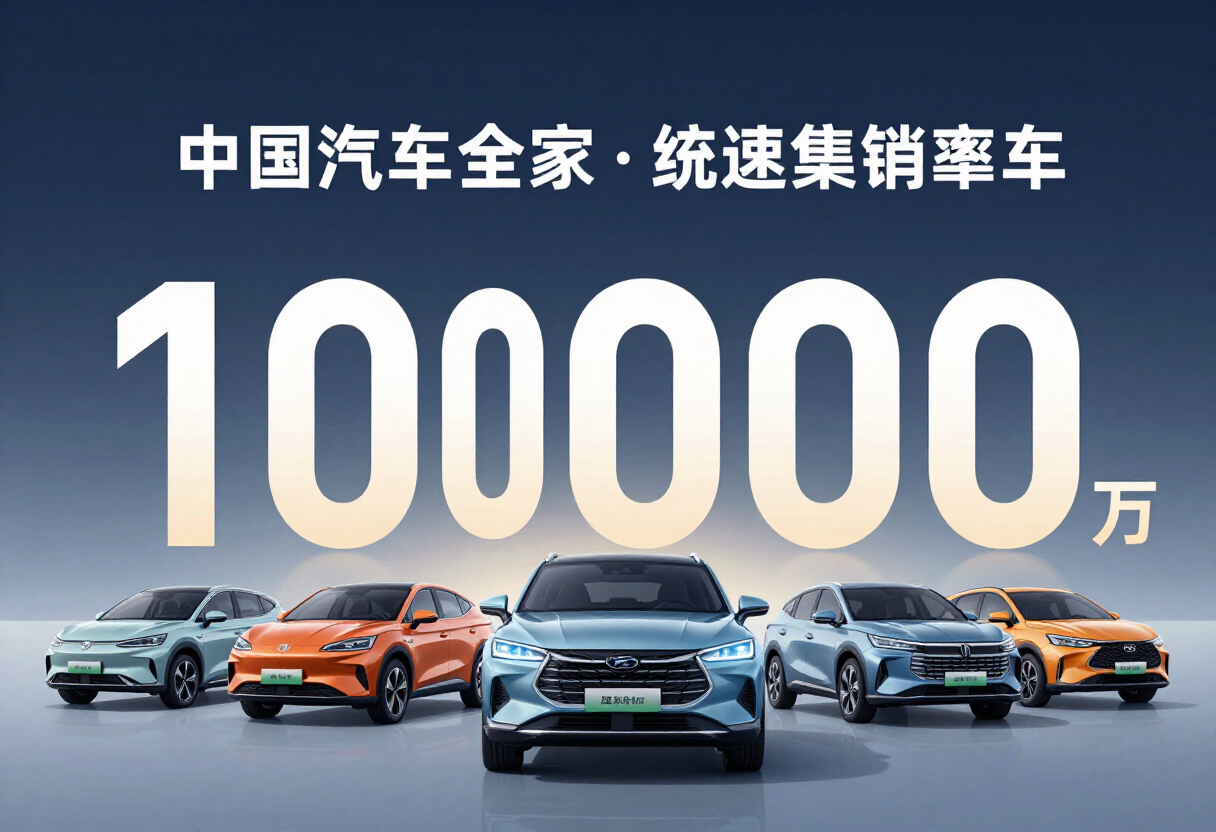
Chinese automakers could sell 1.7 million vehicles a year in the United States by 2038 — roughly 11% of the world's second-largest new car market — if Washington lifts barriers to cars they build in North America, according to a new forecast from market research firm Mobility Global. Bloomberg reported the estimates on Thursday.
Peter Nagle, Mobility Global's associate director of US vehicle forecasting, presented the numbers to reporters in Detroit on September 23. The firm spun off from S&P Global in July.
The scenario comes with a clear caveat. Nagle put only a "low-to-moderate probability" on the US lifting barriers to Chinese-brand vehicles built in North America over the next 10 years. Policy, not product, decides whether the forecast materializes.
The model assumes high tariffs keep direct imports from China effectively unviable, forcing any entry through North American production. Under eased restrictions, automakers including BYD (HKEX: 1211), Geely Auto (HKEX: 0175) and SAIC Motor (SSE: 600104) could begin exporting to the US from factories in Mexico as early as 2029, Nagle estimated. In the 2030s, once annual US sales of popular models pass about 40,000 units each, they could shift to new US plants.
That is a modeled entry path, not an announced investment program. None of the three automakers has committed to the footprint the scenario describes.
The affordability argument
Nagle anchored the forecast in price. New compact and mid-size crossovers sold by Chinese automakers in other countries cost about the same as the average used car in the US, he said. That pricing could appeal to American buyers and generate incremental demand in a US new car market where total sales have stayed largely flat in recent years.
The volume split is notable. Chinese entrants could add about 600,000 additional new vehicle sales a year in the US while taking roughly 1 million annual sales from incumbents, Nagle estimated. Other Asian brands — Nissan, Hyundai and Toyota — would likely absorb most of the share losses, he said, as the entrants both enlarge the market and tighten competition.
Politics cuts both ways
The forecast landed the same week Xi Jinping arrived in Washington on September 23 for a state visit at Trump's invitation, amid a new round of high-level US-China talks.
Trump told Fox News on September 11 he would be open to Chinese automakers building US factories if they hired American workers — but he opposed Chinese brands producing vehicles in Mexico for export to the US, undercutting the near-term Mexico entry route in Mobility Global's model.
The industry is pushing back harder. On September 17, six major US auto industry groups jointly wrote to Trump urging him to keep Chinese automakers out of the US market entirely, including through local production. Some US lawmakers want restrictions maintained against both direct imports and domestic manufacturing. Trump's comments on US factories do not yet amount to a loosening of market access rules.
The mirror market
US automakers already sell into China — and from a weaker position than the one Chinese brands would hold in the reverse scenario. In August, US-brand passenger vehicles retailed 86,071 units in China, a 5.58% share of a 1,541,478-unit market, according to the China Passenger Car Association. Chinese brands held 69.90% of their home market, with German brands at 12.49% and Japanese brands at 10.91%.
What to watch
Watch three things: whether any concrete policy change follows the Washington summit, whether Trump's openness to Chinese-owned US plants survives the September 17 industry letter, and whether any Chinese automaker commits to a Mexico or US plant with stated capacity and timing. Until one of those moves, 1.7 million units remains a scenario — not a plan.
via bloomberg.com (Original)
More from Daniel Okafor
Show full bio
Senior reporter covering marketplaces and e-commerce at Autoplant Brief.
111 articles
Also circulated
- Auto Industry Presses Trump to Block Chinese Automakers Before Xi Talks
- GM warns rivals fleeing China will crowd US market, plans to stay lean
- Tariffs, Chinese Rivals and EV Slowdown Drag Auto Sector Into Losses
- Nissan chairman: Chinese automakers to build in North America within 2-3 years
- US Auto Industry Presses Trump to Bar Chinese Carmakers