ECO-9531 · REV F · effective October 14, 2026
Automation & RoboticsRELEASEDEngineering notice
UBTECH humanoid robots to deploy at FAW Volkswagen logistics
UBTECH Robotics will deploy humanoid robots into logistics operations at FAW Volkswagen. The VW-FAW Group joint venture has not disclosed unit counts, plant sites or timelines.
Scope of change
- UBTECH Robotics will deploy humanoid robots into logistics operations at FAW Volkswagen, the VW-FAW Group joint venture.
- Neither party has disclosed unit counts, plant sites in scope, or deployment timeline.
- FAW Volkswagen is a 50-50 joint venture between China FAW Group and Volkswagen AG, operating assembly plants at Changchun, Chengdu, Foshan and Tianjin.
- UBTECH is headquartered in Shenzhen and previously ran humanoid pilots at multiple Chinese automotive sites.
- The Mjengo Hub report did not specify whether the agreement is a pilot, a limited deployment or a fleet rollout.
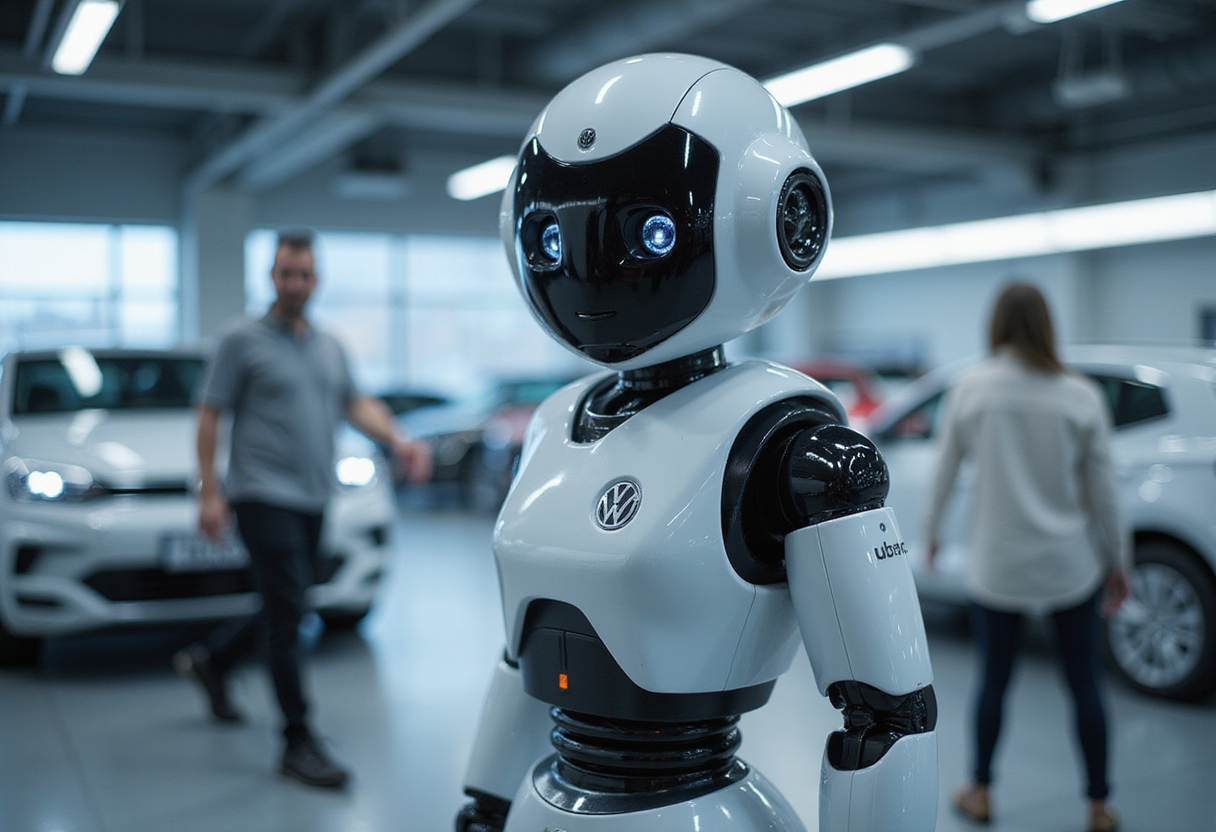
UBTECH Robotics will deploy humanoid robots into logistics operations at FAW Volkswagen, the Chinese-German joint venture (a 50-50 partnership between FAW Group and Volkswagen AG) that builds VW-brand vehicles in China. The deal, reported by Mjengo Hub, marks UBTECH's clearest automotive logistics commitment to date. Neither side has disclosed how many robots will deploy, which plants are in scope, or when operations begin.
What does this change for FAW Volkswagen?
The deal moves a high-volume OEM (original equipment manufacturer — the company whose badge goes on the finished car) from humanoid pilot testing into live logistics deployment. FAW Volkswagen runs assembly plants at Changchun, Chengdu, Foshan and Tianjin, producing VW-brand sedans and SUVs for the Chinese market. Plant logistics — parts movement from warehouse to line, container unpacking, finished-vehicle staging — runs at volume.
For the JV, the open question is whether bipedal humanoids (two-legged walking robots with arms and a torso) can hold up in mixed indoor-outdoor yards against wheeled AGVs (automated guided vehicles, the driverless carts that already handle most plant-floor transport). UBTECH has pitched the humanoid form for its ability to use stairs, ride elevators, and slot into existing warehouse layouts without new racking. Whether that promise survives FAW Volkswagen's throughput targets is the real test.
What does this change for UBTECH?
For the Shenzhen-based maker, the FAW Volkswagen name is reference-customer weight. Other Chinese automakers and Tier 1 suppliers (the largest component vendors, who sell directly to OEMs) have watched UBTECH's earlier humanoid pilots closely. A live deployment at a JV with VW's brand behind it tightens that signal. Mjengo Hub did not specify whether this is a pilot, a limited deployment, or a fleet rollout.
The classification matters for revenue recognition (when a company can book the sale): hardware sale, multi-year services contract, or robotics-as-a-service (a pay-per-use rental rather than an outright buy). UBTECH's automotive segment will be tracked by analysts for that mix.
What to watch next
Three milestones will define the story. A plant go-live announcement naming a specific site. A unit count — even an order-of-magnitude range — in any subsequent UBTECH disclosure. And scope creep: whether the work expands from inbound parts logistics into line-side delivery or finished-vehicle handling.
Pricing model — purchase, lease, or RaaS (robotics-as-a-service) — will signal whether recurring revenue (steady payments rather than one-off hardware sales) is starting to build. Neither FAW Volkswagen nor UBTECH had commented beyond the Mjengo Hub report at time of publication.
via Google News: Automotive assembly automation (Source)
More from Grace Kim
Show full bio
Staff writer covering people, launches and day-to-day practice in Automotive manufacturing and vehicle production at Autoplant Brief.
168 articles