ECO-7877 · REV Z · effective October 9, 2026
Auto Industry PolicyRELEASEDEngineering notice
Trump: tariffs saved US auto industry, Ford plant runs 24/7
President Donald Trump said his tariffs "saved" the US auto industry and pointed to a Ford assembly plant running three shifts a day. He paired the claim with calling Canada "the worst" trade partner.
Scope of change
- Trump said his tariffs "saved" the US auto industry and cited a Ford assembly plant operating three shifts, seven days a week
- Trump called Canada "the worst" trade partner in the same remarks
- The specific Ford plant under 24/7 operation has not been publicly identified
- Ford has not confirmed that the 24/7 schedule is linked to tariff effects
- Verification remains open for line speeds, shift counts, and supplier-tier support at the cited plant
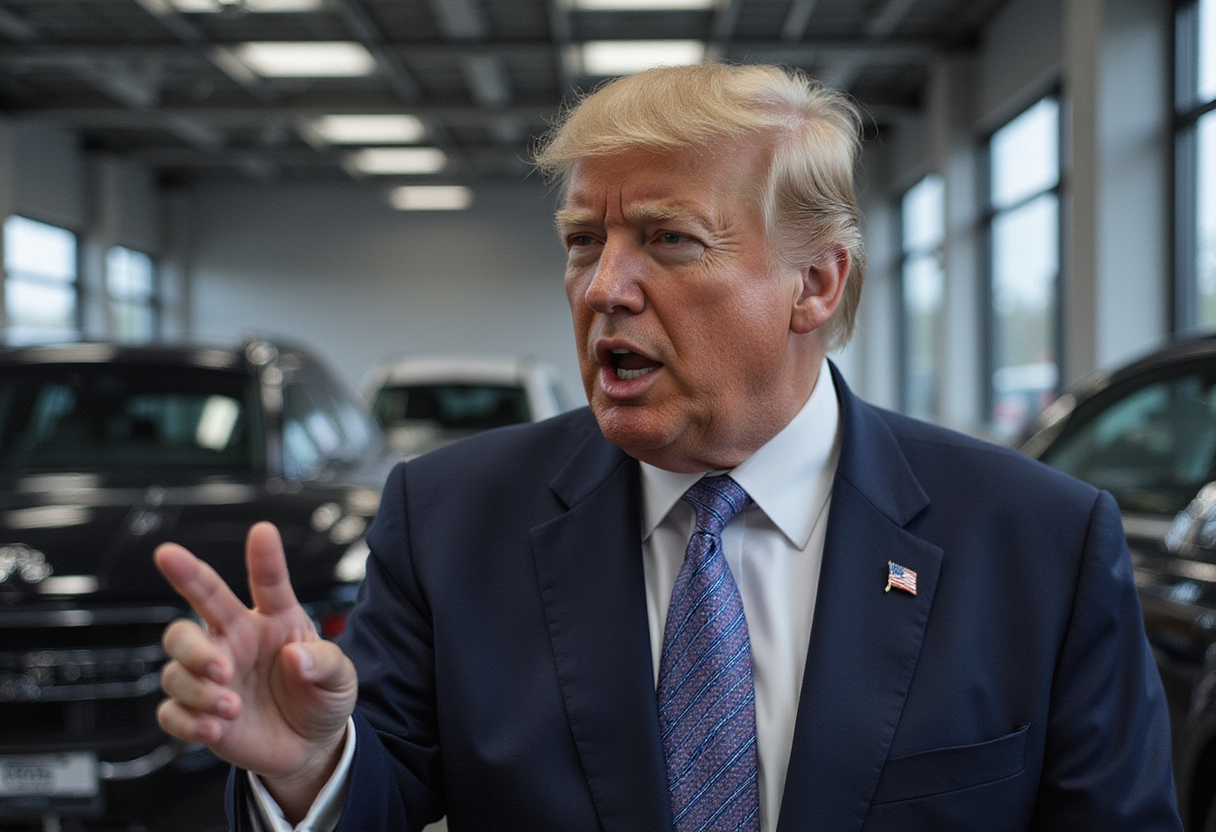
A Ford assembly plant operating three shifts, seven days a week has become the centerpiece of President Donald Trump's claim that his tariff policies have "saved" the US auto industry — a statement he paired with calling Canada "the worst" trade partner.
Trump's remarks point to continuous operation at a Ford Motor Co. facility as evidence of a manufacturing revival driven by trade policy. The specific plant has not been publicly identified, and Ford has not issued a confirming statement on the 24/7 schedule linked to tariff effects.
Around-the-clock production is not unusual at high-volume US assembly plants, particularly during new model launches or constrained-supply periods when manufacturers run additional shifts to address order banks. Without the plant name and the period covered, the 24/7 schedule is consistent with normal demand-cycle planning rather than a tariff-driven inflection.
Trump's "saved" framing is a political claim. It assigns credit to a single policy lever — tariffs — for outcomes that depend on product cycles, labor agreements, supplier capacity, and consumer demand. Trade-press editors treat such claims by checking them against operating data: line speeds, shift counts, headcount, and capital deployment.
What can be verified
Three checks matter. First, Ford's disclosure of which assembly plant runs 24/7 and for which product. Second, whether the schedule predates the tariff actions now in force. Third, whether supplier-tier operations — stamping, powertrain, seats, electronics — support a continuous-assembly tempo or run below it.
Ford operates multiple US assembly plants, and continuous operation at a single facility does not establish an industry-wide trend. It does, however, move the political narrative closer to verifiable shop-floor reality.
Why is Canada the target?
Calling Canada "the worst" sits uneasily with the operational reality of the integrated North American auto sector. USMCA permits duty-free movement of most vehicles and parts between the US, Mexico, and Canada, and Canadian-built vehicles and components feed US assembly lines daily.
Retaliatory tariffs from Ottawa, when applied, raise costs at the integrated facilities the tariff policy is meant to protect. Whether the 24/7 Ford line builds products that cross the Canadian border at any stage of the supply chain is one of the easier facts to verify — and one that would either support or undercut Trump's framing.
What to watch next
Industry readers should track four signals. The identification of the specific Ford plant under continuous operation. Ford's confirmation, or non-confirmation, that tariff costs or pricing effects drive the schedule. Operating disclosures from competing US plants run by General Motors and Stellantis. And any policy move that escalates or pauses tariff actions in the weeks ahead.
If the 24/7 schedule reflects a pre-existing product cycle, the "saved" claim collapses back into rhetoric. If the schedule is new and tariff-driven, the case is harder to dismiss — but still narrower than the headline Trump offered.
via Google News: Auto industry policy (Source)
More from Grace Kim
Show full bio
Staff writer covering industry trends and analytics at Autoplant Brief.
130 articles
Also circulated
- Trump Defends Tariffs, Claims Auto Industry Revival
- Trump Defends Tariff Policy During Michigan Visit to GM
- Trump Defends Tariff Policy, Claims Revival of Auto Manufacturing
- Trump Claims Tariffs Saved U.S. Auto Industry. Data Disagrees
- Trump Escalates Trade Rhetoric on Canada as 'Lesson' Language Hardens Stance