ECO-7828 · REV C · effective September 29, 2026
EV Manufacturing TransitionAPPROVEDEngineering notice
Tesla Semi Production Starts in Nevada: 50,000-Truck Capacity, No Volume Commitment
Tesla starts Semi deliveries from Sparks, Nevada, citing 50,000-unit capacity but no volume or pricing. Outside estimates put 2026 output at 5,000–15,000 trucks.
Scope of change
- Tesla inaugurated its Semi plant in Sparks, Nevada, citing 50,000 trucks/year capacity (roughly 1,000 a week) but disclosing no pricing or production volumes
- The production Semi uses in-house 4680 cells in an 822kWh pack, with consumption cut to about 1,700 Wh per mile from the original 2,000 Wh target
- Outside estimates place 2026 Semi deliveries at 5,000–15,000 trucks, well below the plant's stated annual capacity
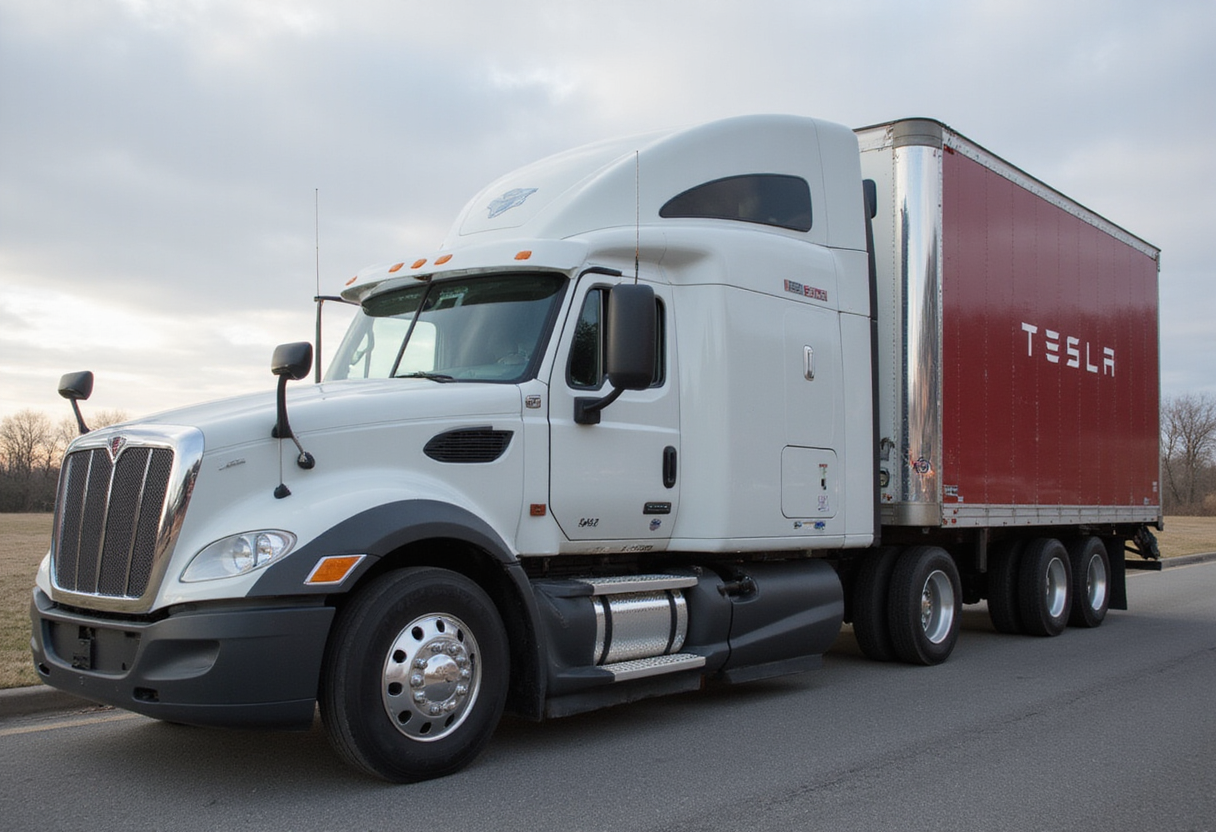
Tesla has begun deliveries of the Semi electric truck from its dedicated plant in Sparks, Nevada, repeating a capacity figure of 50,000 trucks a year — roughly 1,000 a week — while declining to disclose pricing or committed production volumes.
The deliveries came nearly nine years after CEO Elon Musk unveiled the concept in 2017 and coincided with the formal inauguration of the Nevada factory. Reports earlier this year put customer quotes at US$290,000 for the 500-mile Long Range version, up from the US$150,000–US$180,000 Tesla advertised at launch. Even at that price, the Semi undercuts Western rivals: Volvo Trucks' FH Electric can exceed US$450,000.
At least nine customers had trucks staged outside the plant, including PepsiCo, DHL, US Foods, ArcBest, Einride, IMC Logistics, WattEV and OK Produce. PepsiCo, which received the first pilot units in late 2022, now runs dozens of Semis in daily regional service. DHL took its first delivery in December 2025. ArcBest bought units in June after a pilot recorded 1.55 kWh per mile in real-world freight duty.
Einride's 500-truck order in August 2026 remains the largest single Semi commitment to date. Separately, a coalition of cargo owners including Microsoft and PepsiCo selected Tesla this week to help supply 2,500 zero-emission trucks in California, alongside Kenworth, Volvo and RIDE.
What changed under the skin
The production Semi comes in two configurations: a Standard Range trim rated at 325 miles at the full 82,000lb gross combination weight, and a Long Range version rated at 500 miles. Both use an 800kW three-motor drivetrain. Dan Priestley, Tesla's Director of Semi Engineering, said the range figures reflect fully loaded testing rather than reduced payload. Lars Moravy, Vice President of Engineering, said a roughly 60,000lb load could stretch range to about 600 miles.
The truck now runs Tesla's in-house 4680 cells instead of the purchased 2170 cells in earlier test units. That switch sits inside an efficiency push that has cut energy consumption to around 1,700 Wh per mile from the original 2,000 Wh per mile target — letting Tesla fit a smaller, lighter battery pack within an 822kWh capacity without sacrificing range.
Tesla redesigned the drivetrain substantially since 2017. A steel-caged rotor replaces the earlier carbon-fibre-sleeved design, and the stator now shares its bar-wound construction with the Cybertruck. The drive axle is roughly 80kg lighter after engineers eliminated two of three separate oils, leaving a single shared motor and gearbox lubricant that Moravy said should last more than 250,000 miles.
Steering has moved from hydraulic to redundant electric power steering, which Tesla says gives the truck a turning radius close to a Model Y — an explicit design choice for loading docks and tight urban work. The Semi also shares its indirect thermal management system, including pumps, compressors and heat exchangers, with the Cybercab, eliminating long refrigerant lines and moving heat directly between cabin, battery and drive unit.
Charging remains the bottleneck
The 822kWh pack makes charging the program's clearest infrastructure constraint. Tesla's Megacharger system delivers up to 1.2 MW per stall, and the automaker says it will operate more than 30 Semi charging stations with over 200 megawatt-capable posts by year-end. At the inauguration event, Tesla demonstrated a 3% to 60% charge in around 30 minutes. The company also claims fleet uptime above 98%, against an industry average of 90%–95% for diesel Class 8 trucks — though Tesla's record on internal data claims invites scrutiny.
The gap between demonstrated capability and actual output is the open question. Tesla's July shareholder letter pushed volume production into 2026 without confirming when the Sparks plant might approach its 50,000-unit annual capacity in its first year. Outside estimates are more moderate, placing 2026 deliveries somewhere between 5,000 and 15,000 trucks. That means the partially leaked order book will take considerably longer to fulfil.
US diesel prices above US$6.50 a gallon — nearly double year-ago levels — give Tesla's total-cost-of-ownership pitch unusually strong timing. Converting that cost advantage into fleet purchase decisions still depends on Tesla delivering the volume its customers have ordered, a test the company has repeatedly missed since first promising production in 2019.
What to watch next: whether the Nevada plant posts a verifiable weekly output figure, when Tesla confirms pricing for the Standard Range trim, and whether the promised 30-station, 200-post Megacharger network materialises by year-end.
via Automotive World (Source)
More from Sophie Lindqvist
Show full bio
Correspondent covering business strategy at Autoplant Brief.
97 articles