ECO-5919 · REV V · effective September 30, 2026
Suppliers & Tier-1sRELEASEDEngineering notice
Robots Take Over Airbag Sensor Assembly Lines
Assembly Magazine reports robots are now assembling airbag sensors — precision safety components where zero-defect tolerances and high vehicle-linked volumes rule out manual variation.
Scope of change
- Assembly Magazine reports robots now automate assembly of airbag sensors
- Airbag sensors are safety-critical, zero-defect components with volumes tied to vehicle output times multiple sensing points per vehicle
- Report does not specify supplier, plant location, cycle times or volumes — claims pending verification against production data
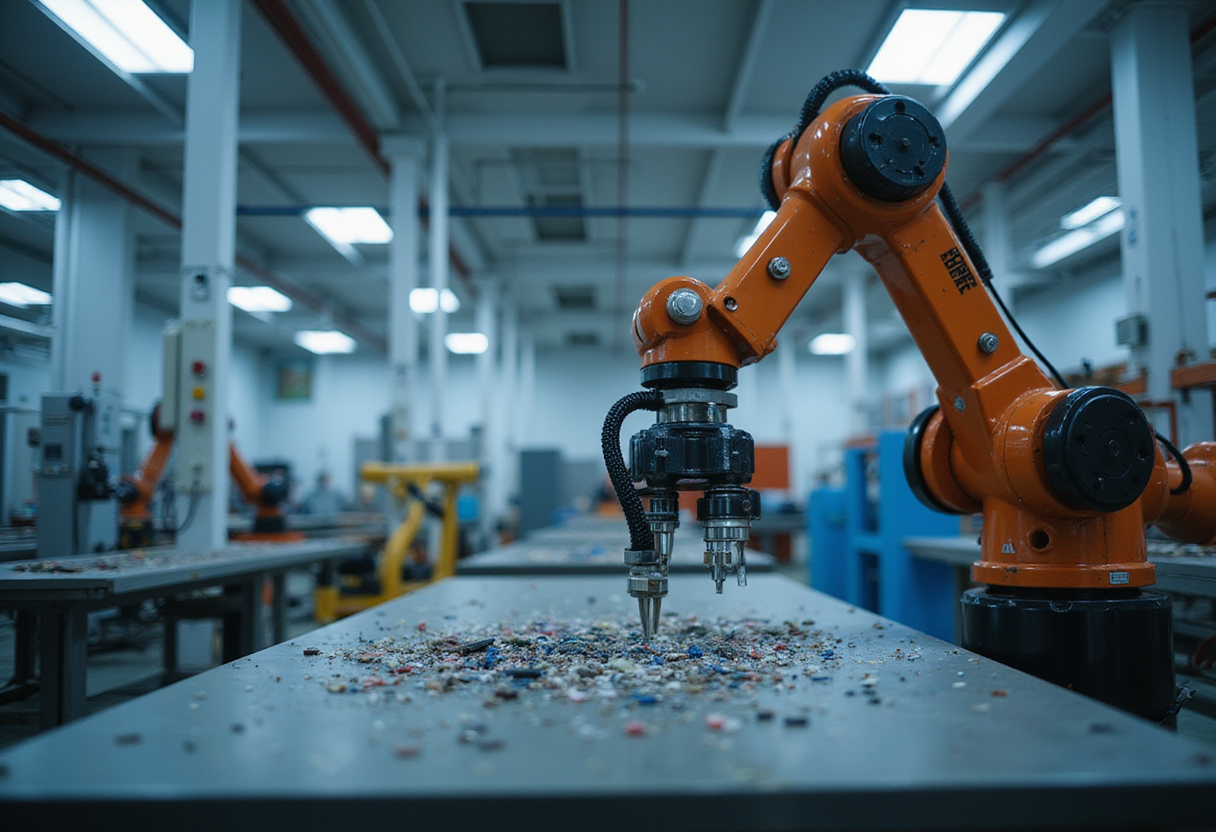
Assembly Magazine has reported on the use of robots to automate the assembly of airbag sensors — a process that sits at the intersection of two hard constraints in automotive manufacturing: safety-critical tolerances and high-volume throughput.
The trade publication's report focuses on how robotic systems handle sensor assembly work that, for decades, depended on manual operators or dedicated fixed automation. Airbag sensors are small, precision electromechanical components. They must detect a crash event within milliseconds and trigger the supplemental restraint system. That functional requirement drives tight tolerances on every assembly step — placement, joining, and testing — and leaves little room for process variation.
Automation at this level matters for several reasons worth tracking for any plant producing safety-critical components.
First, robot-driven assembly removes operator-to-operator variation from a zero-defect process. A sensor built incorrectly may not reveal the failure until it is needed in a crash. Inline, automated assembly and verification — rather than downstream sampling inspection — is the direction safety-component production has moved for years. Reports like this one suggest the approach is extending further into smaller, high-volume parts such as sensors.
Second, airbag sensor volumes track vehicle production almost one-to-one, multiplied by the number of sensing points per vehicle. Modern vehicles carry multiple crash sensors — front, side, and occupancy-detection elements — so a plant supplying several OEM programs faces relentless takt pressures. Robots assemble without fatigue and hold cycle time steady across shifts, which is precisely why Tier 1 and Tier 2 suppliers of restraint-system components have invested heavily in this class of automation.
Third, the piece points to a broader shift in how small-component assembly gets automated. Sensor assembly once required custom-built machinery for each part. Modern approaches pair standard industrial robots with vision systems, force sensing, and flexible fixturing, letting suppliers reprogram rather than rebuild when a sensor design changes. For suppliers balancing multiple OEM programs on shared lines, that flexibility is the difference between a two-week changeover and a two-month one.
The report does not specify which supplier implemented the robotic cells, the plant location, cycle times achieved, or the volumes involved — details that would let readers benchmark the deployment against industry norms. As always with supplier-side automation announcements, the claims of throughput and quality gains are worth testing against actual production data once the lines are running at rate.
What to watch next: whether the robotized assembly approach spreads to adjacent restraint-system components such as seat-belt tensioner sensors and pressure sensors; whether OEMs adjust sourcing requirements to favor suppliers with fully automated, traceable sensor assembly; and how quickly vision-guided placement tolerance continues to tighten as sensor packages shrink.
via Google News: Automotive assembly automation (Source)
More from Grace Kim
Show full bio
Staff writer covering industry trends and analytics at Autoplant Brief.
82 articles
Also circulated
- Assembly Magazine Reports Robots Taking On Difficult Automotive Assembly Task
- Bad Bins Are Breaking Car-Factory Automation Plans
- Humanoid robots reach factory floors at BMW, Tesla and Mercedes
- Global Factory Robot Population Passes 5 Million Units, IFR Says
- JPB Systeme's BOLTRAKK Checks Bolt Tightness Without Teardown