ECO-2191 · REV X · effective November 19, 2026
Automation & RoboticsRELEASEDEngineering notice
Repair Time Cut From 30 to 10 Minutes: New Welding Tech Targets Downtime
Comau's N-WG gun cuts repair time from 30 to 10 minutes, while Lincoln Electric's XpertLINC platform aims to replace robot programming with physical AI. Four new welding tools explained.
Scope of change
- Comau's N-WG spot welding gun reduces average repair time from 30 minutes to 10 minutes
- The N-WG delivers force repeatability within ±20 decanewtons and supports 380–480 V power configurations
- PHD's Series PFD pneumatic frame clamp delivers up to 4,581 pounds of clamping force
- ESAB's Rogue ET 230iP offers four AC waveshapes and adjustable frequency from 50 to 150 hertz
- Lincoln Electric's XpertLINC automates robotic welding without conventional programming
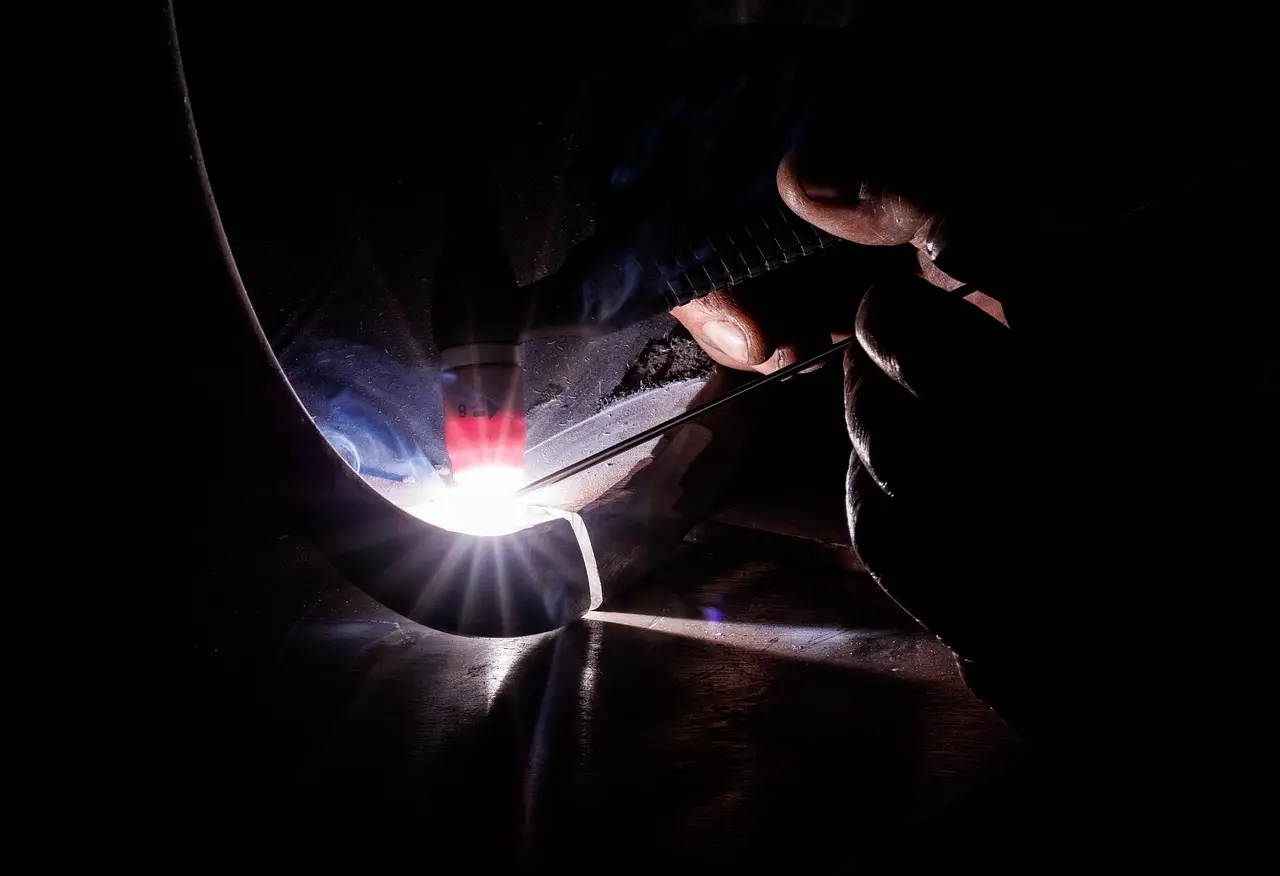
A spot welding gun that cuts average repair time from 30 minutes to 10 minutes leads a wave of new welding and clamping equipment aimed squarely at plant downtime, programming cost and tooling flexibility. Comau, Lincoln Electric, PHD Inc. and ESAB have each launched products intended for automated automotive and heavy fabrication environments, and each vendor's claim rests on measurable parameters rather than software promises.
How does 'physical AI' remove robot programming?
Lincoln Electric has introduced XpertLINC, a platform the company describes as physical AI (artificial intelligence applied to real-world sensing and motion rather than pure software). The system combines vision, coordinated motion, process control and welding expertise to automate robotic welding without conventional programming.
The mechanism works in steps. An operator identifies the start and end points of a weld. XpertLINC then scans the part to determine actual joint geometry and assess fit-up conditions. Using Lincoln Electric's welding process expertise and customer-defined welding procedure specifications, the system establishes the robot's motion and welding parameters. During welding, the platform dynamically adjusts the robot's path and process settings to accommodate variations in parts and joint geometry, and it can flag out-of-specification parts for review and corrective action. In effect, the system replaces teach-pendant programming with scan-and-weld adaptation, which matters most on lines with high part variation.
What does the Comau gun change on the line?
Comau's N-WG spot welding gun uses a single-body, modular architecture designed to reduce spare parts requirements and support both X- and C-type gun configurations. It is compatible with major robot brands, and fast arm exchange with universal mounting allows manufacturers to change tooling without stopping production.
The performance figures are specific. The gun delivers force repeatability within ±20 decanewtons (200 newtons) across its operating range and supports power configurations from 380 to 480 volts. The simplified mechanical design gives direct access to components, which Comau says reduces average repair time from 30 minutes to 10 minutes — a two-thirds cut that compounds quickly on high-volume automotive lines. An advanced cooling system is designed to minimize pressure loss and water consumption.
How much clamping force do fabricators gain?
PHD Inc. has launched the Series PFD pneumatic frame clamp for heavy fabrication and welding applications. The cam-driven clamp delivers up to 4,581 pounds of clamping force across a wide operating pressure range. Wide jaw opening and optional long jaw configurations accommodate large and complex weldments, while modular jaws and removable weld covers simplify maintenance and allow tooling modification as requirements change. The clamp is field repairable, which removes the need to ship units back to the manufacturer.
Where does the new TIG welder fit?
ESAB's Rogue ET 230iP AC/DC TIG/stick welder targets aluminum and stainless steel work on thin metals. The machine offers four AC waveshapes — square, soft square, sinusoidal and triangle — letting operators adjust arc stability, heat input, penetration and bead characteristics. Adjustable AC frequency from 50 to 150 hertz adds control over arc concentration and bead width. A 5-inch color display is designed to simplify setup and operation.
These are vendor claims, and each warrants verification against production data before adoption. What to watch next: which automotive tier-one suppliers first deploy XpertLINC on high-variation weld lines, and whether Comau's 10-minute repair figure holds in third-party plant trials.
via lincolnelectric.com (Original)
More from Sophie Lindqvist
Show full bio
Correspondent covering money, funding and market shifts around Automotive manufacturing and vehicle production at Autoplant Brief.
318 articles
Also circulated
- Queretaro Researchers Report 95.8% Accuracy on Spot Weld AI Inspection
- ABB Claims AI Robot Trainer Cuts Commissioning Time by Up to 90%
- DGH books second AI weld-inspection cell at French automaker
- Real-Time Measurement Moves Laser Weld Verification Into EV Production
- Humanoid robots reach factory floors at BMW, Tesla and Mercedes