ECO-7627 · REV D · effective October 19, 2026
Automation & RoboticsRELEASEDEngineering notice
Purpose-Built Robots Beat Humanoids for Most Factory Work, IFR President Says
IFR President Jane Heffner says purpose-built machines beat humanoid robots for most factory work, with mobile arms already delivering humanoid-style flexibility today.
Scope of change
- IFR President Jane Heffner: purpose-built machines are faster, safer and more reliable than human-form robots for most factory work
- Existing robot arms on mobile platforms already deliver multi-location manipulation without humanoid technology
- Safety standards for dynamically stable bipedal robots remain under development
- Much humanoid development is still prototype and concept work; production deployment 'is going to take a little bit of time'
- Humanoids may suit low-volume tasks in facilities designed around human-scale spaces
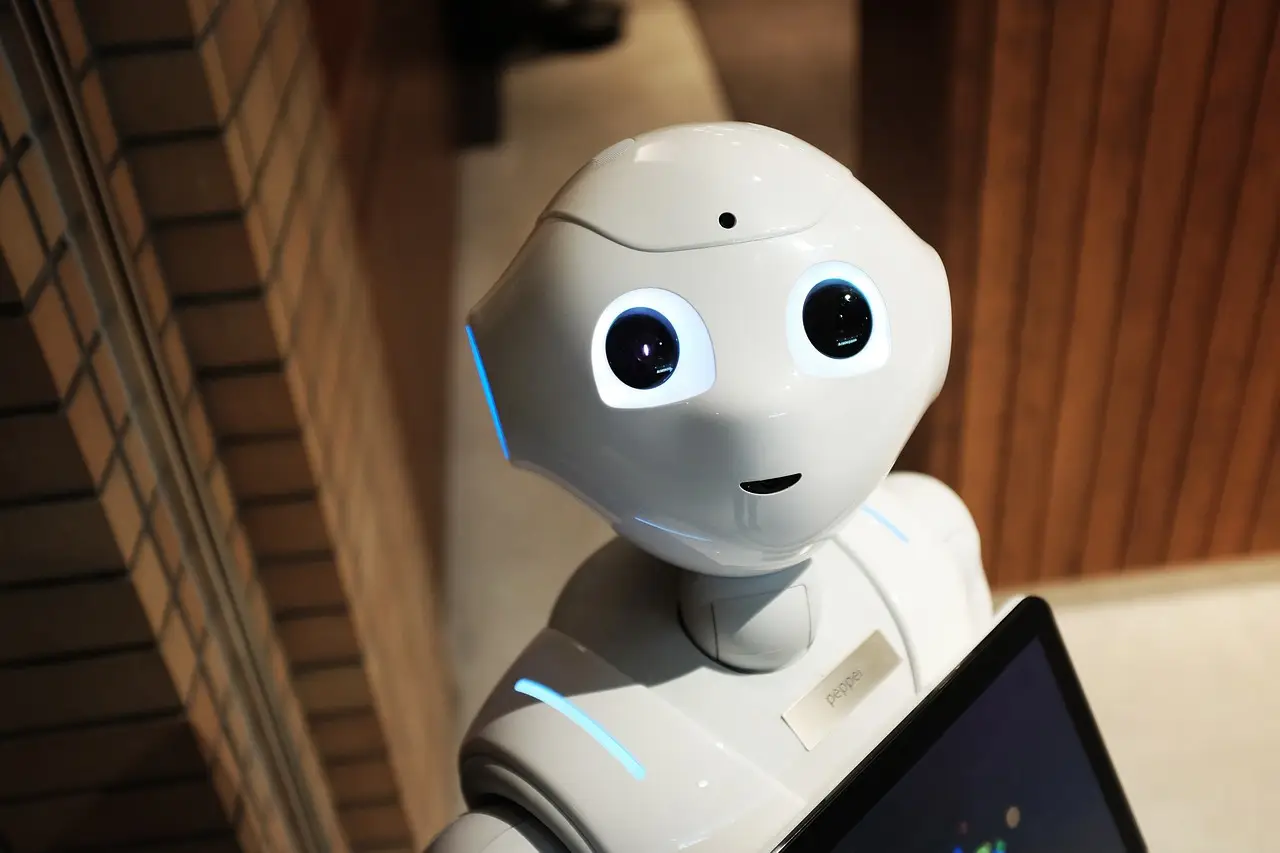
Most factory work will run faster, safer and more reliably on purpose-built machines than on human-shaped robots, according to Jane Heffner, president of the International Federation of Robotics (IFR), the global robotics industry statistics body.
Heffner laid out her position in the debut episode of Robots Today, a companion series to ASSEMBLY's The Future Is Robotic, which releases new episodes monthly on AssemblyMag.com. Her comments give plant engineers a framework for weighing humanoid investments against proven automation.
What does the humanoid push change for manufacturers?
Heffner credited humanoid development with advancing the field in three concrete areas: vision, grasping and manipulation. It is also accelerating a design philosophy that matters on real floors — robots that move to the work and perform multiple tasks, rather than staying bolted in one location.
But she drew a firm line between those gains and a humanoid-dominated factory.
"For most factory work, I think a purpose-built machine is faster, safer, and much more reliable than a human form," Heffner said.
Her practical point for production planners: existing technology already delivers humanoid-style flexibility. Proven robot arms mounted on mobile platforms bring manipulation to different locations today, without waiting for humanoid technology to mature.
Where safety standards still lag
Safety remains a second constraint. Heffner said humanoid safety engineering is still in its early stages, particularly for dynamically stable robots (machines that balance actively while moving) operating around people.
Two factors compound the problem. Bipedal motion is inherently harder to stabilize than wheeled or fixed bases. And the relevant safety standards remain under development, leaving manufacturers without the certification framework they rely on for conventional industrial robots.
Where the human form does pay off
Heffner identified one environment where humanoids could offer a genuine advantage: facilities designed around people. A robot that navigates human-scale aisles, stairs and workstations could automate low-volume tasks without forcing a redesign of the surrounding production line.
That is the business case — retrofit automation for plants where rebuilding the environment costs more than the robot.
"I think humanoids are a part of [the future], but I don't think [the future is] only humanoids. I think we're going to see robots in many, many different forms," Heffner said.
She expects different robot forms to be matched to the tasks they handle best, with humanoids complementing other automation rather than replacing it.
What to watch next
Timing matters most. Much of humanoid development remains at the prototype and concept stage, and Heffner was explicit that production-scale deployment is a separate hurdle.
"A lot of the humanoid development right now is in prototype work. It's in concept work. But actually going to production, I think, is going to be a big step. And I think that's going to take a little bit of time," Heffner said.
For manufacturing practitioners, the near-term watch items are concrete: the maturation of safety standards for dynamically stable robots, the first production-line humanoid deployments beyond demo cells, and whether mobile-arm combinations capture the flexibility use case first.
By Marcus Bennett
via bnpmedia.com (Original)
More from Marcus Bennett
Show full bio
News editor covering regulation, policy and their impact on Automotive manufacturing and vehicle production at Autoplant Brief.
212 articles