Effective November 27, 2026
Suppliers & Tier-1sEngineering notice
Phinia agrees $160m FMP brake deal, forecasting $120m annual sales
Phinia will pay about $160m for FMP Group’s brake-component assets and Bendix rights in Australia and selected Asia-Pacific markets, targeting first-half 2027 completion.
Scope of change
- Phinia agreed to acquire FMP Group’s core assets for approximately $160m using available liquidity.
- Phinia forecasts about $120m in annual revenue and $23m in annual adjusted EBITDA from the acquired business.
- The transaction covers assets in Australia, Thailand and Malaysia, including Bendix rights in selected Asia-Pacific markets.
- Completion is scheduled for the first half of 2027, subject to insolvency proceedings, regulatory approvals and customary closing conditions.
- FMP entered voluntary administration late last month, with Grant Thornton and FTI Consulting appointed to the respective insolvency roles.
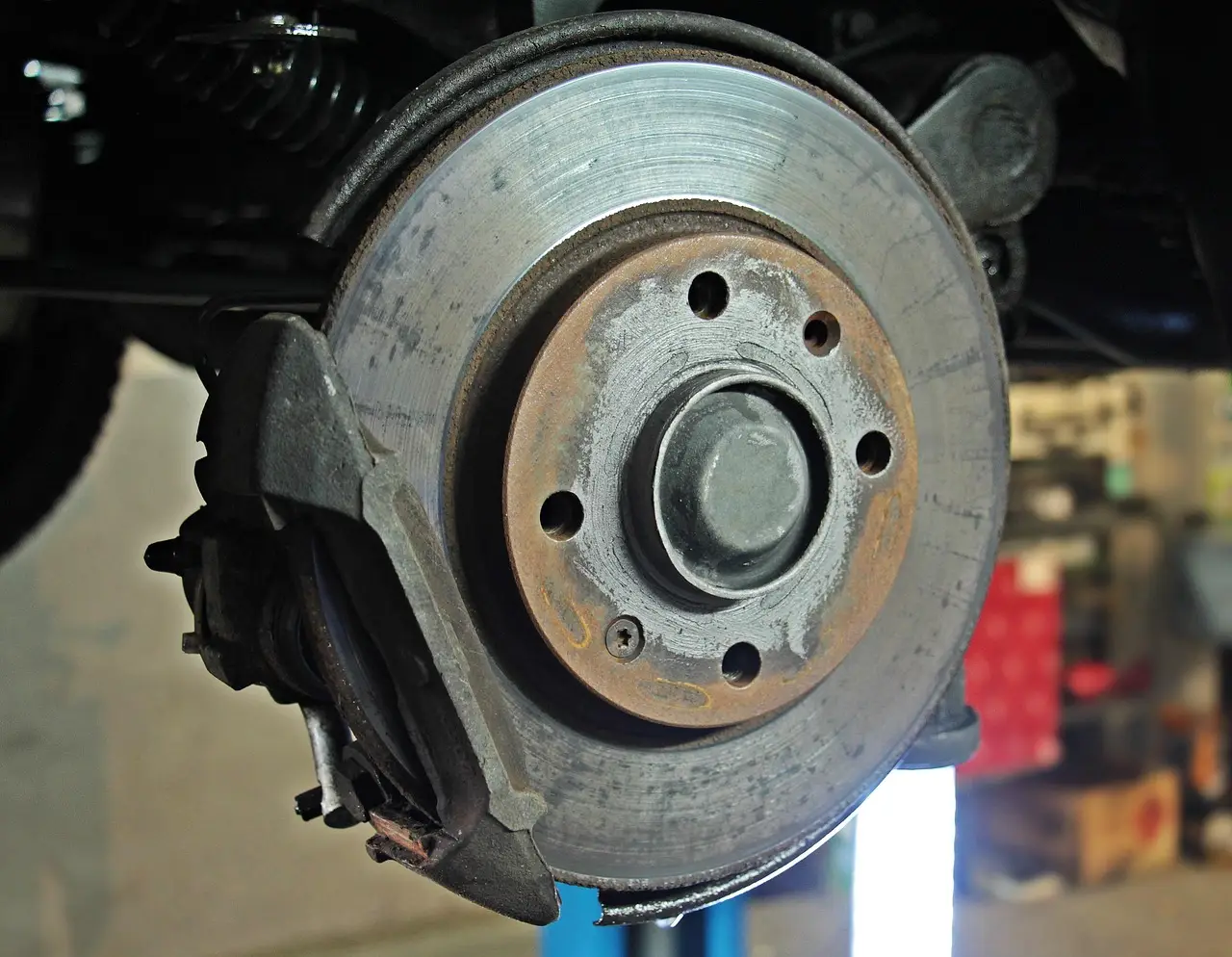
The $160 million agreement covers FMP Group’s core operational assets, capabilities and brand rights, with Michigan-based U.S. automotive supplier Phinia using available liquidity. It spans assets in Australia, Thailand and Malaysia, but completion remains conditional and is scheduled for the first half of 2027.
What does the $160 million transaction include?
Phinia will acquire specified operating assets and rights to the Bendix brand in Australia and selected Asia-Pacific markets. The brake portfolio covers light passenger vehicles, commercial vehicles, motorcycles and speciality applications, giving Phinia a regional aftermarket (replacement-parts) platform.
The acquired operations are vertically integrated, meaning Phinia will control development, testing, manufacturing and distribution through in-house functions. The announcement identifies no original-equipment-manufacturer (OEM) customer, vehicle-program allocation or supplier-tier classification for FMP. It also gives no plant capacity or unit-output target for the assets in Australia, Thailand and Malaysia.
Phinia forecasts that the acquired business will generate approximately $120 million in annual revenue and $23 million in annual adjusted EBITDA (earnings before interest, taxes, depreciation and amortization). Phinia expects the transaction to be accretive to earnings, meaning it expects earnings to increase. These figures are management projections, not verified production or cash-flow results.
On Phinia’s forecasts, the $160 million consideration equals roughly seven times the acquired business’s annual adjusted EBITDA. Phinia disclosed neither purchase-price allocation nor capital-spending and working-capital requirements for the acquired operations. That leaves the cash demands of integration and the utilization of the manufacturing sites unstated.
How does insolvency shape the deal?
FMP Group entered voluntary administration, a formal insolvency process, late last month. Grant Thornton was appointed as joint administrators, and FTI Consulting as receivers and managers.
Under the asset-acquisition structure, Phinia assumes specified operating liabilities. Historical asbestos liabilities and certain other legacy obligations remain with the sellers and are explicitly excluded from the transaction.
Completion requires confirmatory insolvency proceedings, regulatory approvals and other customary closing conditions. The first-half 2027 schedule therefore remains a target, and the announcement specifies no exact closing date.
What does Phinia bring to the transaction?
Michigan-based Phinia manufactures fuel systems, electrical systems and aftermarket components for the passenger, commercial and industrial vehicle sectors. The company operates more than 40 locations across 21 countries and employs about 13,500 people.
Late last month, Phinia posted financial results for the third quarter ended September 30, 2026. Net sales increased 0.4% to $912 million, while sales excluding foreign-currency movements were flat year over year.
Net earnings reached $67 million, or $1.80 per diluted share. Adjusted net earnings were $68 million, or $1.83 per adjusted diluted share, compared with $1.59 in the prior-year period.
Why did Phinia pursue FMP?
Phinia president and CEO Brady Ericson said: “In line with our stated strategy, we continue to be disciplined and focused on acquisitions that strengthen our business at the right price. This transaction meets that standard and is an attractive business acquired at a compelling valuation.”
Ericson added: “This acquisition gives our aftermarket business a strong regional platform, while preserving the financial flexibility to support our other capital allocation priorities. We look forward to welcoming the FMP Group team to Phinia.” His comments position the deal as an aftermarket expansion and a capital-allocation choice, rather than a disclosed production-capacity addition.
What should observers watch next?
The first test will be whether confirmatory insolvency proceedings and regulatory approvals allow the transaction to close during the first half of 2027. The second is whether the acquired operations approach the $120 million revenue and $23 million adjusted EBITDA forecasts while operating under Phinia’s ownership. Closing, performance against those forecasts and final implementation of the liability exclusions are the next measurable milestones.
via just-auto (Source)
More from Sophie Lindqvist
Show full bio
Correspondent covering money, funding and market shifts around Automotive manufacturing and vehicle production at Autoplant Brief.
346 articles
Also circulated
- Phinia raises 2026 guidance, cites six global business awards
- Opel Pays Leapmotor €100 Million to Engineer 2028 C-Segment SUV
- JSW Motors plans 500,000-unit plant and 50-plus PHEV agreements
- Stellantis and Tata Sign Definitive Deal for India-Built Exports
- Rivian lifts 2026 delivery guidance to 67,000-70,000 after 38% revenue jump