Effective September 26, 2026
EV Manufacturing TransitionEngineering notice
Mercedes-Benz gains preferential access to ProLogium Gen4 battery cells for testing
Mercedes is testing ProLogium's Gen4 ceramic solid-state cells with no series decision yet; Dunkirk plant targets 4 GWh by 2030, scaling to 44 GWh.
Scope of change
- Mercedes has begun testing ProLogium Gen4 solid-state cells with no series-production decision made.
- Mercedes invested a high double-digit million euro amount in ProLogium in 2022; the partnership began in 2016.
- ProLogium's Dunkirk gigafactory targets 4 GWh annual capacity by 2030, with up to 44 GWh planned long-term.
- Mercedes also holds a stake in US solid-state developer Factorial Energy, invested in 2021.
- ProLogium has not disclosed energy density or charging power figures for the cells under test.
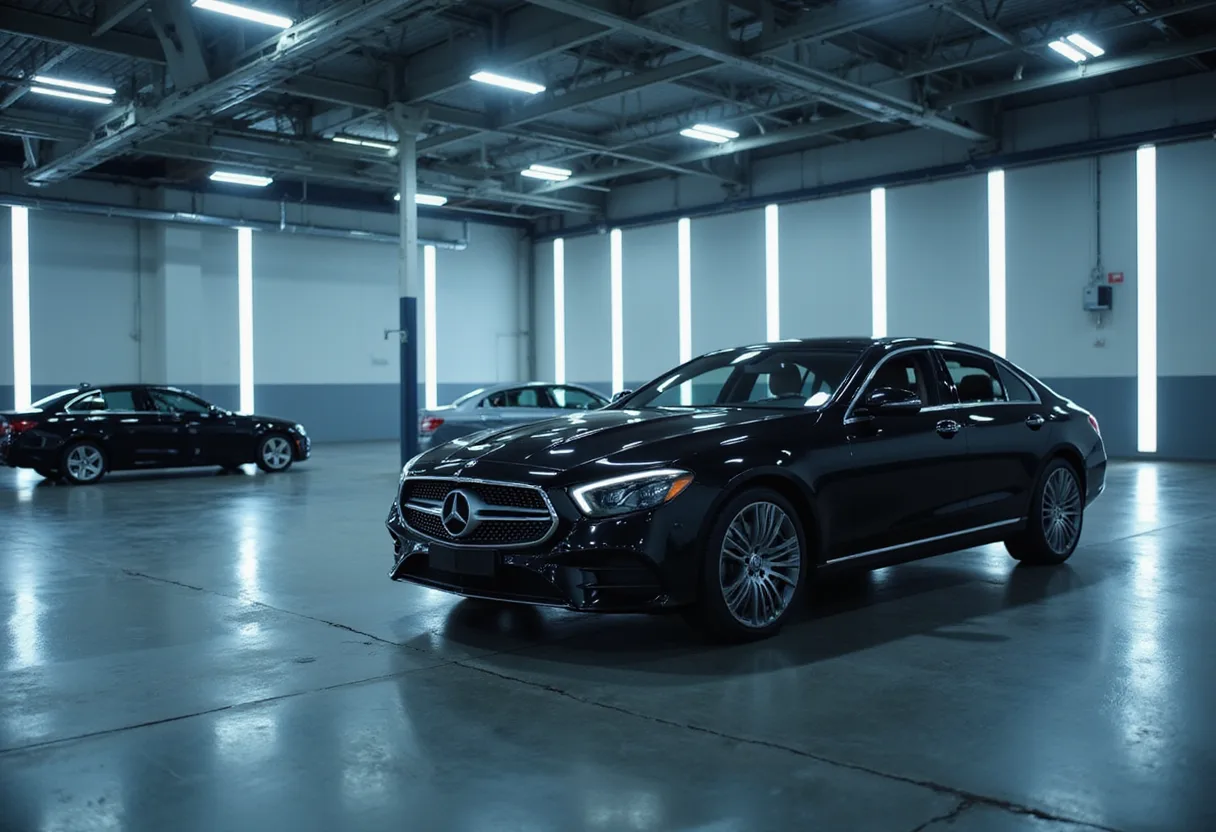
Mercedes has started testing ProLogium's Gen4 cells, the Taiwanese developer's Superfluidized Inorganic Next-Generation Lithium Ceramic Battery, at its own facilities and at specialised external institutes. No decision on series production has been made. The tests will first establish whether the technology is fundamentally suitable for future Mercedes models.
The automaker will examine the cells electrically, thermally and for safety. ProLogium claims its Gen4 cells deliver high energy density, fast-charging capability, high power output and strong low-temperature performance. The company has not disclosed specific figures for energy density or charging power for the cells now under test.
What does the safety concept involve?
ProLogium bases its safety architecture on a non-flammable inorganic electrolyte (a solid material that replaces the liquid electrolyte of conventional lithium-ion cells), ceramic separators, and its own active safety concept. The inorganic electrolyte addresses the single largest failure mode of liquid-electrolyte cells: thermal runaway after an internal short circuit.
These remain supplier claims until Mercedes publishes validation results. The Stuttgart carmaker has said only that it is testing; it has not confirmed any performance data of its own.
How deep does the partnership go?
The relationship dates back to 2016. In 2022, Mercedes invested a high double-digit million euro amount in ProLogium and agreed on joint cell development. At that point, the automaker already envisaged using the technology in selected models. Since then, the cooperation has expanded. According to ProLogium, the partners have tested pouch and prismatic cell formats as well as bipolar technology (a stacking method in which cells share current collectors, raising pack-level energy density).
Mercedes remains a strategic investor and holds a seat on ProLogium's Board of Directors. That governance position gives the automaker direct visibility into the developer's industrialisation progress, an arrangement comparable to its stake-based influence at other battery partners.
Is ProLogium Mercedes' only solid-state path?
No. In parallel, Mercedes is pursuing other development routes for solid-state batteries. As early as 2021, it invested in the US developer Factorial Energy and entered a development cooperation there as well. The new testing agreement with ProLogium is therefore one element of a broader technology portfolio, not a commitment to a single cell approach.
Where can ProLogium actually build?
ProLogium has so far produced its cells primarily at its Taoke Gigafactory in Taiwan. The company states it has validated GWh-scale production there and manufactures C-samples (near-series prototype cells) and cells for demonstration vehicles.
In Europe, ProLogium is building a Gigafactory in Dunkirk, France. The first phase is designed for 4 GWh of annual capacity, to be reached gradually by 2030. In the long term, the site is planned to scale to 44 GWh. To put that in perspective, the long-term Dunkirk figure approaches the output of a large single-site battery plant serving several vehicle programmes.
What to watch next
For Mercedes, the agreement carries supply-chain weight beyond the technical results. If Gen4 technology proves itself in testing, ProLogium could supply cells from its European production in Dunkirk, shortening the logistics chain for future Mercedes plants. The companies have not announced a concrete timeline for series production or specific vehicle platforms.
The milestones to track are threefold: the outcome of the electrical, thermal and safety validation now under way; any disclosure of hard energy-density and fast-charging figures for the Gen4 cells; and the construction progress at Dunkirk as the 4 GWh first phase builds toward its 2030 target. Each of those will indicate whether this moves from a development partnership toward a production commitment.
via prologium.com (Original)
More from Daniel Okafor
Show full bio
Senior reporter covering regulation, policy and their impact on Automotive manufacturing and vehicle production at Autoplant Brief.
372 articles
Also circulated
- AMG Lithium expands Frankfurt lab to 1,100 sq m for solid electrolyte cell testing
- ProLogium and Rimac target 2028 for first solid-state vehicle tests
- Gelion Signs Material Transfer Deal with Top-15 Global Automotive OEM
- CATL reaches 20 Ah solid-state samples, pilot line still set for 2027
- Maryland team links fast-charge slowdown to electrode drying