ECO-7898 · REV C · effective November 5, 2026
EV Manufacturing TransitionAPPROVEDEngineering notice
LG Energy Solution runs 10th global battery research contest
LG Energy Solution's 10th battery research contest closes 6 December 2026, after about 50 projects since 2017, while 46100-cell plans for Mercedes-Benz remain unconfirmed.
Scope of change
- LGES says it has funded around 50 research projects since the contest launched in 2017.
- The 10th contest has two categories and a two-stage application process through BRIDGE.
- Applications have been accepted since 29 October; the submission deadline is 6 December 2026.
- LGES cites a pending BMS-model patent and a room-temperature solid-state result published in Science in 2019.
- Unconfirmed 46100-cell plans point to 2027 production preparation and 2028 Mercedes-Benz EV deliveries.
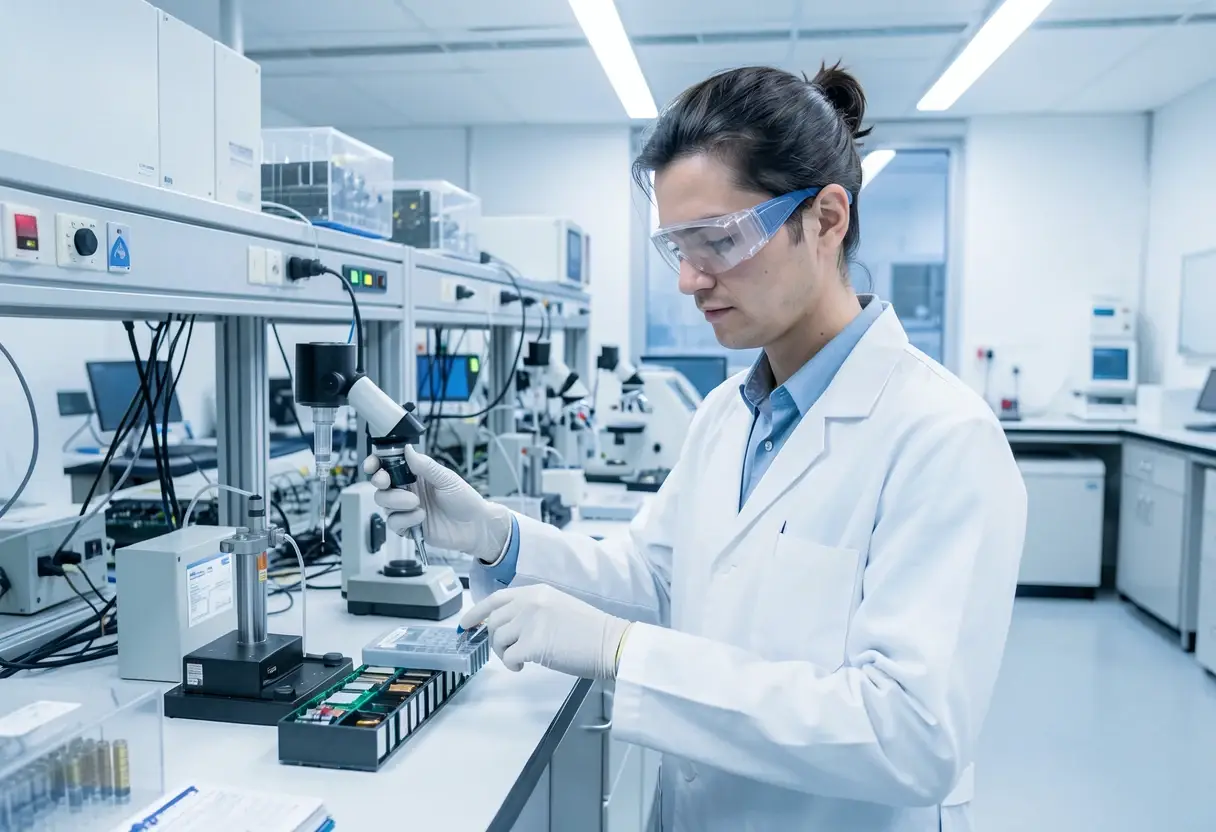
LG Energy Solution (LGES) says it has funded about 50 battery research projects since the competition launched in 2017, while its 10th Battery Innovation Contest is accepting applications from universities and research institutions worldwide.
The company is seeking projects “with commercial potential,” according to its announcement. It has accepted applications since 29 October through BRIDGE, its in-house innovation platform. The window closes 6 December 2026, and researchers can submit through bridge.lgensol.com.
What is the contest seeking?
The 10th edition splits research into two categories:
- Thematic Call: LG Energy Solution’s product-development departments define the topics, spanning battery materials, cells, battery-management systems and artificial-intelligence applications. The company says the number of specified topics was “significantly increased” for this edition.
- Open-Topic Call: Researchers can propose their own approaches across battery technology, bringing outside ideas into the company’s effort to address specific industry challenges.
LG Energy Solution says the contest should strengthen collaboration between industry and academia and accelerate practical use of new technology. That is a stated objective, not a measured result.
LGES uses a two-stage application process to protect research ideas. Applicants first submit a brief project outline. Only after pre-selection does the company request full proposals, while BRIDGE handles submissions and project management. The announcement does not reconcile whether the 6 December deadline applies to outlines or full proposals.
Several commercial details remain absent. LGES has disclosed no winner count, award value, judging timetable or shortlist date. It also has not said how many of the roughly 50 projects supported since 2017 reached commercial production.
What happened with earlier research?
The company says the competition has supported around 50 projects since its 2017 launch. Particularly promising approaches can move into the Frontier Research Laboratory, a collaborative initiative with universities and research institutions that provides added funding and technical support.
LGES cites two examples of past achievements:
- Battery-management model: LGES cites a physics-based model designed to accelerate battery-management-system calculations. The company says it has a patent application pending.
- Room-temperature solid-state cell: LGES also cites a long-life solid-state battery that can operate at room temperature. The company says Science published the results in 2019.
Neither cited achievement has a disclosed manufacturing site, annual capacity, vehicle award or commercial start date. A patent application and a journal paper also do not establish production readiness.
What is the reported Mercedes-Benz link?
Separately, South Korean battery manufacturer LGES is reportedly set to supply novel 46100 cylindrical cells for future Mercedes-Benz electric vehicles. The report places LGES in the cell-supply tier and Mercedes-Benz in the OEM role, but names no plant or vehicle model.
Production preparations could begin in 2027, with deliveries scheduled for 2028. LGES has not officially confirmed those plans, so the timing remains a reported intention rather than a committed production schedule.
The missing evidence is material. No plant, annual capacity, investment or job count accompanies the report, and the information provided names no Mercedes-Benz model. Researchers should test the claim against tool installation, cell output and future vehicle-launch data.
What should be watched next?
The immediate milestone is the 6 December 2026 submission deadline. Watch whether LGES discloses its pre-selection schedule, full-proposal timetable, funding decisions and whether selected projects enter the Frontier Research Laboratory.
Other proof points include the pending patent decision for the battery-management model and any manufacturing validation of the room-temperature solid-state work. Those steps would show whether published research moves beyond academic results and patent filings.
For the reported Mercedes-Benz supply plan, watch for formal confirmation from LGES or Mercedes-Benz, a named production location and evidence of 2027 preparation for 2028 deliveries. Capacity, investment and model-launch data would determine the program’s commercial scale.
via bridge.lgensol.com (Original)
More from Amara Osei
Show full bio
Market editor covering technology and product news in Automotive manufacturing and vehicle production at Autoplant Brief.
283 articles
Also circulated
- Li Auto stages Power Day on Oct 20 as in-house battery rollout widens
- China Sets 2030 Target for Large-Scale Solid-State Battery Use
- LGES to supply 46-series cells to IndiGOtech for 2027-2030
- Saft Inaugurates Solid-State Battery Lines at Bordeaux Plant
- Hyundai, Kia and LGES test second-life EV batteries as charging buffers