ECO-6551 · REV X · effective September 26, 2026
EV Manufacturing TransitionRELEASEDEngineering notice
Hyundai, Kia and LGES test second-life EV batteries as charging buffers
Hyundai and Kia are running a large-scale demo with LGES: buffer storage at charging stations built from second-life E-GMP EV batteries.
Scope of change
- Hyundai and Kia are collaborating with LG Energy Solution on a large-scale demonstration project
- The project uses second-life batteries from EVs on the E-GMP platform as external buffer storage at charging stations
- Site counts, storage capacity and project duration have not been disclosed
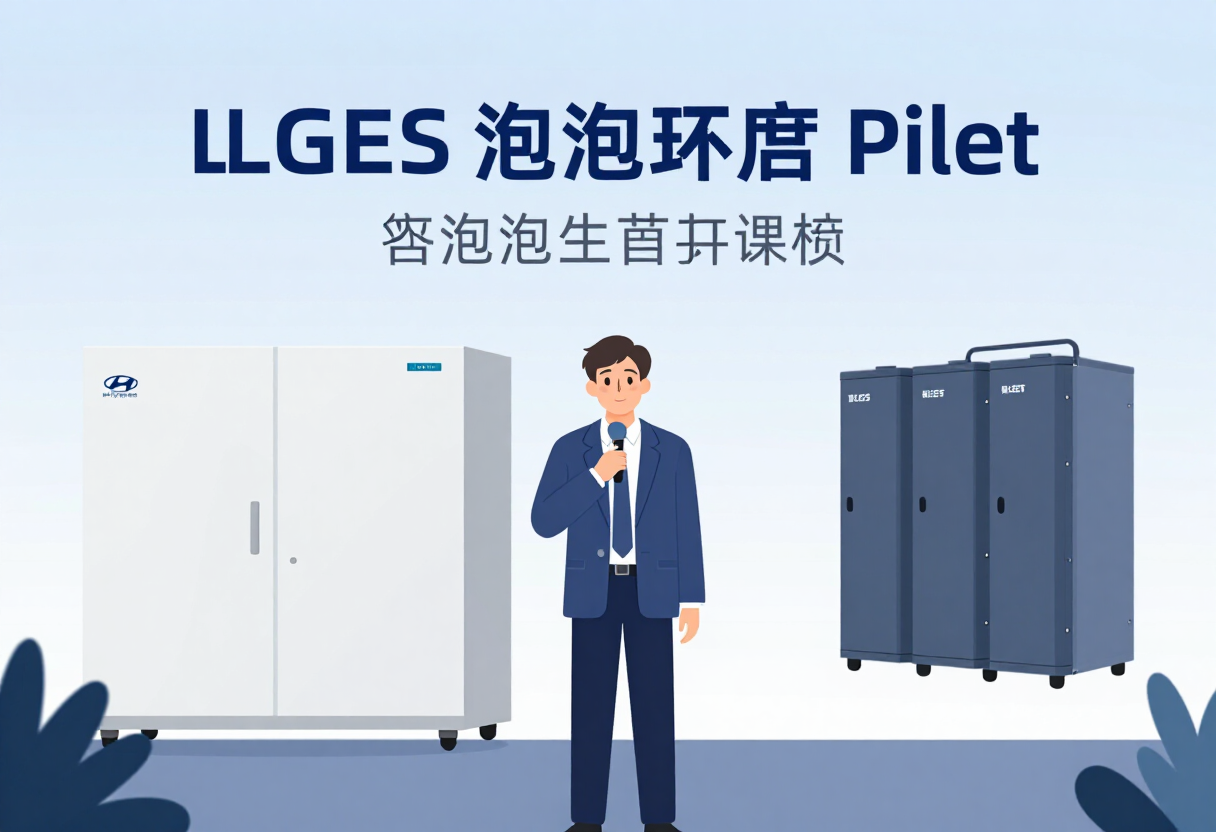
Hyundai and Kia are working with LG Energy Solution on a large-scale demonstration project that pairs charging stations with stationary battery storage acting as an external buffer — and the storage cells are second-life batteries recovered from electric vehicles built on the E-GMP platform.
The project targets one of the hardest operating constraints in EV infrastructure: peak power demand at fast-charging sites. Buffer storage lets a station draw grid power at a steady rate and discharge into vehicles during demand spikes, reducing the cost of grid connections and the strain on local networks. Using retired EV batteries for that buffer also gives the automakers an answer to the growing volume of E-GMP packs reaching end of vehicle life.
E-GMP is the dedicated electric platform underpinning Hyundai Motor Group's volume EVs, including the Hyundai Ioniq 5 and Ioniq 6 and the Kia EV6. Those models have been in series production since 2021, which means the first cohorts of their batteries are now approaching the point where reuse and recycling decisions become real rather than theoretical.
For LG Energy Solution, the project extends its role beyond cell supplier into stationary storage integration alongside its automotive business. For Hyundai and Kia, a successful demonstration would create a validated second-life channel for battery packs — a factor that increasingly matters for both battery passport compliance and residual value calculations across their EV lines.
The three companies describe the effort as a large-scale demonstration, not a commercial rollout. Key parameters — the number of charging sites, storage capacity in megawatt-hours, project duration and the target markets — have not been disclosed in the announcement. That leaves the economics unproven: second-life battery projects elsewhere have struggled with the cost of testing, grading and re-packaging used modules, and the burden here falls on showing that E-GMP packs can be repurposed at scale without eroding the cost advantage over new stationary cells.
What to watch next: the first site locations and installed capacity figures, which will show whether this is a handful of pilot stations or a meaningful buffer fleet; the grading process Hyundai and LGES apply to returned E-GMP packs; and any capacity milestone or commercial follow-on the partners commit to once the demonstration phase reports results.
via koreaherald.com (Original)
More from Grace Kim
Show full bio
Staff writer covering industry trends and analytics at Autoplant Brief.
82 articles
Also circulated
- Hyundai to Fast-Track Ulsan EV Plant Conversion, Report Says
- Honda Repurposes EV Plant to Build Batteries for Data Centers
- JSW Greentech Bets 15,000-Unit Plant on AMPSTAR EV Truck Brand
- Hyundai Mobis Begins Mass Production of EV Powertrains in Slovakia
- BMW's Gen6 Battery Takes Top China Tech Prize, Only Foreign Winner