ECO-8847 · REV X · effective September 30, 2026
Automation & RoboticsRELEASEDEngineering notice
Doosan Robotics to Ship 100 Manufacturing Robots to Kwangjin
Doosan Robotics will supply 100 manufacturing robots to Kwangjin Group, the Korean automotive Tier 1 — a volume order that signals batch-level automation in the supplier tier. Delivery timing and plant allocation remain undisclosed.
Scope of change
- Doosan Robotics will supply 100 manufacturing robots to Kwangjin Group, a Korean automotive Tier 1 supplier.
- No delivery schedule, plant allocation or process breakdown had been disclosed as of the announcement.
- The order is a volume-level deployment, not a pilot, and serves as a reference win for Doosan in the Korean automotive supply chain.
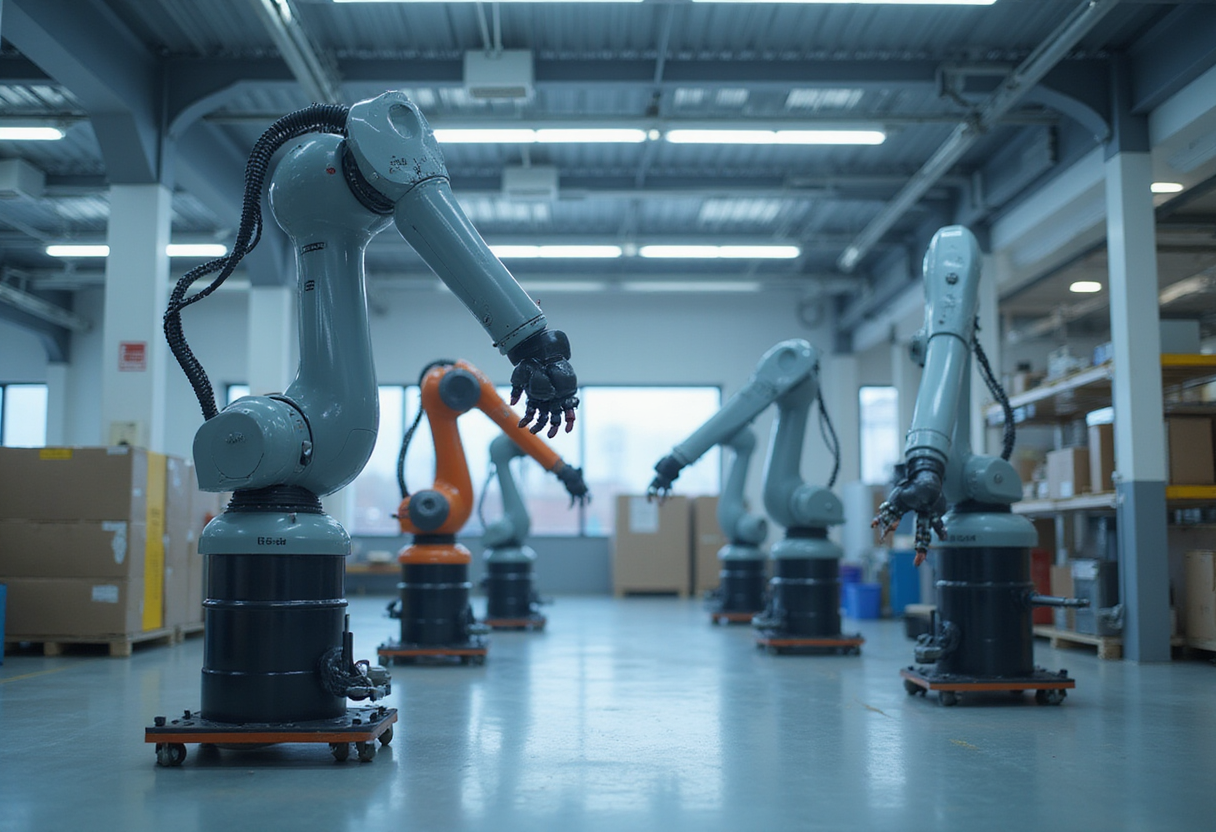
Doosan Robotics will supply 100 manufacturing robots to Kwangjin Group, according to an announcement reported by Assembly Magazine. The order is one of the larger single industrial robot deployments the Seoul-based cobot and industrial arm maker has disclosed with a Korean supplier group, and it lands Kwangjin — a Tier 1 automotive parts supplier — squarely in the ranks of mid-sized manufacturers committing to multi-unit automation rather than piecemeal, one-or-two-arm installations.
The headline number is 100 robots. That figure matters for two reasons. First, it signals batch-level automation: at that volume, Kwangjin is not trialing automation on a single cell. It is tooling a production process, or several, around robotic handling, assembly or welding at scale. Second, it gives Doosan Robotics a reference deployment of meaningful size within the Korean automotive supply chain, where the company has been pushing to convert its strength in collaborative robots into broader industrial market share.
Kwangjin Group supplies automotive components to OEM assembly operations, which places this order in the Tier 1 supplier segment — the layer of the market where robot demand is driven less by headline EV programs and more by steady imperatives: labor cost, defect rates, cycle-time compression and the difficulty of staffing second and third shifts. A 100-unit order from a company at this tier is a datapoint worth tracking for what it says about supplier-side capital spending in Korea more broadly.
What the announcement does not yet establish is delivery timing. As of the announcement, no schedule had been disclosed for when the 100 units will ship, how they will be distributed across Kwangjin's plants, or which processes — welding, handling, machine tending, assembly — they will serve. Those details will determine whether this is a phased rollout across multiple sites or a concentrated installation at a single flagship plant. Until Doosan or Kwangjin specifies the deployment scope, the 100-unit figure should be read as a confirmed order quantity attached to an unconfirmed implementation plan.
For Doosan Robotics, the order extends a pattern the company has pursued since its founding and through its 2023 listing on the Korea Exchange: pairing its collaborative robot portfolio with industrial applications at Korean manufacturers. Competing domestically against heavyweights including Hyundai Robotics, and globally against Fanuc, ABB, KUKA and Universal Robots, Doosan has positioned volume orders from established industrial groups as proof that its arms can hold up outside the cobot niche.
The claim is a supplier announcement, and supplier announcements warrant scrutiny. The verification standard for a deal like this is straightforward: watch for the robots on the floor. Confirmation would come in the form of a Kwangjin statement on deployment timing, photographs or video from an installed line, or a follow-up disclosure from either company quantifying throughput or staffing effects once the units are running.
What to watch next: the delivery and installation schedule for the 100 units, which Kwangjin plants receive them, and whether Doosan discloses the robot models involved. A second indicator is whether Kwangjin reports measurable output or quality gains after commissioning — the kind of production data that would convert this announcement from an order into a result.
via Google News: Automotive assembly automation (Source)
More from Amara Osei
Also circulated
- Global Factory Robot Population Passes 5 Million Units, IFR Says
- Japanese Auto Industry Automation Use Hits Five-Year High
- Japanese Auto Plants Post Strongest Robot Uptake in Five Years
- Hyundai Aims at $20,000 Humanoid Robots, Recruits 200 Suppliers
- U.S. Passes Japan as World's No. 2 Industrial Robot Market