ECO-9288 · REV S · effective November 13, 2026
Vehicle Plants & ProductionAPPROVEDEngineering notice
Volkswagen begins Tengo SUV production at Kariega plant
Volkswagen Group Africa has begun producing the Tengo SUV at Kariega after a R4 billion upgrade, even as Chinese rivals pressure South Africa and Volkswagen prepares 50,000 global job cuts.
Scope of change
- Full-scale Tengo production has started at Kariega, marking the plant's most significant shift in 75 years.
- The R4 billion ($241 million) plant upgrade was announced in 2024.
- About 45% of Tengo components are targeted for local sourcing in South Africa.
- Kariega produced a record 167,084 vehicles in 2024 and exports beyond Africa.
- The SUV is planned for a 2027 debut while Volkswagen prepares about 50,000 global job cuts.
By Daniel Okafor
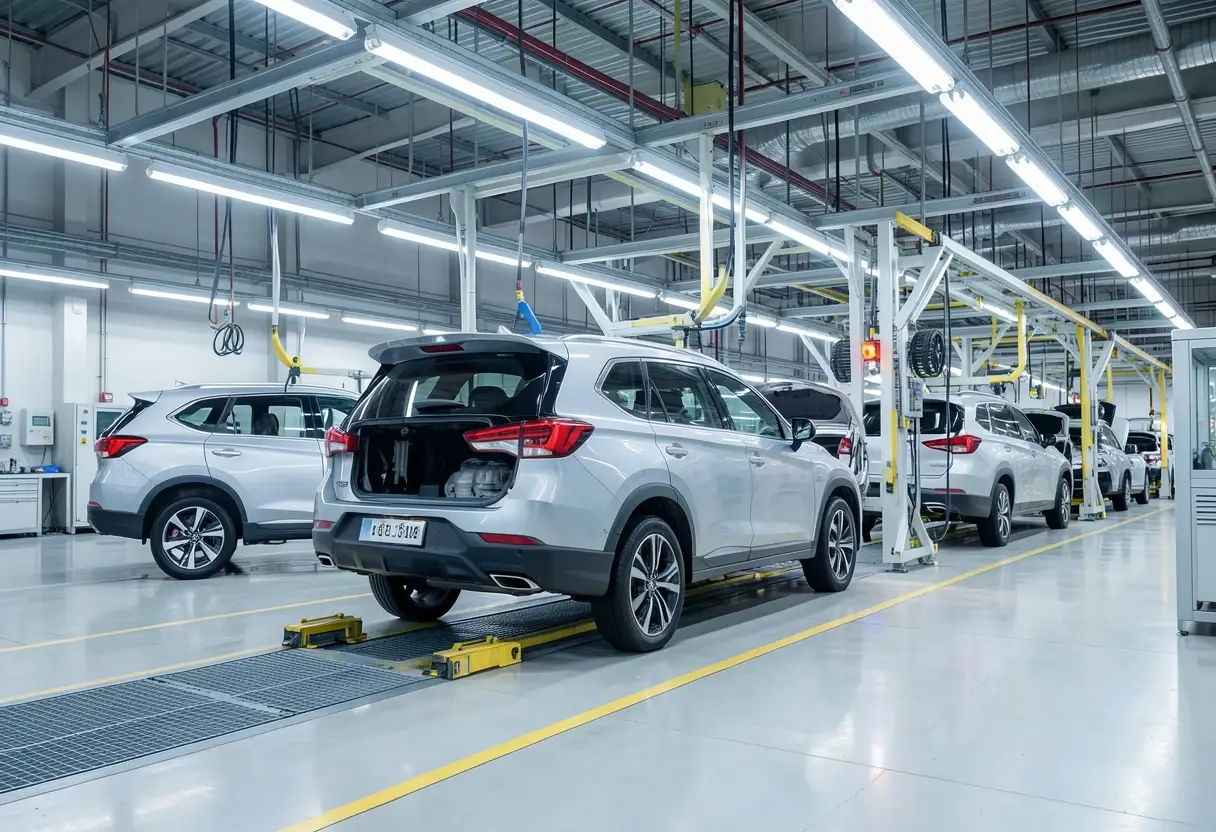
Volkswagen Group Africa has started full-scale production of the Tengo compact SUV at its Kariega plant in South Africa's Eastern Cape, under a 4 billion rand ($241 million) upgrade announced in 2024.
The launch marks the factory's most significant manufacturing shift in 75 years. The Tengo is its first SUV and third model, alongside the Polo and Polo Vivo, and has a planned debut in 2027. It gives Kariega a vehicle type it has never built, aimed at growing African demand for affordable sport-utility vehicles.
What changed at Kariega?
The 4 billion rand program funded new body-shop equipment, production tooling and manufacturing technology for the additional model. Kariega produced a record 167,084 vehicles in 2024 and also supplies export markets beyond Africa, giving Volkswagen an established production base rather than a greenfield project.
Volkswagen said about 45% of the Tengo's components would be sourced locally, supporting South Africa's automotive supply chain. That is close to one in two parts, but it remains a company target rather than a disclosed production result. The launch announcement gave no model-level output or unit-capacity target, and Kariega's 2024 record predates the SUV.
Takeaway: The plant has the equipment; sustained output and verified local content are the next tests.
Where did the SUV come from?
Tengo is based on the Brazil-built Tera. According to Reuters, Volkswagen Group Africa and Volkswagen do Brasil developed the model specifically for African markets, linking a Brazilian product base with South African assembly and regional product work.
The product strategy is affordability. Kariega's SUV is intended for African demand, while South Africa remains Volkswagen's most important market on the continent and its African manufacturing base.
Takeaway: The SUV was tailored for Africa, although its mechanical base comes from Brazil.
What does Chinese competition change?
Volkswagen Group Africa now fields a locally assembled SUV against a growing field of lower-priced Chinese brands in South Africa. That should sharpen price discipline at Kariega; sheet metal does not settle the argument.
Christiane Zorn, a Porsche executive, has taken charge of Volkswagen's African business as the German automaker responds to the shift. Her remit covers a region where the group says it still intends to grow.
Local supply depth matters as much as the badge. If the roughly 45% sourcing target becomes repeatable series production, it can support domestic suppliers and reduce reliance on imported components; if not, it stays a target on a slide.
Takeaway: Competitive pressure will be settled in procurement and pricing, not in the model announcement.
How does expansion fit 50,000 job cuts?
Volkswagen's African expansion comes alongside a global restructuring in which the company plans to cut roughly 50,000 jobs worldwide, part of what it describes as its biggest-ever overhaul. One program adds a model and tooling; the other pares the group's worldwide workforce.
Yet Volkswagen Group Africa has dismissed reports that it plans to leave Rwanda. The company reaffirmed its long-term commitment to the country and announced an expansion of its operations in Rwanda, pointing to continued regional investment even as the wider group shrinks.
That contrast matters: Volkswagen is cutting globally while retaining Africa. The two strategies can coexist, but only if Kariega earns the volume.
Takeaway: Africa remains a growth pocket inside a global cost-cutting program.
What should readers watch?
The next disclosures should show whether the roughly 45% local-content target holds at series production, whether annual output moves beyond the 167,084-vehicle record, and how South African policy changes the economics of local assembly. Volkswagen has started the line and committed capital, but it has not disclosed a Tengo production scale.
Takeaway: Watch the planned 2027 debut, the first disclosed output or capacity milestone at Kariega and the next South African policy decision, because the line is running but the business case remains unproven.
via africa.businessinsider.com (Source)
More from Daniel Okafor
Show full bio
Senior reporter covering regulation, policy and their impact on Automotive manufacturing and vehicle production at Autoplant Brief.
337 articles
Also circulated
- VW Anhui has no new models lined up for 2027-28 as ID. UNYX sales stall
- Chery picks Omoda C4 for Rosslyn as South Africa output starts
- VW starts ID. Tiguan series production in Emden at 780 cars a day
- South Africa to publish plans to lift local vehicle production
- Chery opens assembly plant in South Africa