ECO-3247 · REV B · effective November 13, 2026
Vehicle Plants & ProductionRELEASEDEngineering notice
Tesla to End Cybertruck Production by Q2 2027 for Cybercab Switch
Tesla retires Cybertruck by Q2 2027 for the Cybercab, the UK weighs cutting its 2030 ZEV target to 60%, and Honda plans a $3bn Ohio hybrid plant.
Scope of change
- Tesla plans to end Cybertruck production by Q2 2027 to build the Cybercab
- The UK is expected to cut its 2030 ZEV mandate target from 80% to around 60%
- Honda plans a US$3bn plant in Ohio, leaning further into hybrids
- Exports carried China's NEV sales to a record October
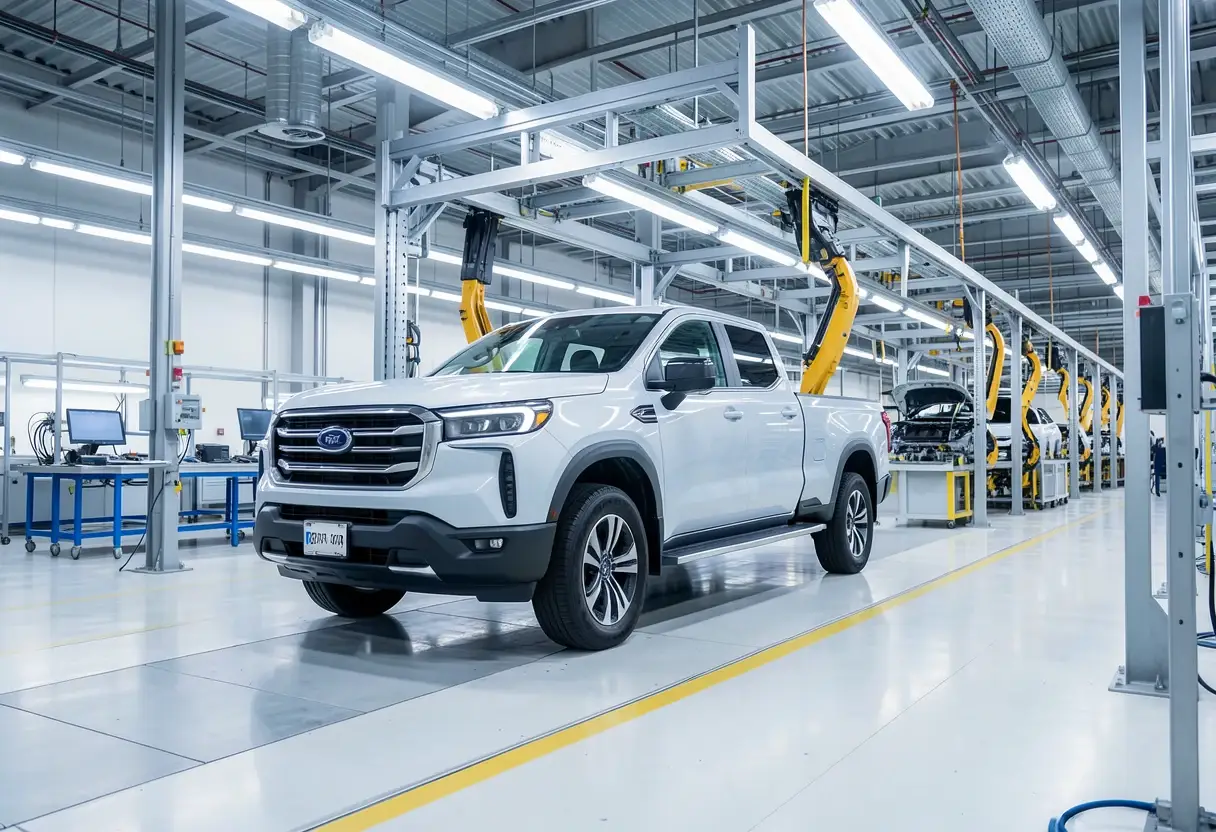
Tesla plans to end Cybertruck production by the second quarter of 2027, clearing manufacturing capacity for the Cybercab robotaxi, according to this week's E-Mobility Intelligence Brief from Automotive World. The decision retires a model that fell far short of the volumes Elon Musk projected for it.
The Cybertruck never became the volume pillar Tesla's leadership once forecast. Its replacement on the line, the Cybercab, carries a different commercial logic. Its early production volumes depend on regulatory approval for autonomous operation rather than on customer orders, which makes the program's ramp a policy question as much as a manufacturing one.
What does the Cybercab switch mean for Tesla's plants?
Reallocating Cybertruck capacity to the Cybercab converts a retail product line into a fleet-oriented one. Where the Cybertruck sold — however modestly — to individual buyers, the Cybercab's demand curve forms around permits for driverless deployment (vehicles operating without a human at the wheel). Until regulators approve that operation at scale, the line's utilization rests on Tesla's own assumptions rather than confirmed orders.
That distinction matters for capacity planning. A truck line sized for six-figure annual sales now gives way to a vehicle whose early volumes regulators, not shoppers, will determine.
How much is the UK cutting its ZEV mandate?
Separately, the UK government is expected to cut its 2030 ZEV mandate target. The requirement — the sales mix rule forcing manufacturers to sell a set share of zero-emission vehicles — was set at 80% of new-car sales by 2030. The expected revision brings that figure down to around 60%.
A cut of that size gives manufacturers more room to keep selling combustion and hybrid models in the UK while still complying. It also signals political pressure on the mandate's original pace, a shift suppliers and volume OEMs (carmakers selling through dealers at scale) will read as a loosening of the demand-side lever that underpinned their electrification investment cases.
Where is Honda putting $3bn?
Honda, meanwhile, plans a US$3bn plant in Ohio as it leans further into hybrids rather than battery-electric models. The investment anchors US production capacity around a propulsion type Honda has favored while pure-EV demand in North America has stayed uneven.
The move illustrates a wider realignment among legacy OEMs: capital that two years ago pointed at dedicated EV plants now flows toward flexible hybrid capacity, closer to what customers currently order.
Why did China's NEV sales set a record in October?
China's NEV (new energy vehicle — the Chinese category covering battery-electric, plug-in hybrid and hydrogen cars) sales reached a record October, and exports carried the result. Domestic demand contributed, but shipments abroad pushed the month into record territory.
For European and US incumbents, export-led Chinese volume means more competition in third markets, not just at home.
What to watch next
Watch three dates and decisions: the final wording of the UK's revised mandate target, regulatory approvals that would let Cybercab volumes materialize after Q2 2027, and Honda's confirmation of the Ohio plant's capacity and hybrid model assignments.
via mailchi.mp (Original)
More from Sophie Lindqvist
Show full bio
Correspondent covering money, funding and market shifts around Automotive manufacturing and vehicle production at Autoplant Brief.
299 articles