ECO-3915 · REV V · effective September 28, 2026
Production TechnologyRELEASEDEngineering notice
Virginia Tech Team Builds Duct-Tape-Beating Adhesive That Degrades on Command
Virginia Tech chemists built two chemically recyclable PSAs — a mono-material tape that beats duct tape, and a bottlebrush polymer four times stronger that dissolves in alkaline water within minutes.
Scope of change
- Bottlebrush polymer adhesive is four times stronger than the commercial adhesives used in duct tape, per peel tests by graduate researcher Regina Ham
- Mono-material tape design allows adhesive and plastic backing to be recycled together; a mild chemical reaction breaks them down into original components within hours
- Bottlebrush adhesive degrades within minutes after exposure to mildly alkaline water; both studies are lab-scale with no commercialization timeline announced
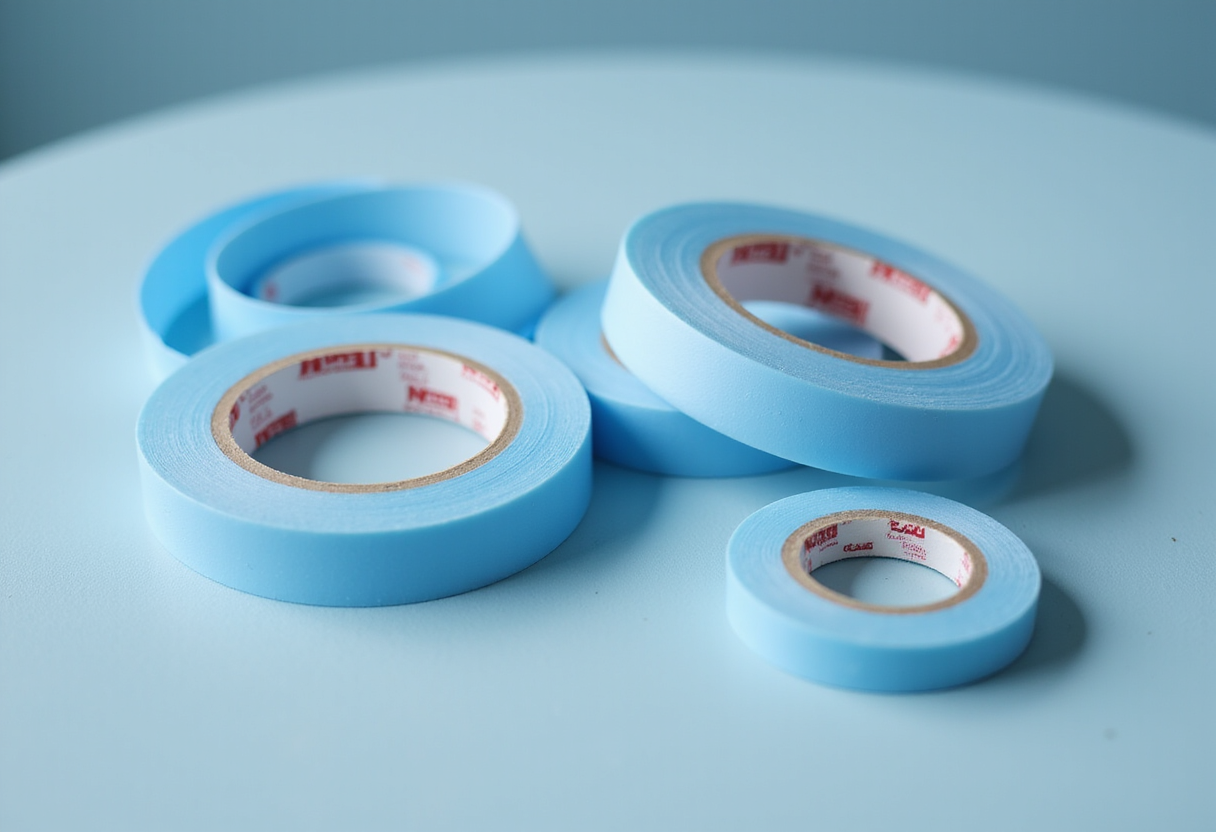
Virginia Tech chemists have produced pressure-sensitive adhesive tapes that outperform heavy-duty duct tape in peel strength and still break down into their original components — one of them within minutes of a rinse in mildly alkaline water.
The work comes out of two labs in Blacksburg, Virginia, led by John Matson, Ph.D., and Josh Worch, Ph.D. Their target is a specific, costly failure mode in packaging and assembly operations: adhesive residue left on cardboard boxes and similar substrates renders those products unrecyclable. For any plant taping components, sealing cartons or bonding trim, that residue is a materials-recovery problem that starts at the tape dispenser.
"It's a classic friction. We want this to be useful while we're using it, but as soon as we're done using it, it should go away," said Worch, assistant professor of chemistry. "We're designing for end of life in every new material that we make."
Mono-material tape, chemically recyclable
In a study published in Advanced Functional Materials, Worch and graduate researcher Regina Ham demonstrated a tape whose adhesive and plastic backing layers can be recycled together. The researchers call it a "mono-material" design: both layers are chemically similar but perform different functions, which eliminates the sorting and separation step that normally keeps mixed-material tapes out of the recycling stream.
The chemistry rests on lipoic acid, a naturally occurring sulfur-based compound found in foods such as broccoli and spinach. The team used it to build extremely large, inherently tacky polymers. By adjusting the amount of acid, Ham found the balance between tackiness and cohesiveness. The result is an adhesive compound that beats heavy-duty duct tape in adhesion strength while remaining chemically recyclable.
The recycling route is a second, mild chemical reaction that takes just a few hours to break the adhesive and backing layers down into their original components. Those components can then be reconstructed into new adhesive tape — repeatedly, according to the researchers.
Bottlebrush polymer: four times the peel strength
The Matson lab pushed the strength envelope further. In work published recently in Angewandte Chemie, Clark Vu and Isaac Addo — a former and a current graduate student — developed an even stronger degradable adhesive built on a different polymer architecture.
The material uses a polymer with a central backbone and side chains that stick out like bristles. Under a microscope, the structure resembles a brush used to clean bottles, hence the name bottlebrush polymers. Vu and Addo strung together molecules of a viscous oil and a gas to create a new variation of the bottlebrush. The outcome is a transparent, moldable polymer with a texture like putty.
Addo brought the polymer to Ham in Worch's lab, where she converted it into tape and measured the force required to peel it from a surface.
"When she got back to us with the results, we couldn't believe what we were hearing," Addo said. "It was four times stronger than the commercial adhesives used in duct tape."
The degradation profile is the sharper selling point for disassembly and end-of-line rework scenarios: the adhesive breaks down within minutes after a quick douse with mildly alkaline water.
What it means for the plant
Both programs remain at the laboratory scale, published in peer-reviewed journals rather than validated on a converting line. No production partner, capacity plan or commercialization timeline has been announced. The claims on adhesion strength and chemical recyclability are the researchers' own, measured against commercial duct-tape adhesives in lab peel tests — not yet benchmarked against industrial tape specifications such as shear hold, temperature cycling or long-term aging.
The manufacturing logic, though, is straightforward. If a tape can deliver duct-tape-level or better peel strength and then dissolve with nothing stronger than mildly alkaline water, packaging streams become cleaner to recycle and disassembly operations — battery module debonding, electronics rework, trim removal — get a faster route than heat, solvents or mechanical scraping.
What to watch next: whether the lipoic-acid chemistry and the bottlebrush polymer survive scale-up from bench synthesis to industrial tape converting, and whether any adhesive or packaging supplier moves to license the work. The capacity milestone to track is the first pilot-line run of a mono-material tape; the technical milestone is a published head-to-head against commercial industrial tapes on standardized peel and shear tests.
via bnpmedia.com (Original)
More from Grace Kim
Show full bio
Staff writer covering industry trends and analytics at Autoplant Brief.
82 articles
Also circulated
- Adhesive Selection Decides EV Battery Assembly Automation Success
- LG Chem and Volkswagen Group Sign MoU on Lightweight Materials
- Magna bets on biomaterials and digital tools for net-zero push
- Vianode and FAAM prove graphite recycling loop from battery waste
- Rivian Taps Redwood Materials for Recycled-Battery Power at EV Plant