ECO-2258 · REV Y · effective September 29, 2026
EV Manufacturing TransitionAPPROVEDEngineering notice
Adhesive Selection Decides EV Battery Assembly Automation Success
Avery Dennison says PSA tape design for automated EV battery assembly must balance bond strength with manufacturability — liner chemistry, vision detection and substrate realities decide line uptime.
Scope of change
- Avery Dennison applies lessons from labeling lines producing 100 million parts annually to automated EV battery assembly tape design.
- Release liner chemistry, zone coating and vision-detectable pigmentation determine whether a PSA tape is automation-friendly at high volumes.
- Testing must reflect real plant conditions — oily stamped metal, low-surface-energy plastics, fragile thermal barriers and finished-part geometry rather than flat data-sheet coupons.
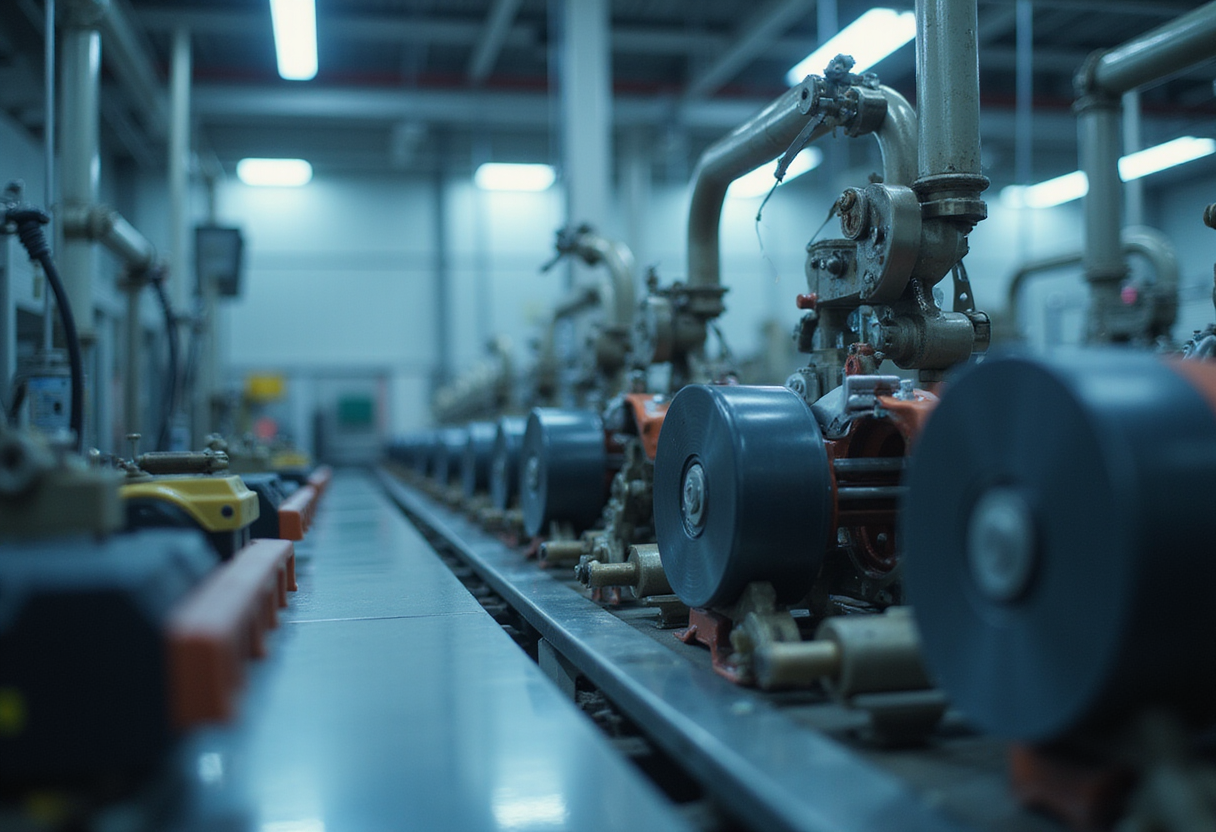
BIRMINGHAM, Mich. — A labeling line producing 100 million parts a year cannot tolerate interruptions, and Avery Dennison argues the same discipline must now apply to electric vehicle battery assembly, where pressure-sensitive adhesive (PSA) tapes must bond reliably and feed high-speed automated lines at the same time.
The two requirements cannot be treated separately, says Max VanRaaphorst, marketing manager for e-mobility and energy storage at Avery Dennison.
"Always think about the design for manufacturing concurrently with whatever material properties you're looking for, because it makes or breaks projects," VanRaaphorst says.
That means adhesive selection cannot rest on final bond strength alone. Engineers must account for how tapes will be converted, handled, detected, positioned and applied on an automated line. Avery Dennison draws on decades of roll-to-roll manufacturing and labeling experience when developing tapes for EV production, and VanRaaphorst says those lessons transfer directly to automated battery assembly.
Stronger is not always better
Adhesive chemistry can reduce residue buildup on tooling and extend preventive maintenance intervals. But overengineering the adhesive creates its own problems. A tape may deliver more peel strength and tack than an application needs, yet an excessively thick or aggressive adhesive leaves residue during converting and die cutting.
VanRaaphorst says engineers should define which performance characteristics the application actually requires, then optimize the rest of the tape construction around manufacturability. "There are probably about 30 things they have not considered where we can make adjustments and tweaks on our end to make their life easier," he says.
Substrate variety complicates the picture. Low-surface-energy plastics such as polypropylene and polyethylene bond poorly. Silicone foams resist adhesion because of silicone's inert surface chemistry. Other materials bond easily but automate badly — VanRaaphorst points to inorganic thermal barriers that may be delicate or fragile, making robotic release-liner removal and part placement risky. Avery Dennison tests whether such materials can survive robotic application before they enter high-volume battery production.
Surface condition matters as much as substrate type. "The tape is going to be only as good as the surface it sees," VanRaaphorst says. Plants rarely deliver pristine surfaces, so Avery Dennison evaluates materials as received. A sheet-metal part may still carry stamping lubricant; testing that real condition shows whether the adhesive performs acceptably or whether the process needs a cleaning step.
Geometry matters too. A tape that performs well on a flat coupon can behave differently wrapped around a corner or stretched over a complex surface. Residual stress can make a seemingly secure bond lift after heat aging if the tape lacks conformability.
Technical data sheets can mislead. PET films look attractive for dielectric applications because of their high strength, but once a tear starts near a sharp metallic edge, PET tends to split. A weaker but more ductile and conformable material can outperform it.
"You don't need something to be stiffer and stronger," VanRaaphorst says. "You want it to be more ductile and more conformable."
Avery Dennison runs environmental chambers that expose materials to temperature extremes, humidity and repeated thermal cycling, starting with small specimens and scaling toward sections that represent the actual assembly.
The unsung hero: the release liner
Some of the most consequential design decisions involve components that get little attention. VanRaaphorst calls release liners one of the "unsung heroes" of design for manufacturing. Adjusting liner chemistry controls the force required to separate liner from adhesive. Zone coating creates adhesive and non-adhesive areas, giving automated equipment a defined grip point for liner removal. Pigmenting adhesives, films or liners improves detection by machine vision systems, which then drives placement accuracy.
"We'll often look at pigmenting adhesives or some of the films or printing on them so that things can be caught by vision systems, and vision systems can help with the placement and accuracy of these materials," VanRaaphorst says.
Those details grow more important as volumes climb. And suppliers often see projects too late. "Oftentimes, we will get projects super late — scrambling, and they just need Band-Aids," VanRaaphorst says. "Whereas we could have been much more proactive in the design cycle and save a considerable amount of headache."
Pre-application fits new assembly architectures
PSA tapes gain an advantage as automakers rethink assembly around structural battery packs and new methods of joining major vehicle assemblies. A tape can be applied to a component before it reaches final assembly; when the part arrives at the line, equipment removes the liner, positions the part and creates an immediate bond.
"You can pre-apply them," VanRaaphorst says. "And then when you're ready to stick the two things together, you take off the release liner and then you stick them together and they have that instant grab of a PSA. So then you can move parts down your assembly line very quickly."
As EV makers keep changing both battery design and assembly processes, VanRaaphorst expects automation and robotics to become central to scaling production. For adhesive suppliers and manufacturing engineers, the question is no longer whether an adhesive can create the required bond — it is whether the line can create that bond reliably, repeatedly and fast enough.
What to watch: how quickly tier-one and tier-two battery suppliers adopt vision-detectable liners and zone-coated tapes as line rates climb, and whether OEMs bring adhesive suppliers into the design cycle earlier as structural pack architectures move toward production.
via bnpmedia.com (Original)
More from Sophie Lindqvist
Show full bio
Correspondent covering business strategy at Autoplant Brief.
97 articles
Also circulated
- Virginia Tech Team Builds Duct-Tape-Beating Adhesive That Degrades on Command
- CommercialSearch Report: EV Production Growth Loses Steam
- Angstrom Group Acquires 3D Printed Tooling Specialist Mantle
- OPmobility Revenue Declines Yet Beats Global Output Trend
- Charged EVs Spotlights Ultrasonic Joining For EV Assembly Efficiency