ECO-6226 · REV W · effective October 30, 2026
Vehicle Plants & ProductionAPPROVEDEngineering notice
VinFast owner Vingroup plans €449m EV plant in the Philippines
Vingroup will invest $500m (€449m) in a Philippine EV plant with 200,000-unit capacity, targeting Q1 2027 construction and production by mid-2028.
Scope of change
- Vingroup plans a $500m (€449m) EV plant in the Philippines with initial capacity of 200,000 vehicles per year
- Construction targeted for Q1 2027, with production possible by mid-2028 after a 1-1.5 year build
- Batangas is the preferred location; Vingroup is seeking a site of at least 300 hectares near ports
- The plant would be Vingroup's third overseas hub after Indonesia and India, building cars first, then scooters
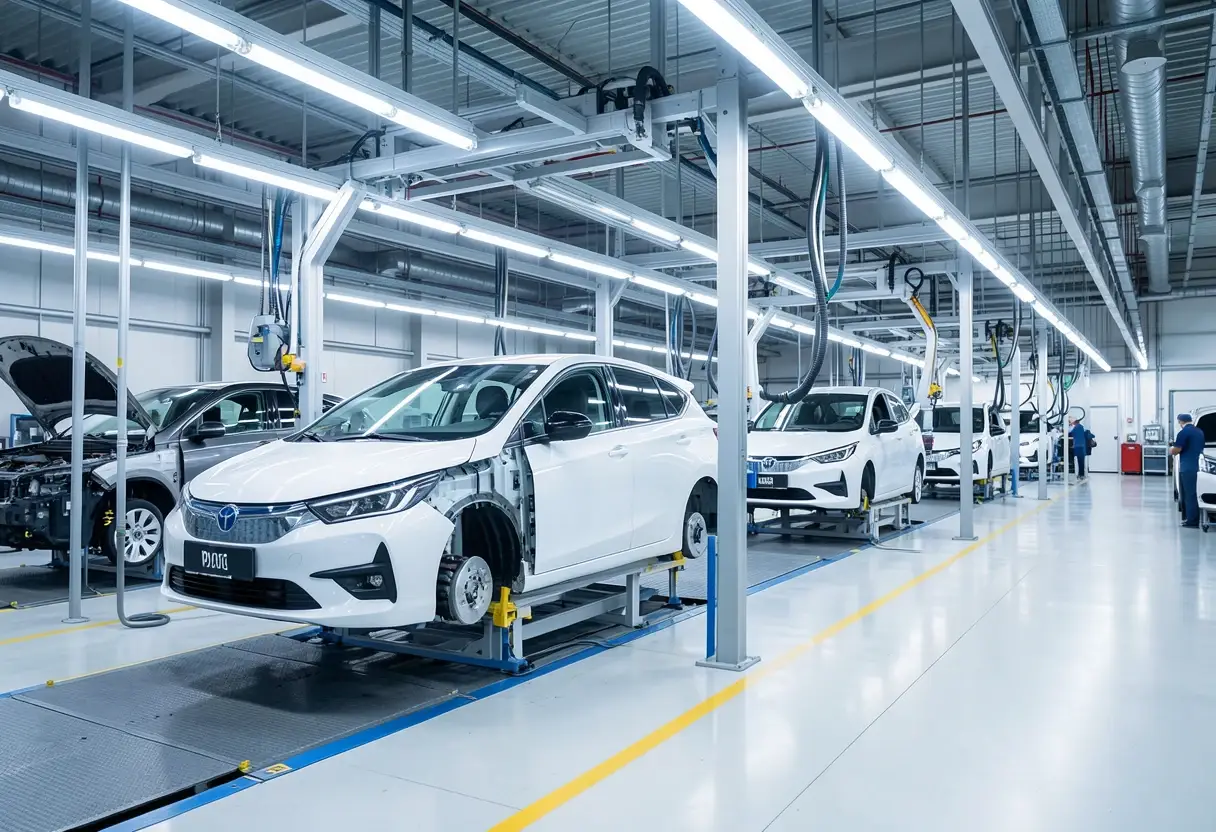
Vingroup, the Vietnamese conglomerate behind EV maker VinFast, plans to spend $500 million (€449 million) on an assembly plant in the Philippines with an initial annual capacity of 200,000 vehicles. The Philippines' Department of Trade and Industry (DTI) disclosed the figure after a meeting between DTI Secretary Cristina Roque, other government officials, and Vingroup Vice Chairman Nguyen Quoc Tuan.
It's a big number for a first plant. And the timeline is tight.
The facility will be Vingroup's third overseas production hub, after plants in Indonesia and India. DTI has not confirmed a location, but Inquirer.net quoted Roque as saying Batangas is the "preferred" site. Batangas, a province in southwestern Luzon, one of the Philippines' three major island groups, appeals to Vingroup because of its proximity to ports. The company is reportedly looking for a plot of at least 300 hectares.
What does this change for VinFast in the Philippines?
Right now, VinFast imports everything it sells there. The brand currently offers five electric cars in the country: the VF 3, VF 5, VF 6, VF 7 and VF 9. In July it entered electric two-wheelers, launching three scooters at once: the Evo, Feliz II and Viper. The planned plant will build both cars and scooters, starting with cars.
Local production would let VinFast avoid import costs in a market where it's still building volume. It also puts the company's supply chain in-country, which matters under an administration pushing hard for manufacturing investment.
Roque framed the deal in exactly those terms. "Vingroup's $500 million investment underscores the Philippines' rising status as Southeast Asia's destination of choice for advanced manufacturing and green technology," she said. "Under President Marcos Jr.'s administration, our mandate is clear: to translate investor confidence into immediate operational momentum."
Timing: construction in 2027, production as early as mid-2028
The schedule leaves little slack. According to DTI, Vingroup aims to start construction in the first quarter of 2027, which means it must finalise the location and secure land soon. The company expects to build the plant in one to one and a half years. That puts the start of production around mid-2028 at the earliest.
A 300-hectare land acquisition of that scale in Batangas, a province with active industrial demand near its port complex, typically takes time. No site has been named. No groundbreaking date is fixed.
Capacity claim vs. reality
Treat the 200,000-unit figure as an announced intention, not a confirmed production plan. VinFast has a record of setting ambitious capacity targets across Southeast Asia. Whether the Philippine plant ramps toward its stated ceiling will depend on how fast local EV demand grows and how VinFast's sales in the market develop between now and 2028.
For context on the product side: the plant will start with the passenger cars, the segment where VinFast has its five Philippine models, before adding the scooter lines it introduced this summer.
What to watch next
Three markers will tell you if this project is real. First, the site announcement: a confirmed Batangas location and a signed land deal would signal commitment before year-end. Second, the Q1 2027 construction start. Third, any update on capacity phasing: whether 200,000 units is a day-one figure or a long-run target.
Until then, the Philippines plant remains a plan with a number attached — a large one, but a plan.
via electrive (Source)
More from Grace Kim
Show full bio
Staff writer covering people, launches and day-to-day practice in Automotive manufacturing and vehicle production at Autoplant Brief.
245 articles