ECO-5743 · REV H · effective October 17, 2026
Auto Industry PolicyRELEASEDEngineering notice
Philippines commits billions to electric vehicle production
Manila has announced a multi-billion-peso EV production push, but no plant, OEM partner, capacity figure or timeline yet backs the headline claim.
Scope of change
- The Philippine government has announced a multi-billion-peso investment in electric vehicle production.
- No confirmed plant capacity, OEM partner, location or timeline accompanies the announcement.
- Neighbouring Vietnam, Thailand and Indonesia already host named EV programmes with stated sites and volumes.
- The commitment currently stands as announced intention, not confirmed production capacity.
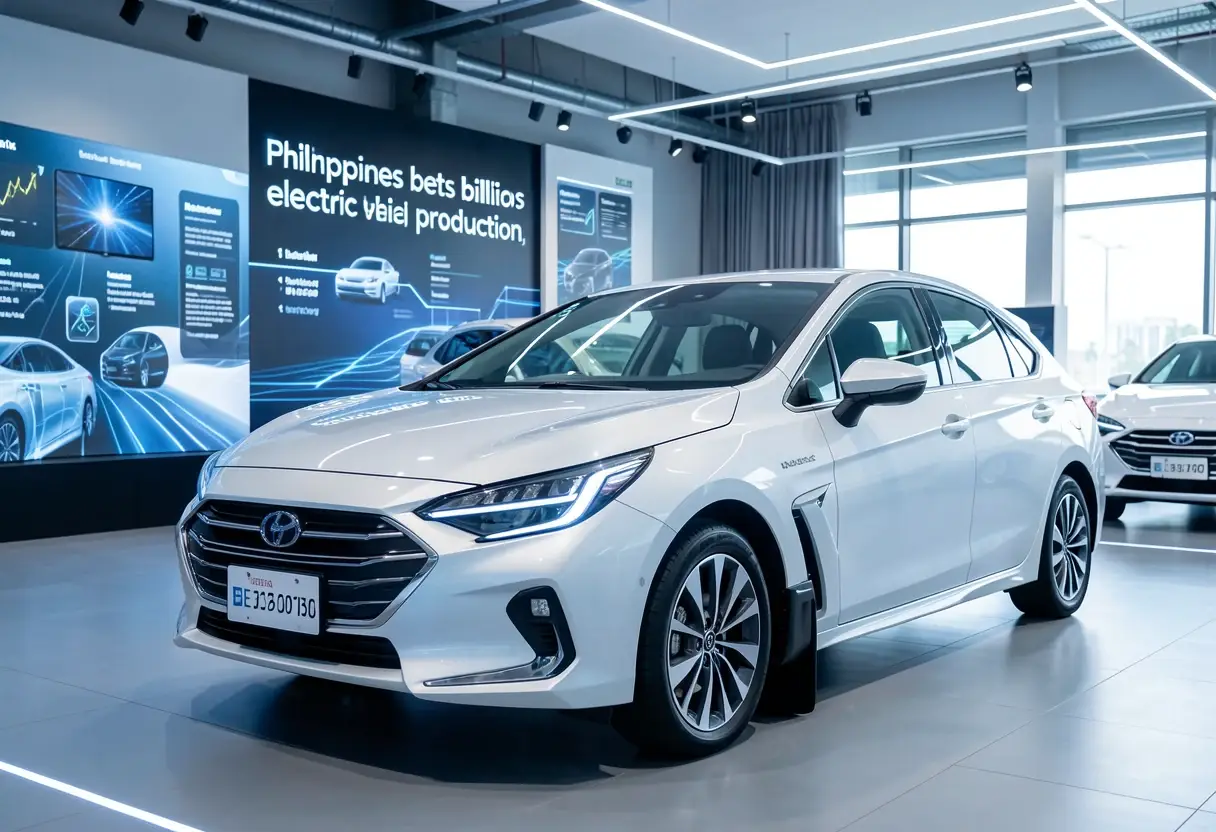
The Philippine government has announced a multi-billion-peso bet on electric vehicle production, staking public money on a sector where the country currently holds no significant manufacturing base. The announcement, reported by Vietnam.vn, frames the programme as a national push into EV assembly and parts production. No confirmed plant capacity, timeline or named industrial partner accompanies the headline, which places the plan firmly in the category of announced intention rather than committed capacity.
That distinction matters in the automotive trade. An OEM that signs a vehicle programme names a plant, a volume target and a start of production. A government that promises investment names a budget line and a policy direction. The Philippine statement, as reported, belongs to the second group. Readers tracking Southeast Asian manufacturing should treat the figure as a policy claim until a plant operator confirms tooling, hiring or output.
What does the announcement actually contain?
The source material is thin, and precision requires saying so. The report establishes three things:
- The Philippines is directing billions into electric vehicle production.
- The commitment is framed at national level, not by a single plant or OEM.
- No production volumes, factory locations or launch dates appear in the available reporting.
For comparison, when Vietnam attracted VinFast, the project came with a named site in Hai Phong, a stated capacity in the hundreds of thousands of units and a construction schedule. The Philippine announcement, at this stage, offers none of those anchors. The gap between the two is the gap between a policy ambition and a manufacturing programme.
Where does the Philippines fit in regional EV manufacturing?
Southeast Asia's EV production map currently runs through Thailand, Indonesia and Vietnam. Thailand hosts assembly operations from Japanese OEMs and Chinese entrants such as BYD and GAC. Indonesia leverages its nickel reserves (the metal used in lithium-ion battery cathodes) to attract battery-chain investment. Vietnam fields VinFast as a domestic champion with export ambitions.
The Philippines brings a different set of assets: a large, low-cost labour pool, an established electronics assembly sector that supplies automotive components at tier-two and tier-three level (companies supplying the suppliers of the OEMs), and a domestic vehicle market dominated by imported Japanese brands. Whether billions in public investment can convert those inputs into competitive EV assembly is the open question. Labour cost alone has never secured an automotive programme; Thailand built its base over four decades of policy continuity and supplier-network depth.
How should manufacturers and suppliers read the claim?
Trade readers should apply the standard verification sequence to any government EV announcement. First, check whether a specific OEM or tier-one supplier has confirmed a facility with a stated capacity. Second, look for a fiscal instrument — a tariff exemption, a tax holiday, a local-content requirement — that would actually move capital. Third, watch whether the budget figure survives an appropriation vote rather than remaining a headline number.
None of those checkpoints can be cleared from the current report. The announcement tells us Manila wants EV production. It does not yet tell us who will build it, where, at what volume, or on what schedule. Supplier announcements and government ambitions both function as claims until production data confirms them, and this one has not yet met that test.
What to watch next
Three developments would convert intention into a plant story. A named OEM or tier-one supplier announcing a Philippine facility with a capacity figure would be the first. A specific site selection, with the local government confirming land and utilities, would be the second. An appropriation or executive order turning the billions into a binding fiscal commitment would be the third. Until one of those appears, the Philippine EV programme remains a budget line in search of a factory, and Autoplant Brief will track it accordingly.
By Sophie Lindqvist
via Google News: Auto plant and vehicle production (Source)
More from Sophie Lindqvist
Show full bio
Correspondent covering money, funding and market shifts around Automotive manufacturing and vehicle production at Autoplant Brief.
236 articles
Also circulated
- Philippines commits $1 billion to EV manufacturing in ASEAN race
- Philippines unveils 60bn peso EV manufacturing incentive scheme
- Philippines rolls out €850m EV manufacturing incentive scheme
- Toyota commits $373M to expand Vietnam plant, add hybrids
- Malaysia Positions Itself As Southeast Asia's Next EV Build Hub