ECO-8614 · REV U · effective September 29, 2026
Auto Industry PolicyAPPROVEDEngineering notice
Trump Claims Auto Comeback; Michigan Production Data Pushes Back
President Trump claims a U.S. auto manufacturing revival, but Michigan's own production and employment data contradict the White House narrative, Motor1.com reports.
Scope of change
- President Trump publicly claims credit for a U.S. auto manufacturing comeback driven by his policies, including tariffs.
- Michigan production and employment data contradict the White House's comeback narrative, according to Motor1.com.
- The gap between political claims and state production data carries real costs for Midwest suppliers making capacity and staffing decisions.
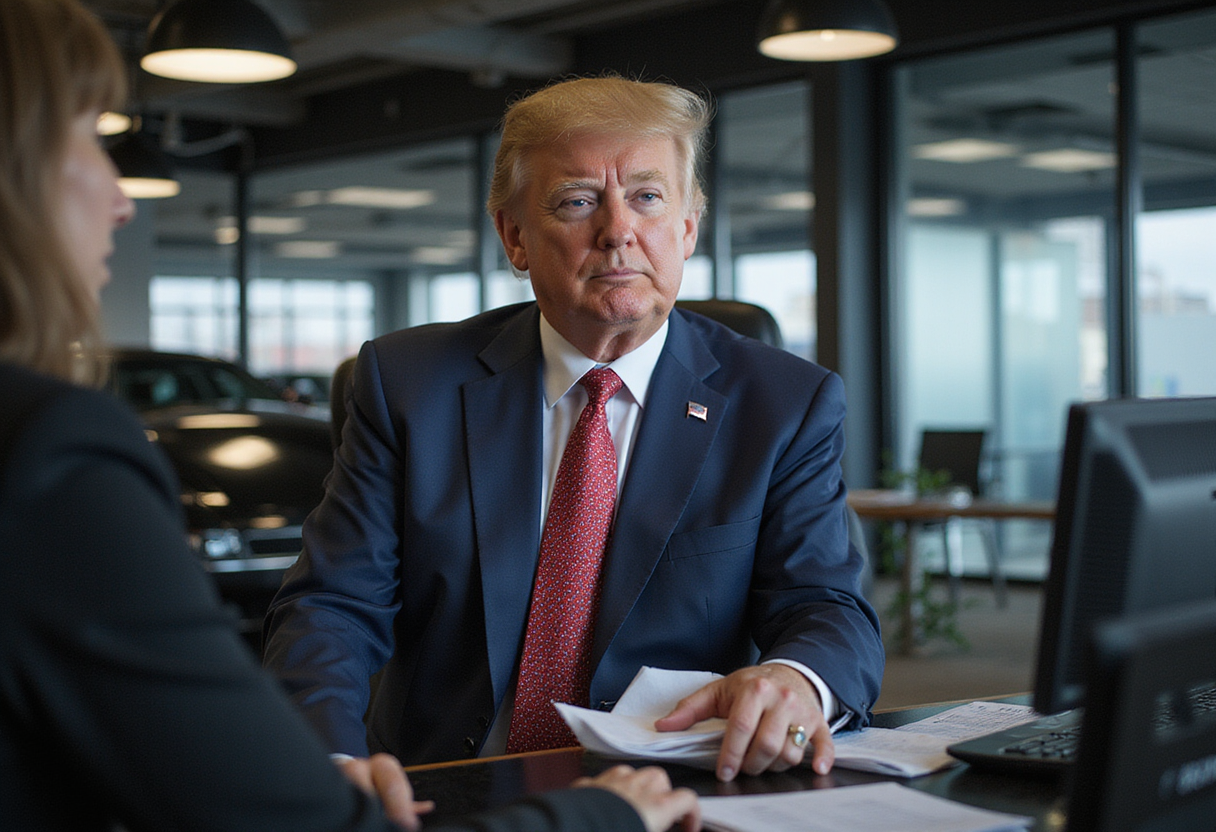
The White House is boasting of an American automotive comeback. Michigan's own production data tells a different story.
President Donald Trump has publicly claimed credit for a revival in U.S. auto manufacturing, framing his administration's policies — tariffs chief among them — as the driver of new investment, new plants and new jobs across the domestic industry. It is a message aimed squarely at the industrial Midwest, and Michigan in particular, where the 2024 electoral coalition leaned heavily on autoworkers and supplier employees who have watched plants close and shift schedules shrink over two decades.
The claim, as Motor1.com reports, does not survive contact with the state's own numbers. Michigan — still the center of gravity for North American vehicle production, home to General Motors, Ford and Stellantis assembly operations and a supplier base measured in the thousands of firms — has not posted the production rebound the president describes. Output, employment and investment indicators from the state have moved in the opposite direction from the rhetoric.
For manufacturing planners and supplier executives, the gap matters beyond politics. OEM sourcing decisions, tooling programs and tier-two capacity commitments are made years ahead of any political cycle. When a administration claims capacity is returning, suppliers are asked to staff up, buy steel and commit capital against a recovery timeline. If the underlying production data shows contraction instead, that mismatch lands on the balance sheets of machine shops, stampers and molders across the Midwest — firms that cannot hedge a lost program the way a Wall Street desk hedges a position.
The dispute also highlights a familiar pattern in auto-industry policy announcements: the conflation of intentions with capacity. Headlined investment pledges from OEMs — commitments spread over five or ten years, contingent on market conditions, labor agreements and regulatory outcomes — routinely get counted as delivered jobs in political messaging. Actual production schedules, plant utilization rates and state employment data are the harder, slower metrics. Michigan's numbers fall into the second category.
Trump's tariff regime remains the backdrop to the argument. The administration has positioned duties on imported vehicles and parts as the mechanism that will pull manufacturing back to U.S. soil. Automakers themselves have been more cautious, with several OEMs publicly warning that tariff costs flow through vehicle pricing and supplier margins before — if ever — they translate into new American assembly capacity.
None of this settles whether a comeback materializes. Policy shifts of this scale take years to show up in plant floors, and some announced programs could yet convert from pledge to production line. But the verification standard in this industry is not the podium claim. It is the build count, the shift schedule and the state's own employment rolls — and on those measures, Michigan is currently telling a story the White House is not.
What to watch next: monthly Michigan light-vehicle production and auto-sector employment releases, any OEM announcements that move from stated intention to confirmed tooling and hiring, and whether the administration's tariff schedule prompts verifiable new assembly capacity — or further pricing pressure passed down the supply chain.
via Google News: Auto industry policy (Source)
More from Sophie Lindqvist
Show full bio
Correspondent covering business strategy at Autoplant Brief.
97 articles
Also circulated
- Fact Check: Trump's Michigan Auto Revival Claims Face Data Test
- Trump Defends Tariff Policy During Michigan Visit to GM
- Trump Claims Tariffs Saved U.S. Auto Industry. Data Disagrees
- Trump Defends Tariffs at GM's Milford Plant as Michigan Job Growth Stalls
- CAR Report: Michigan Auto Sector Can't Win on Tariffs Alone