ECO-2578 · REV O · effective September 29, 2026
Auto Industry PolicyAPPROVEDEngineering notice
Trump Trade-Deal Threat Puts Canada's Auto Town on the Spot
Trump's threat to blow up the trade deal puts Canada's auto town in the crosshairs, exposing cross-border plants and tier-two suppliers to sudden repricing.
Scope of change
- Trump has threatened to blow up the current trade deal, putting Canada's auto town on the spot, The Washington Post reports.
- The report contains no new tariff rates, implementation dates or confirmed production shifts.
- Canadian auto plants and tier-two/three suppliers in the town depend on frictionless cross-border flows with Detroit-area assembly operations.
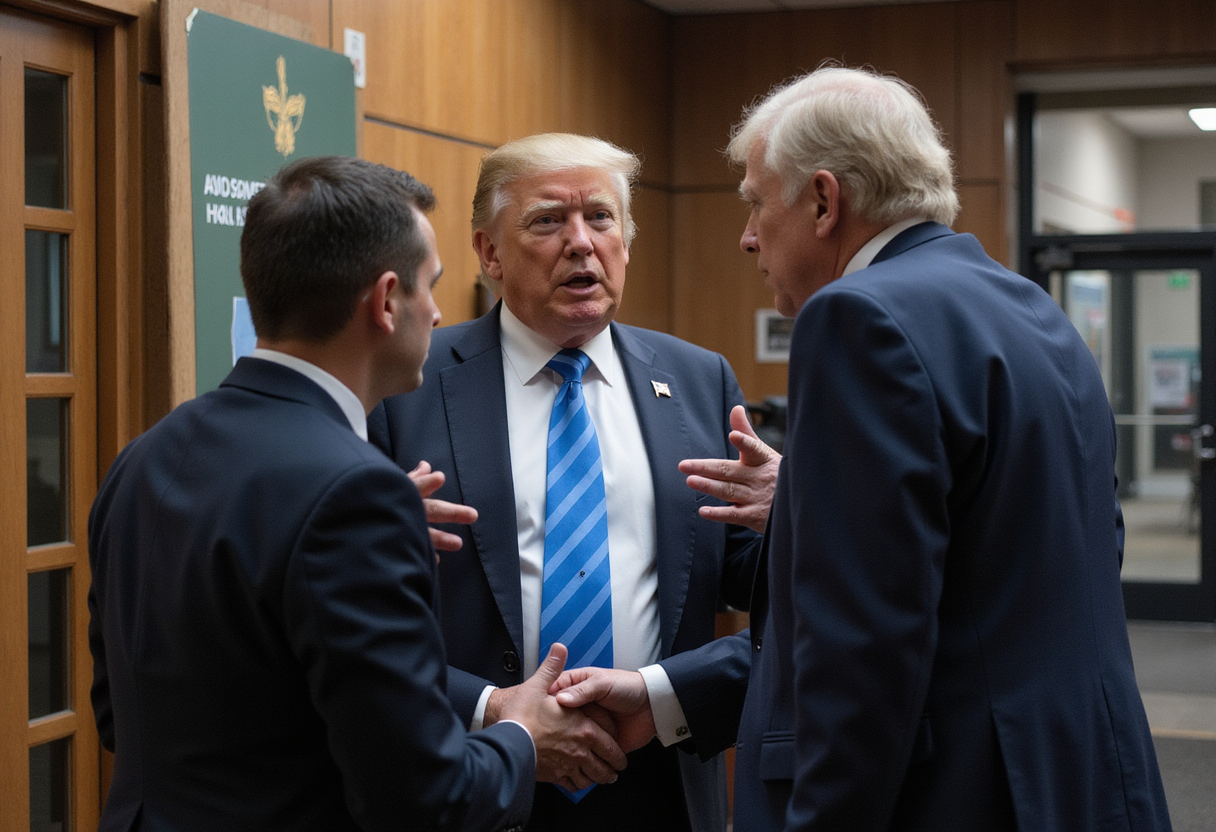
A threat by President Donald Trump to blow up the current trade deal has put Canada's principal auto manufacturing town back at the center of North American trade policy, The Washington Post reports.
The report does not specify new tariff rates or implementation dates. What it does make plain is the exposure. The Canadian auto town at the heart of the story sits directly across the border from Detroit, and its plants operate inside a supply chain that assumes parts and vehicles cross the border multiple times before a finished car rolls off the line.
For plant managers and purchasing chiefs on both sides of the border, the operating question is not political. It is contractual. Tooling commitments, model-year launch schedules and long-term supplier awards were all written against the tariff structure of the United States–Mexico–Canada Agreement. If that structure is reopened, the economics of specific programs — not just the aggregate trade balance — get repriced.
Canadian parts suppliers, most of them tier two and tier three, are the most directly exposed tier in this scenario. Their contracts typically carry no tariff pass-through clauses, because none were needed under USMCA's zero-tariff regime for compliant goods. A unilateral change to that regime would shift the cost question to whoever holds the commercial risk when the truck reaches the bridge.
The Washington Post framing — a threat to "blow up" the deal rather than to renegotiate a clause — matters for how plants should read it. A renegotiation timeline runs in years. A unilateral action could land in weeks, which is a horizon no production schedule can absorb without disruption. OEMs have not, according to the report, announced capacity shifts in response. Any claim that plants are already moving volume should be treated as unverified until an OEM or supplier confirms it with production data.
What the story does confirm is the asymmetry of exposure. The town in question depends on auto manufacturing for its economic base in a way few American jurisdictions do, and its plants are integrated with US assembly operations rather than competing with them. That cuts both ways. It makes the location vulnerable to any border friction. It also makes the plants there difficult to replace quickly, because the cross-border flows they serve are built into vehicle programs already in production.
For manufacturing planners, the practical watch items are these. First, whether the threat converts into a formal notice of intent to withdraw from or renegotiate the agreement, which starts a clock. Second, whether any tariff action is announced with an implementation date or left open-ended, which determines whether suppliers can price it. Third, whether OEMs begin publicly flagging production impacts in earnings guidance or supplier communications — the earliest reliable signal that schedule risk has become real.
Until one of those happens, the story remains a policy threat with a known blast radius and no confirmed detonation date.
via Google News: Auto industry policy (Source)