ECO-6915 · REV Z · effective October 16, 2026
Vehicle Plants & ProductionRELEASEDEngineering notice
Toyota to build hybrid Lexus NX in Cambridge, Ontario this December
Toyota will start building a hybrid-only Lexus NX at its Cambridge, Ontario complex this December, Bloomberg reported. The move bucks a retreat by Detroit Three rivals and arrives as US tariffs loom.
Scope of change
- Toyota begins hybrid Lexus NX output at its Cambridge, Ontario complex in December 2026, per Bloomberg.
- Toyota produced 537,518 vehicles at its two Ontario plants last year; about 85% went to export markets, mostly the United States.
- The Cambridge launch follows a separate $1.1bn investment allocated to the latest RAV4 crossover, which entered production in January.
- US tariffs of 50% on vehicle imports have been threatened if no bilateral deal is concluded by 1 January.
- Annual Canadian vehicle assembly fell from roughly three million units in 2000 to 1.3 million in 2024.
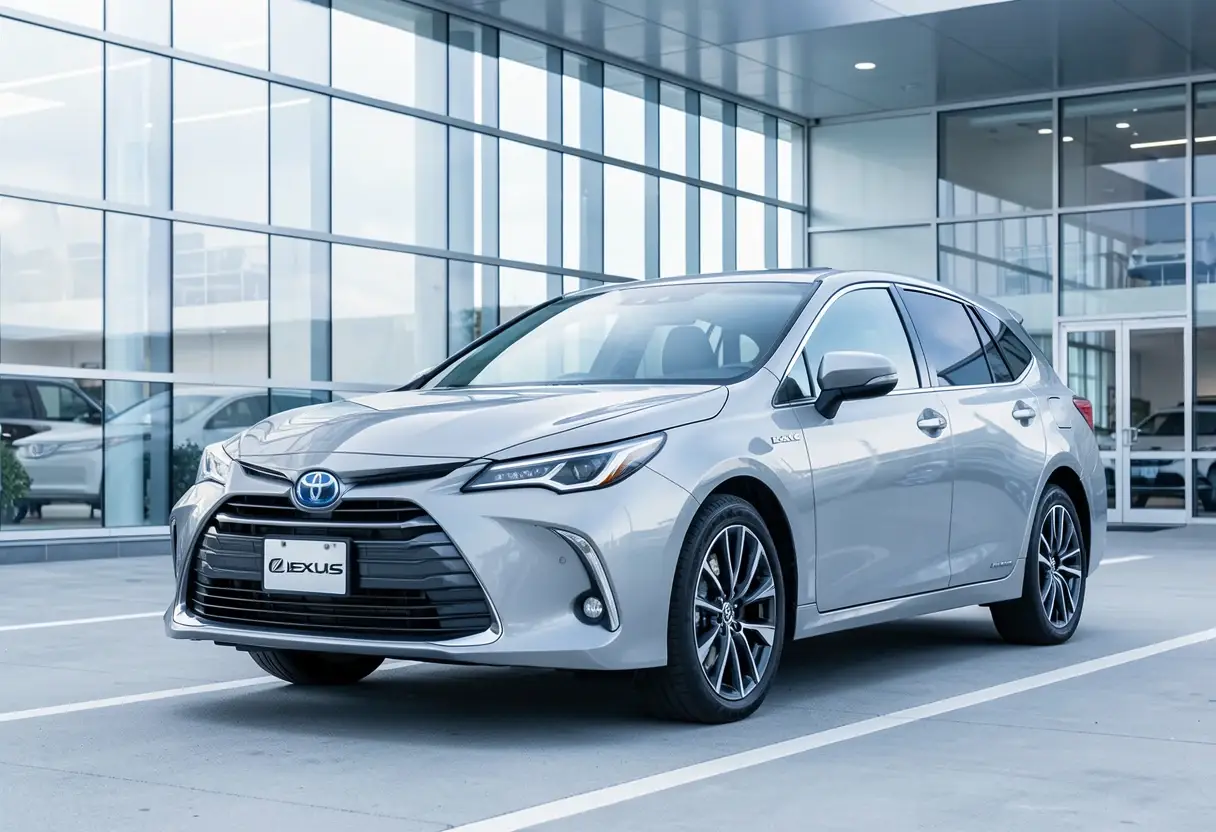
Toyota will begin building a hybrid-only Lexus NX at its Cambridge, Ontario complex this December, Bloomberg reported on 15 October. The Japanese car maker has earmarked capital expenditure running into the hundreds of millions of dollars for the programme.
The Cambridge launch follows a separate $1.1bn investment allocated to the latest RAV4 crossover. RAV4 production began in January. The two programmes together anchor Toyota's Ontario build base through the end of the decade.
How full is Toyota's Canadian pipeline?
Toyota produced 537,518 vehicles last year across its two Ontario plants. Both facilities ran at or near full capacity on two shifts plus overtime. About 85% of that volume shipped to export markets, predominantly to the United States.
Toyota Motor Manufacturing Canada corporate affairs director Scott MacKenzie told Bloomberg: "We're fully committed to making cars in Canada for the long-term. We continue to invest here and think Canada is a great place to make cars."
That statement is a claim, not a confirmed capacity figure. Cambridge has not published how many NX units it will build per year. Bloomberg cites the headline investment but does not break out unit allocation or model split between RAV4 and the incoming NX programme, leaving the production ratio unverified.
The "hundreds of millions" figure is itself worth scrutiny. Toyota has not separated tooling, robotics and retooling costs from the headline number. Without that line item, supply chain planning remains opaque for parts suppliers across southwestern Ontario.
What trade headwinds does the plan face?
US tariffs of 50% on vehicle imports loom if no broader bilateral deal lands by 1 January. The NX launch lands inside that deadline window. Cambridge exports roughly 85% of output across the border.
The Toyota decision contrasts with Detroit's retreat from the region. General Motors removed a shift at its truck facility near Toronto last year. GM also closed output at its Ingersoll plant in 2025.
Stellantis halted production at a Toronto-area facility it now intends to sell. Ford abandoned plans to build electric vehicles in Canada, refocusing on heavy-duty trucks. Honda paused capacity expansion and cancelled a C$15bn ($10.58bn) Ontario battery supply chain.
Toyota is the only major automaker expanding Canadian output this year, a distinction that carries political weight and leaves the OEM exposed if tariff exemptions are not extended to hybrid models.
How steep is Canada's wider contraction?
Annual Canadian vehicle assembly fell from roughly three million units in 2000 to 1.3 million in 2024, a 57% drop across 24 years that has hollowed out the supplier base. Domestic competition is also rising on a second front.
Federal quotas will permit increased Chinese imports under a bilateral arrangement. Geely has signalled entry into the Canadian market next year. That adds pricing pressure on Toyota's domestic deliveries before the new programme even adds volume.
Toyota sold 249,445 vehicles in Canada last year to gain share. GM still led the market at roughly 300,000 units. Toyota's trajectory diverges from cuts at every Detroit Three operation in the province.
The provincial supplier base will feel each of those decisions directly. Tooling vendors, stampers and seat makers in southern Ontario have already absorbed programme cancellations from three of the five major OEMs. Toyota's expansion partially offsets that pressure but cannot replace the lost volume on its own.
What to watch next
The December Cambridge start will test whether Toyota can absorb the NX programme without displacing RAV4 output or forcing overtime beyond the current two-shift pattern. The 1 January US-Canada tariff deadline will determine whether the export economics still hold for the 85% share bound south.
A confirmed NX unit allocation has not appeared in any regulatory filing or public statement reviewed by Autoplant Brief.
via bloomberg.com (Original)
More from Amara Osei
Show full bio
Market editor covering technology and product news in Automotive manufacturing and vehicle production at Autoplant Brief.
228 articles
Also circulated
- Toyota Commits $3.6 Billion to New Auto Plant in Texas
- Trump Threatens 50% Tariff on Vehicles and Parts From Canada
- Toyota commits $1.34 billion to Argentina's largest-ever auto plant
- Toyota Pegs Automation Push at 400,000 Robots, $6.4B a Year
- Toyota Targets In-House Gigacasting for Lexus EV Plant in China