ECO-1843 · REV T · effective September 28, 2026
Auto Industry PolicyRELEASEDEngineering notice
Trump Threatens 50% Tariff on Vehicles and Parts From Canada
Trump threatens a 50% tariff on Canadian vehicles and parts, a rate that would hit Ontario assembly plants and the cross-border parts flows feeding US lines.
Scope of change
- Trump threatened a 50% tariff on vehicles and parts imported from Canada, the Wall Street Journal reports.
- The threatened rate, if enacted, would apply to Ontario assembly plants run by Stellantis, Toyota, Ford and GM, and to cross-border parts flows.
- No effective date, formal proclamation, or product scope has been confirmed; the threat has not been enacted into policy.
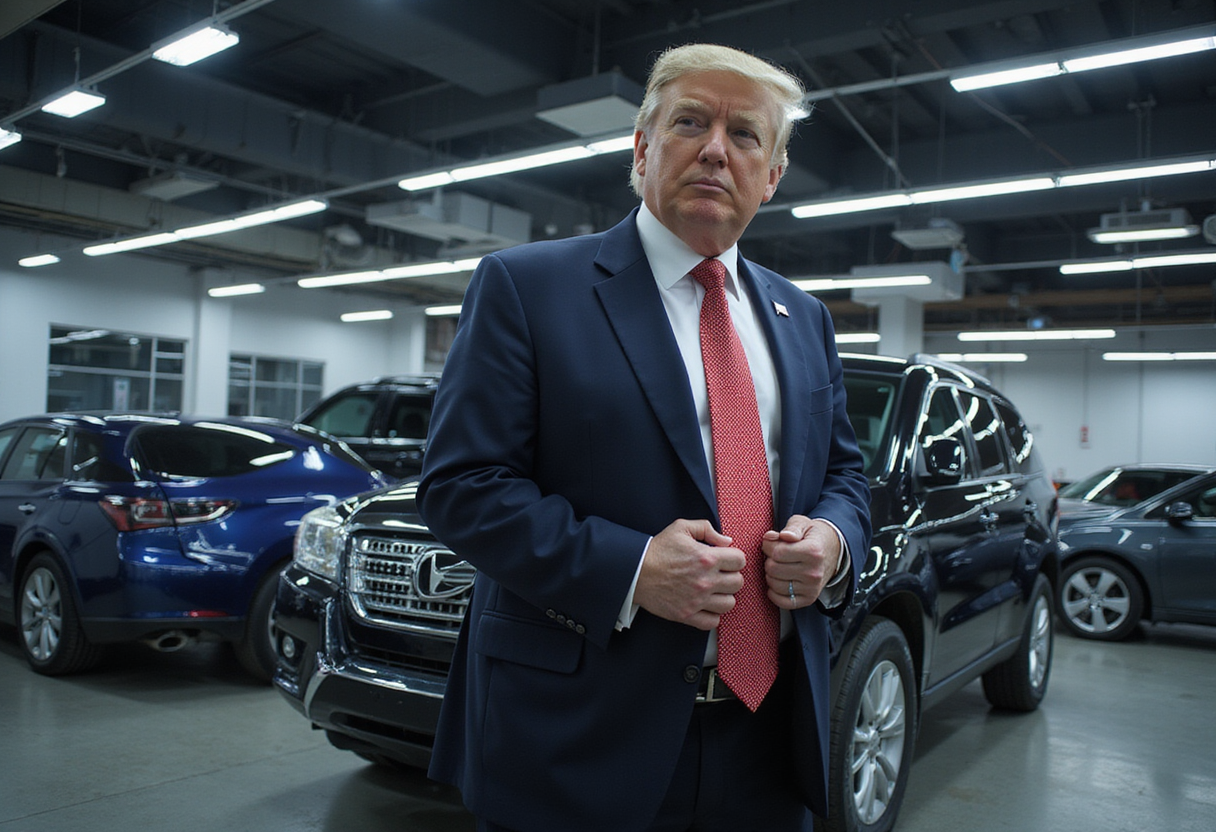
President Donald Trump has threatened to impose a 50% tariff on vehicles and parts imported from Canada, according to a Wall Street Journal report — a rate that, if enacted, would land directly on the tightly integrated Canada–US automotive supply chain.
The threatened 50% figure matters more for what it targets than for its headline size. Vehicles assembled in Canada for the US market come from a small number of plants: Stellantis operates Windsor and Brampton in Ontario, Toyota builds the RAV4 in Cambridge and Woodstock, Ford assembles trucks in Oakville, and GM runs the Oshawa and CAMI plants. A tariff at that level would reshape the economics of every one of those operations.
Parts are the larger exposure. Engines, transmissions, stampings, seats and wiring harnesses cross the border multiple times before a finished vehicle rolls off a final line — a structure built around the USMCA trade agreement's regional content rules. Parts producers on both sides of the border, from Tier 1 system suppliers to small stamping houses, ship into US assembly plants daily. A 50% duty on Canadian-origin parts would raise input costs for US plants as much as for Canadian ones.
Two distinctions are essential here. First, this is a threat, not a implemented policy. The report describes a threatened action by the president; no effective date, formal proclamation, or tariff schedule has been confirmed in the reporting available. Second, the scope — whether the 50% would apply to all Canadian-origin vehicles and parts, or only to goods outside USMCA compliance — is not specified in the reporting. That distinction determined the real-world impact of earlier tariff rounds this year, when USMCA-compliant parts received different treatment from non-compliant goods.
For plant planners, the immediate question is sourcing, not headline rates. OEMs that spent the spring re-routing parts flows and re-papering origin documentation after earlier tariff announcements would face a much steeper calculation at 50%. Suppliers with single Canadian plants feeding US lines have the least flexibility; multi-plant Tier 1s can shift allocation, but only over months, not weeks.
The threat also lands on an industry already adjusting capacity to US tariff policy. Several OEMs moved to expand US assembly volumes this year in response to the existing 25% vehicle tariff regime, with announcements concentrated in Michigan, Ohio and the Southeast. A 50% Canadian rate would sharpen the cost gap between US-built and Canadian-built vehicles for the US market, increasing pressure on the Ontario assembly footprint.
Canadian officials and Ontario Premier Doug Ford have previously pushed to keep automotive trade inside the USMCA framework, and the industry's lobbying position has consistently argued that tariffs on parts raise costs for US plants rather than protecting them. Neither a response from Ottawa nor a confirmation of next steps from the White House appears in the initial report.
What to watch next: whether the threat converts into a signed proclamation with an effective date and a defined product scope; whether USMCA-compliant goods are carved out, as they were in part during earlier tariff actions; and how quickly OEMs with Ontario assembly exposure — Stellantis, Toyota, Ford and GM — respond with production or sourcing adjustments.
via Google News: Auto industry policy (Source)
More from Grace Kim
Show full bio
Staff writer covering industry trends and analytics at Autoplant Brief.
82 articles
Also circulated
- Trump Threatens 50% Tariff on Canadian Vehicles and Parts
- Trump's 50% Auto Tariff Threat Rattles Southwestern Ontario Plants
- Trump Doubles Canada Auto Tariffs as Industry Warns of Competitive Hit
- Even a 15% U.S. Tariff Could Hit Canadian-Built Vehicles Hard
- Tariff Threat Hangs Over Auto Industry, Windsor Star Reports