ECO-2127 · REV H · effective November 5, 2026
Vehicle Plants & ProductionRELEASEDEngineering notice
Tesla Opens €100 Million Berlin Engineering Centre, 250 Staff First
Tesla moves 250 engineers into a €100 million, 30-lab engineering centre in Berlin-Köpenick, halfway between the city and Grünheide. Phase two would double staff.
Scope of change
- Tesla has moved into BTEC in Berlin-Köpenick, a €100 million investment
- Around 250 engineers and technicians at launch; expansion approval sought for ~500
- Renovated ~20,000 m² factory complex with 30 laboratories, consolidating four development sites
- Tesla's third engineering hub after Fremont and Shanghai; about one-fifth of global developers were in Germany as of 2025
- Site decision followed review of more than three dozen locations, announced by Lars Moravy a year ago
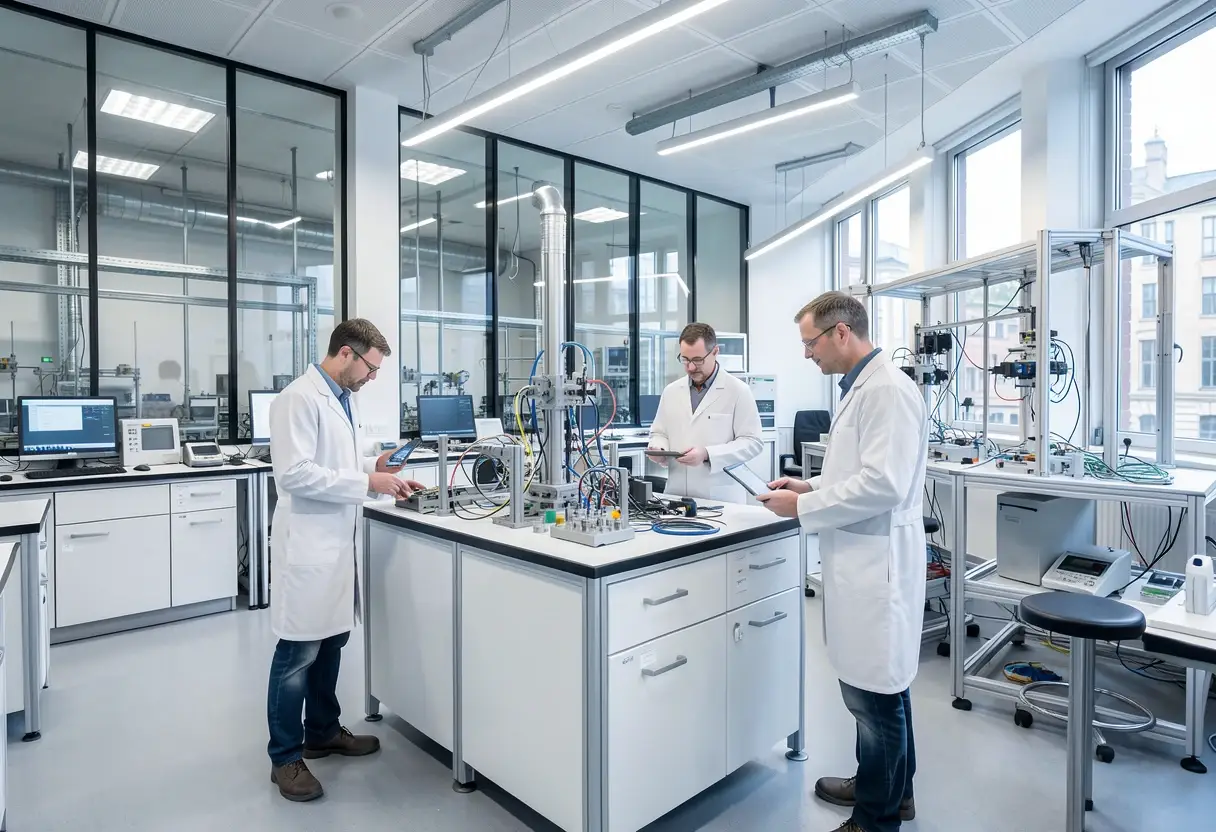
Tesla has moved into its new Berlin Tesla Engineering Centre (BTEC) in Köpenick, a €100 million project that puts roughly 250 engineers and technicians to work in a renovated 20,000-square-metre factory complex — with paperwork already filed to double the headcount.
The company confirmed the move-in this week. The site sits about halfway between central Berlin and the Gigafactory in Grünheide, Brandenburg, which was apparently the point: short feedback loops between development and production ramp.
Tesla calls Berlin its "third hub of this kind after Fremont and Shanghai." In its own words: "We're combining materials, powertrain, vehicle engineering & validation under one roof – enabling a short feedback loop between development & ramp."
What took so long?
When Tesla established the Grünheide Gigafactory a few years ago, it promised a European engineering centre in the Berlin area. That promise sat unfulfilled until about a year ago, when Lars Moravy, the Tesla manager who oversees the development department, announced the final site decision.
Moravy said last year that Tesla had examined more than three dozen locations and considered building from scratch before settling on Köpenick. The facility won, he said, "because of the spacious area and good energy supply – and the location between Berlin and Grünheide."
Renovating an old factory complex beat a greenfield build, at least on paper. The site now consolidates four development locations onto a single campus with 30 different laboratories.
What happens inside?
Engineers in Köpenick will develop new vehicles, motors and materials, and run tests. According to the German news portal RBB24, the work includes:
- safety tests on vehicle components
- battery cell testing, carried out in a large hall at the centre
Findings from the development and test work will flow back into production at Grünheide — the closed loop Tesla says it wanted all along.
How big can it get?
The €100 million investment covers the first phase. RBB24 reports Tesla has already applied for approval of a second expansion phase, which would grow the centre to around 500 engineers and technicians. Take that as an intention with a permit file behind it, not a confirmed capacity figure.
The Köpenick site also needs context. As of 2025, Tesla employed around 2,000 engineers and technicians across Germany, spread over many locations — including Tesla Grohmann Automation in Prüm, the plant manufacturer Tesla acquired years ago. That's about one-fifth of Tesla's global developer base working in Germany.
So 250 seats in Köpenick is a consolidation play as much as an expansion: pulling scattered German R&D muscle onto one campus next to the factory that builds the cars. Whether phase two arrives on schedule is the number to watch, along with which vehicle programs BTEC actually touches first.
The permit decision on the 500-staff expansion is the next milestone.
via rbb24.de (Original)
More from Daniel Okafor
Show full bio
Senior reporter covering regulation, policy and their impact on Automotive manufacturing and vehicle production at Autoplant Brief.
293 articles