Effective November 19, 2026
Suppliers & Tier-1sEngineering notice
Solis targets Jan. 13, 2027 KOSDAQ listing after Hanwha SPAC merger
Solis targets a Jan. 13, 2027 KOSDAQ listing after a Hanwha SPAC merger, with North American projects lifting revenue 53.1% and plans spanning European battery equipment and U.S. semiconductors.
Scope of change
- Nov. 26 shareholder vote and Dec. 29 merger closing precede the scheduled Jan. 13, 2027 KOSDAQ listing.
- Last-year revenue reached KRW 72.4 billion, up 53.1%, with KRW 6.8 billion operating profit and KRW 5.9 billion net income.
- Through Q3, revenue totaled KRW 38.3 billion and operating profit KRW 3 billion, but net income showed a KRW 28.5 billion loss.
- Solis has four Canadian and U.S. subsidiaries and contracts with Next Star Energy, L-H Battery and an LG Energy Solution plant.
- A September tier-one supplier registration with Samsung SDI supports market access, but no European order or capacity was disclosed.
By Marcus Bennett
Solis plans to list on the KOSDAQ on Jan. 13, 2027; last year, the South Korean equipment maker generated KRW 72.4 billion in revenue, up 53.1%. The listing still depends on shareholder approval of its merger with Hanwha Plus No. 5 Special Purpose Acquisition Company, or SPAC (a company formed to take a business public).
Shareholders will vote on the merger approval Nov. 26, with closing set for Dec. 29. Solis will survive as the combined company, while Hanwha Plus No. 5 will dissolve; Hanwha Investment Securities will manage the transaction. The new shares are scheduled to begin trading on KOSDAQ Jan. 13, 2027.
What has Solis secured in North America?
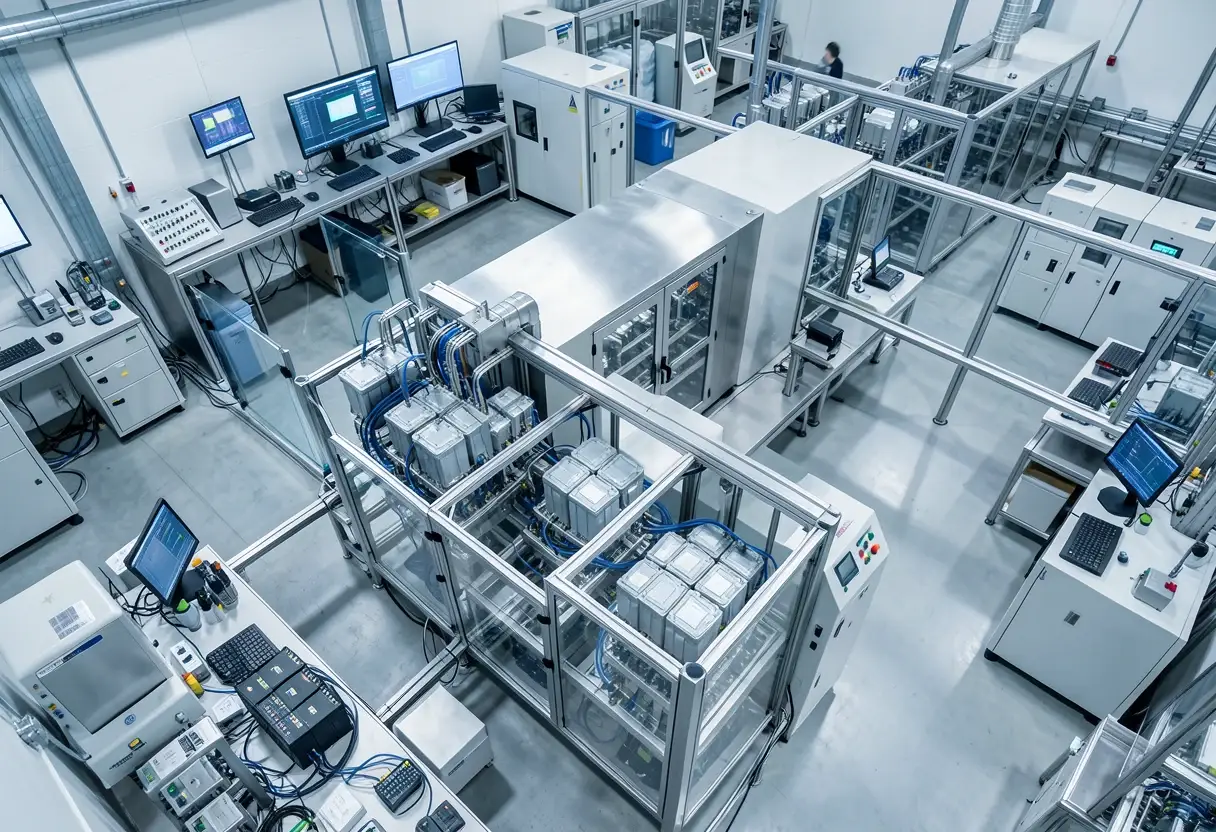
Founded in 2018, Solis designs and manufactures chemical-material supply and recovery equipment for semiconductor and secondary-battery production, meaning rechargeable battery manufacturing. Its systems recover and purify battery-process solvents for reuse and automatically supply electrolyte to production lines.
At an IPO press briefing on the 19th, Solis said it would widen global customer cooperation through an integrated engineering model. That model covers equipment design and fabrication, on-site installation, trial operation and commissioning (testing before production). “Our integrated engineering capability secures the trust of global customers,” CEO Lee Jong-pil said.
After establishing four local subsidiaries in Canada and the United States and obtaining certifications, Solis said it won three construction contracts:
- Next Star Energy — Canada
- L-H Battery — Ohio
- LG Energy Solution plant — Michigan
The announcement provides no contract values, capacity additions or production dates for the three projects. That leaves the North American wins as confirmed customer work, while their effect on output remains unquantified.
What do the earnings show?
Solis tied last year's improvement to its North American expansion.
- Last year: consolidated revenue of KRW 72.4 billion, up 53.1%; operating profit of KRW 6.8 billion; net income of KRW 5.9 billion.
- Through the third quarter this year: cumulative revenue of KRW 38.3 billion and operating profit of KRW 3 billion, maintaining operating profitability; a KRW 28.5 billion net loss.
The announcement did not break down the reasons for the net-income reversal. Readers should therefore separate operating traction from bottom-line performance rather than treat the two indicators as interchangeable.
Which expansions are contracted and which remain targets?
Solis expects existing customers' line expansions and maintenance to support equipment demand. It also wants new business in Europe's secondary-battery equipment market, having registered as a tier-one supplier to Samsung SDI in September. That status opens a route to the market, but it is not evidence of an order or a committed European production program.
In the United States, Solis intends to apply its experience building semiconductor equipment infrastructure in South Korea to ultrapure water supply, water treatment, and electrical and instrumentation systems. Ultrapure water contains almost no impurities and serves semiconductor production; the other systems provide the utilities and controls needed to operate a fabrication facility.
Solis has not named a U.S. customer, factory, investment or capacity target for that plan. It therefore remains an announced business direction rather than a confirmed production program.
What does this change for plant operators?
For plant operators, Solis offers one point of accountability across process-equipment design, fabrication, installation and start-up. That combination could reduce handoffs between engineering and construction teams, but the announcement does not demonstrate added cell or chip output. Readers should separate the three named North American contracts from the European and U.S. targets: only the former carry disclosed customers and locations.
What should readers watch next?
The immediate sequence is the Nov. 26 shareholder vote, the Dec. 29 merger and the Jan. 13, 2027 listing. Beyond that corporate timetable, plant operators should watch for named European battery and U.S. semiconductor contracts, disclosed investment and capacity figures, and commissioning dates. Until those details appear, Solis's overseas targets remain announced intentions rather than measurable production growth.
via news.jkn.co.kr (Source)
More from Marcus Bennett
Show full bio
News editor covering regulation, policy and their impact on Automotive manufacturing and vehicle production at Autoplant Brief.
324 articles
Also circulated
- Solterra opens Bengaluru R&D on Sept 18 as Sinpro distribution deal lands
- Pino commits 51 billion won to Singapore unit in nickel supply push
- Orient Precision, KOMOTEC target motors and actuators
- Hyundai Mobis to sell lighting unit to OPmobility for $441m
- Samsung SDI Pivots to ESS as EV Battery Drag Persists