ECO-3802 · REV O · effective October 14, 2026
Vehicle Plants & ProductionAPPROVEDEngineering notice
Renault to build new BEV at Busan from 2028
Renault plans a Busan-built BEV for 2028 and a new hybrid in 2027, as Korean sales fell 32% to 47,231 units in the first nine months of 2026.
Scope of change
- New South Korea-built BEV launches in 2028; a new hybrid follows in 2027
- Renault Korea global sales fell 32% to 47,231 units in the first nine months of 2026
- Local sales dropped 32% to 27,203 units; exports down 32% to 20,028 units
- BEV will feature Level 2++ autonomous driving and in-house City NOA urban driving system
- Busan plant targeted as a major global hub for C- and D-segment vehicles
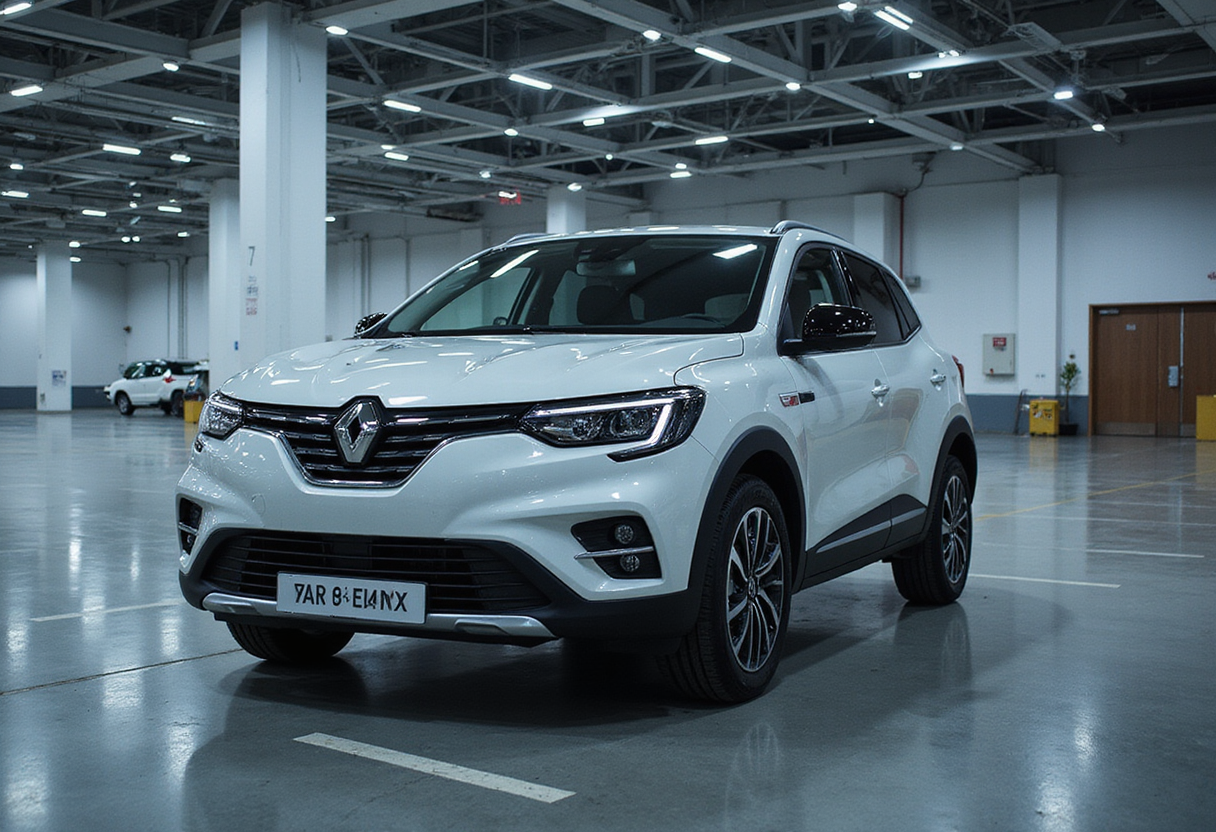
Renault will launch a new South Korea-built battery electric vehicle in 2028, with a new hybrid model arriving a year earlier, as the French OEM tries to reverse a 32% sales collapse at its Korean operation.
Executives laid out the plan at the 2026 Paris Motor Show this week. Renault Korea sold 47,231 units globally in the first nine months of 2026, down 32% year on year. Local sales fell 32% to 27,203 units. Exports dropped 32% to 20,028 units. That's a uniform decline across every channel, despite the recent launch of the Filante hybrid SUV.
The new models target exports first. Busan is the designated plant, and the stated goal is scale: more output, more shipments abroad.
What does this change for Busan?
Renault's director of global sales and operations, Ivan Segal, confirmed that South Korea "is a very important and strategic market for us" — but acknowledged the company can't lean on its existing hybrid lineup alone. He described the Busan plant as one of Renault's most competitive manufacturing sites for C- and D-segment vehicles globally. The stated ambition is to turn Busan into a major global manufacturing hub for those segments.
That's a positioning claim, not a confirmed capacity number. Renault has not published a production target, headcount plan or investment figure for the program. Watch whether one follows.
The technology package
Chief technology officer Philippe Brunet confirmed the new BEV will carry what Renault calls Level 2++ autonomous driving — an advanced driver-assistance tier short of full autonomy, handling steering and acceleration with driver supervision. It sits within the company's broader push to integrate artificial intelligence into its vehicles.
Renault is also developing an in-house urban navigation-assisted driving system, City NOA (Navigation on Autopilot), which handles guided driving on city routes.
Timing and what to watch
The sequence is fixed, at least on paper:
- 2027: new hybrid model joins the South Korean lineup
- 2028: new BEV enters production at Busan
Both dates were presented at Paris as plans, and BEV programs have slipped across the industry before validating them against firm production milestones.
What does this change for Renault Korea? Potentially a lot, if Busan output finds export markets. The operation's 2026 numbers show the urgency: nothing in the current lineup is holding volume. The Filante launch didn't stop the slide.
Watch next: confirmation of a production start date at Busan, any announced capacity or investment for the BEV program, and whether the 2027 hybrid arrives on schedule. First-quarter 2027 sales data will show whether the decline has bottomed out before the new metal lands.
via just-auto (Source)
More from Grace Kim
Show full bio
Staff writer covering people, launches and day-to-day practice in Automotive manufacturing and vehicle production at Autoplant Brief.
167 articles
Also circulated
- Korea to Cut Hyundai EV Plant Permits From 40 Months to 12
- Hyundai to Fast-Track Ulsan EV Plant Conversion, Report Says
- South Korea's Big-Five Domestic Sales Fall 20% in September
- South Korea slashes Hyundai EV plant rebuild permit window to one year
- Hyundai Transys to Invest $560M in Georgia Hybrid Powertrain Plant