ECO-2151 · REV P · effective October 9, 2026
EV Manufacturing TransitionRELEASEDEngineering notice
Honda, Taisei set FY2027 in-motion wireless EV charging demo
Honda R&D, Taisei and Taisei Rotec will demonstrate an in-motion wireless EV charging road system in FY2027, targeting passenger cars through heavy trucks with logistics operators first in line for commercial deployment.
Scope of change
- Demonstration scheduled for fiscal year starting 1 April 2027
- Three co-developers: Honda R&D, Taisei Corporation, Taisei Rotec Corporation
- System targets passenger EVs through heavy trucks and buses
- First commercial use planned for logistics and transportation sectors
- Architecture uses magnetic coupling for wireless power transfer with DC distribution
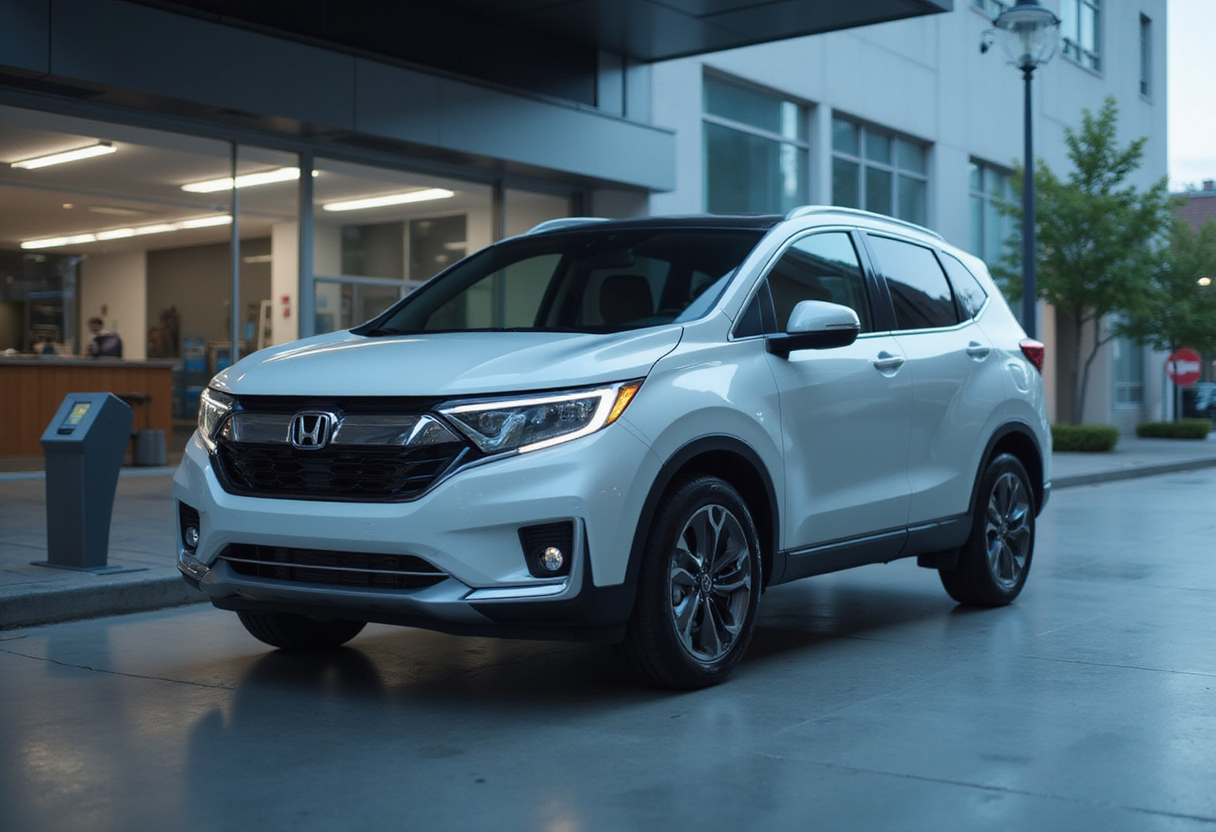
Honda R&D Company, the research arm of Honda Motor Company, will road-test an in-motion wireless EV charging system in the fiscal year beginning 1 April 2027. The project pairs Honda with two construction-sector partners: general contractor Taisei Corporation and roadworks specialist Taisei Rotec Corporation.
The three companies have co-developed the underlying technology for what Honda calls a magnetic-coupling wireless power transfer (WPT) road system.
Honda confirmed each partner contributed a discrete subsystem. The automaker supplied a high-power-density power receiver and transmitter engineered for DC power distribution. Taisei delivered a high-response DC power supply unit. Taisei Rotec provided the equipment-embedding technology that installs the hardware into road surfaces.
The architecture is designed to transfer power at high wattage while easing the disruption and cost of cutting into pavement — a chronic limitation of earlier road-embedded charging pilots. The partners are positioning the system to serve vehicles ranging from passenger EVs to heavy trucks and buses.
Honda said the WPT technology "is expected to enhance the convenience of EVs by supplying power to vehicles while they are in motion, thereby reducing the frequency of charging needed at home or at charging stations." Practical introduction will start in the logistics and transportation sectors, where vehicles run scheduled, repeatable routes.
What does the FY2027 demo actually involve?
Honda has framed the demonstration milestone as a technical proof, not a commercial launch. The announcement did not specify the test site, route length, vehicle fleet or power throughput. Watch for those parameters when Honda publishes the demonstration programme in the quarters ahead of April 2027.
Which sectors does Honda target first?
The company is sequencing commercial deployment toward logistics fleets and bus operators. Fixed-route operation makes charging economics far more predictable than random public use, and depot-side static chargers still leave long-haul trucks idling at terminals. In-motion road charging is the option Honda's partners believe can cut the number of stationary charging stops operators currently plan into daily routes.
What does the partner split mean for manufacturing?
Each firm is contributing its core competence rather than a generic consortium role:
- Honda R&D: receiver/transmitter hardware and DC power distribution architecture
- Taisei Corporation: high-response DC power supply system
- Taisei Rotec Corporation: road-embedding installation technology
Taisei's general-construction pedigree, combined with Taisei Rotec's pavement-installation expertise, addresses a question the auto industry has historically left to utilities: how to embed power-transfer hardware under live traffic without surface failure. The arrangement looks closer to a telecoms rollout than to a conventional tier-one automotive supply contract.
What to watch next
The April 2027 trial start is the first clear benchmark. Subsequent markers to track include the power-transfer rating achieved in road testing, identification of any commercial pilot corridor — Honda's home Japanese market remains the probable venue — and disclosed cost-per-kilometre installation data. Those figures will determine whether the WPT road system can move from a single controlled corridor to wider highway deployment.
via just-auto (Source)
More from Amara Osei
Also circulated
- Honda Repurposes EV Plant to Build Batteries for Data Centers
- Honda Poised to Shelve $11 Billion Canada EV Project: Nikkei
- Suzuki to launch e SKY mini EV in Japan on 16 November with 310 km range
- Spain's PERTE program grants NX Technologies €1.9 million for LEV inverter R&D
- Hyundai, Kia and LGES test second-life EV batteries as charging buffers