ECO-5889 · REV P · effective September 30, 2026
Industry Analysis & MarketsRELEASEDEngineering notice
Honda, Ford and Toyota Warn of China's Vehicle Output Capacity
Honda, Ford and Toyota have issued a blunt warning on China's vehicle production capacity, with one executive stating "We will not survive" amid rising competitive pressure.
Scope of change
- Honda, Ford and Toyota executives have publicly warned about the scale of China's vehicle production capability.
- One executive was quoted saying: "We will not survive."
- The warning reflects Chinese automakers' growing domestic share and expanding exports into markets long held by legacy OEMs.
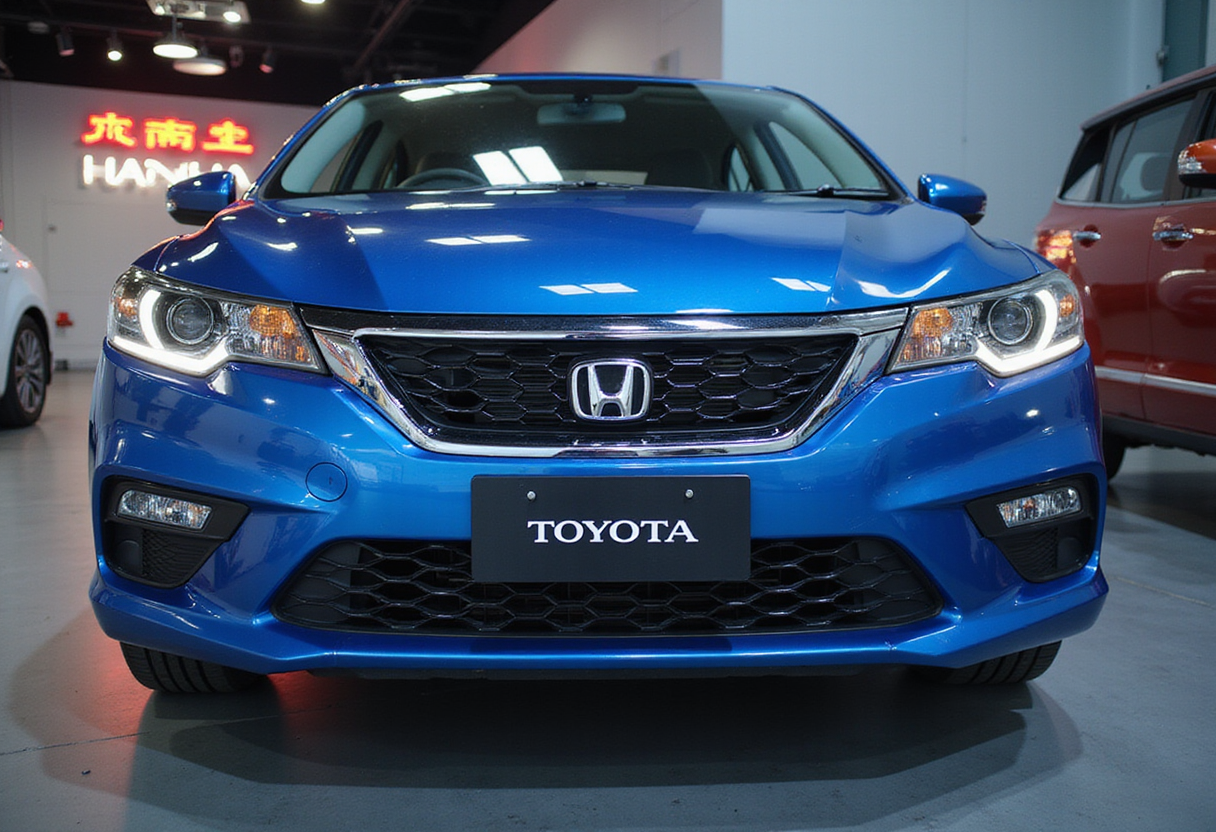
Three of the world's largest legacy automakers — Honda, Ford and Toyota — have issued an unusually blunt warning about the scale of China's vehicle production capability, with one executive quoted as saying of the competitive threat: "We will not survive."
The statement, reported by MotorBiscuit, marks a sharp escalation in rhetoric from manufacturers that have spent decades treating China as both a growth market and a low-cost production base. The quoted executive's framing leaves no room for the hedged language that typically accompanies OEM commentary on competitive risk.
The warning lands as Chinese automakers continue to expand output at a pace that legacy manufacturers cannot match on cost. For Honda and Toyota, the pressure is most acute in China's own market, where domestic brands have taken share from Japanese incumbents that once dominated the segment. Ford, which has already restructured its China operations, faces the same producers as they begin exporting at scale into Southeast Asia, Europe and Latin America — markets where the Detroit automaker and its Japanese rivals have historically held volume.
What makes the warning notable is who is delivering it. Honda and Toyota have rarely spoken publicly about competitive threats in existential terms. Toyota remains the world's largest automaker by volume; Honda is a top-five Japanese producer. When executives at companies of that scale use language like "we will not survive," it signals that internal planning scenarios now treat Chinese production capacity as a structural threat to their global volume base, not a regional pricing problem.
The production numbers behind that concern are well established in industry data. China builds and sells more vehicles annually than any other country, and its manufacturers have added capacity aimed at export markets, not just domestic demand. That combination — domestic scale plus export ambition — is what compresses the price points at which legacy OEMs can profitably compete in third markets.
The quote also reflects a broader shift in how legacy automakers discuss China. Early in the EV transition, Western and Japanese executives framed Chinese brands as a local phenomenon. That framing has collapsed. In the past two years, executives across the industry have acknowledged that Chinese producers lead on battery-electric vehicle cost structures and are exporting that advantage globally.
For manufacturers with plants in North America, Europe and Japan, the strategic question the warning raises is straightforward: which production footprints can be defended, and at what volumes. Announced restructuring plans across the legacy sector — capacity cuts, plant closures and shifts toward hybrid and lower-volume platforms — already reflect the scenario the executives describe. Supplier tier alignment follows: component makers tied to high-volume internal combustion programs face the same arithmetic as their OEM customers.
What to watch next: whether Honda, Ford and Toyota translate the warning into specific capacity actions — plant closures, market exits or accelerated localisation in third markets — and whether policy responses in the US and EU, including tariffs on Chinese-built vehicles, alter the export economics that drive the threat. The executives' own sales reporting in China over the coming quarters will show how fast the pressure is building.
via Google News: Auto plant and vehicle production (Source)
More from Amara Osei
Also circulated
- ITIF: US Auto Industry Needs National Strategy for China Challenge
- Sector Confidence Rises, But Tariffs And China Lead Worry List
- Chinese carmakers are piling pressure on UK rivals, industry chief says
- Auto Industry Presses Trump to Block Chinese Automakers Before Xi Talks
- Tariffs, Chinese Rivals and EV Slowdown Drag Auto Sector Into Losses