ECO-8084 · REV M · effective October 30, 2026
Production TechnologyAPPROVEDEngineering notice
Four Holes, Two Cylinders: AIM-Joraco Builds Custom Piercing Workcell
AIM-Joraco built a custom workcell in Smithfield, RI, that punches four holes at once using two hydropneumatic cylinders with remote piston technology.
Scope of change
- AIM-Joraco built a custom workcell in Smithfield, RI, that punches four holes simultaneously in a stamped metal part
- The system uses two multistage hydropneumatic cylinders with remote piston technology, with punches operating more than 7 inches from the piston
- The custom worktable is 24 inches wide and movable between production line locations
- Custom piercing dies produce four slots across both sides of the part in a horizontal configuration
- Engineers used stress simulations and iterative design to optimize structural supports for maintenance and changeovers
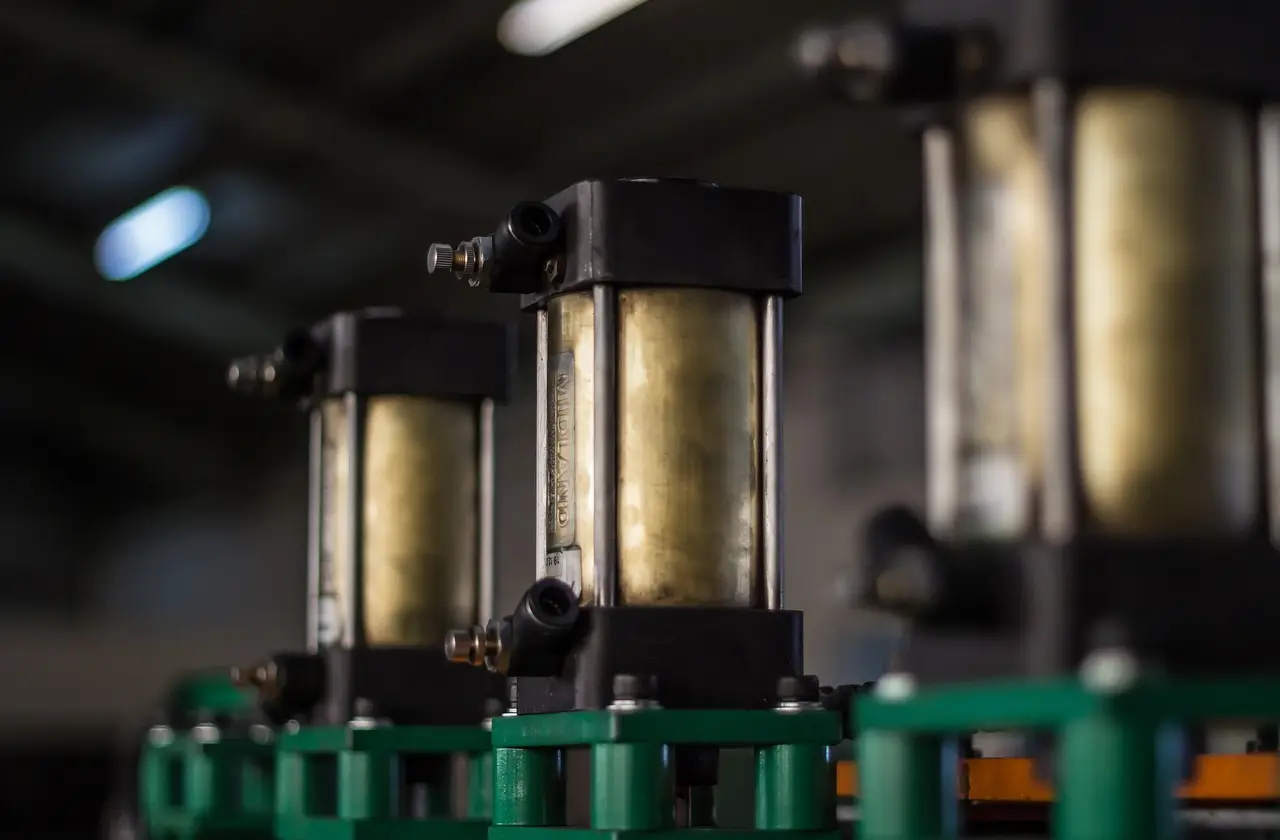
A single workcell from AIM-Joraco now punches four holes at once into a stamped metal part, using just two hydropneumatic cylinders instead of the four a conventional setup would demand. The Smithfield, Rhode Island, company designed and built the custom system for an unnamed customer, and the project shows how far OEMs will push machine builders when part geometry and floor layout refuse to cooperate.
The customer set two constraints at the outset. First, the system had to move parts in and out of the press automatically. Second, it needed a custom worktable, 24 inches wide, that operators could relocate between production line locations. The cell also had to serve two masters on the floor: automated gantries on one side, human operators on the other.
AIM-Joraco's engineers worked directly with the customer's engineering team to review manufacturing requirements and refine the machine concept. The joint review covered part orientation, loading and unloading locations, operator accessibility, and gantry access. It also covered integration with an inbound feed system and an outbound conveyor — the two interfaces that decide whether a custom press becomes a production asset or an island.
How does two cylinders do the work of four?
The mechanical answer sits in the tool area. The team engineered a mobile stand with dedicated mounting points for two multistage hydropneumatic cylinders — devices that combine compressed air with hydraulic oil to deliver high force in a compact stroke. Custom piercing dies produce four slots across both sides of the part in a horizontal configuration.
The key innovation, according to the company, is remote piston technology. Each punch operates more than 7 inches away from the cylinder piston that drives it, and heavy-duty structural supports carry the punches and dies directly in the tool area. That support structure keeps the tooling aligned across the offset, which matters because a punch that drifts even a small distance off axis produces scrap, not slots.
Remote piston arrangements are not new in press engineering, but applying them to halve the cylinder count on a four-hole piercing operation is a meaningful cost decision. Each hydropneumatic cylinder adds purchase cost, maintenance points, and potential leak paths. Two cylinders instead of four cuts all three.
What did the engineering process involve?
AIM-Joraco ran stress simulations and went through iterative design rounds before finalizing the structural supports. The goal was twofold: safe, precise punching in production, and partial disassembly of the tooling area for maintenance and product changeovers.
That second goal is easy to overlook. A press optimized purely for rigidity can become a press nobody can service without a full teardown. Building service access into the structure from the start, rather than retrofitting it, shortens changeover time across the machine's life.
What should manufacturers take from it?
The project is a supplier claim, not audited production data; no throughput figures, cycle times, or force ratings appear in the company's announcement. Buyers evaluating similar custom cells should ask for the same stress simulation results AIM-Joraco cites internally, plus measured repeatability data from the acceptance test.
What to watch next: whether AIM-Joraco extends the remote piston approach to higher hole counts, and whether the mobile worktable concept — a 24-inch-wide surface designed to move between line locations — appears in future standard products rather than one-off builds.
via joraco.com (Original)
More from Sophie Lindqvist
Show full bio
Correspondent covering money, funding and market shifts around Automotive manufacturing and vehicle production at Autoplant Brief.
319 articles
Also circulated
- Assembly Magazine Reports Robots Taking On Difficult Automotive Assembly Task
- EMG Presses Launches Plug-and-Play Force Monitoring for Press-Fit Assembly
- Humanoid robots reach factory floors at BMW, Tesla and Mercedes
- Stellantis Cuts Bolt Miss Rate 10-Fold With Inbolt Vision Guidance
- Mercedes Puts Humanoid Robots to Work on Assembly Line