Effective November 19, 2026
Auto Industry PolicyEngineering notice
EU quota could blunt Chinese hybrid imports after 100,000-unit surge
China’s September hybrid exports neared 100,000, but GlobalData sees timing—not demand—as the driver as the EU quota prompts a Q4 stock build and possible H1 2027 sales lift.
Scope of change
- China exported nearly 100,000 PHEV and FHEV vehicles in September 2026.
- September hybrid exports rose 18.9% from August and 204.2% from September 2025.
- BYD, SAIC, Chery and Geely may front-load through October and November ahead of the December 1 deadline.
- GlobalData expects a Q4 2026 mini-boom to extend into H1 2027 as inventory clears.
- Used vehicles meeting the EU mileage or age definition are exempt from the hybrid quota and countervailing tariffs.
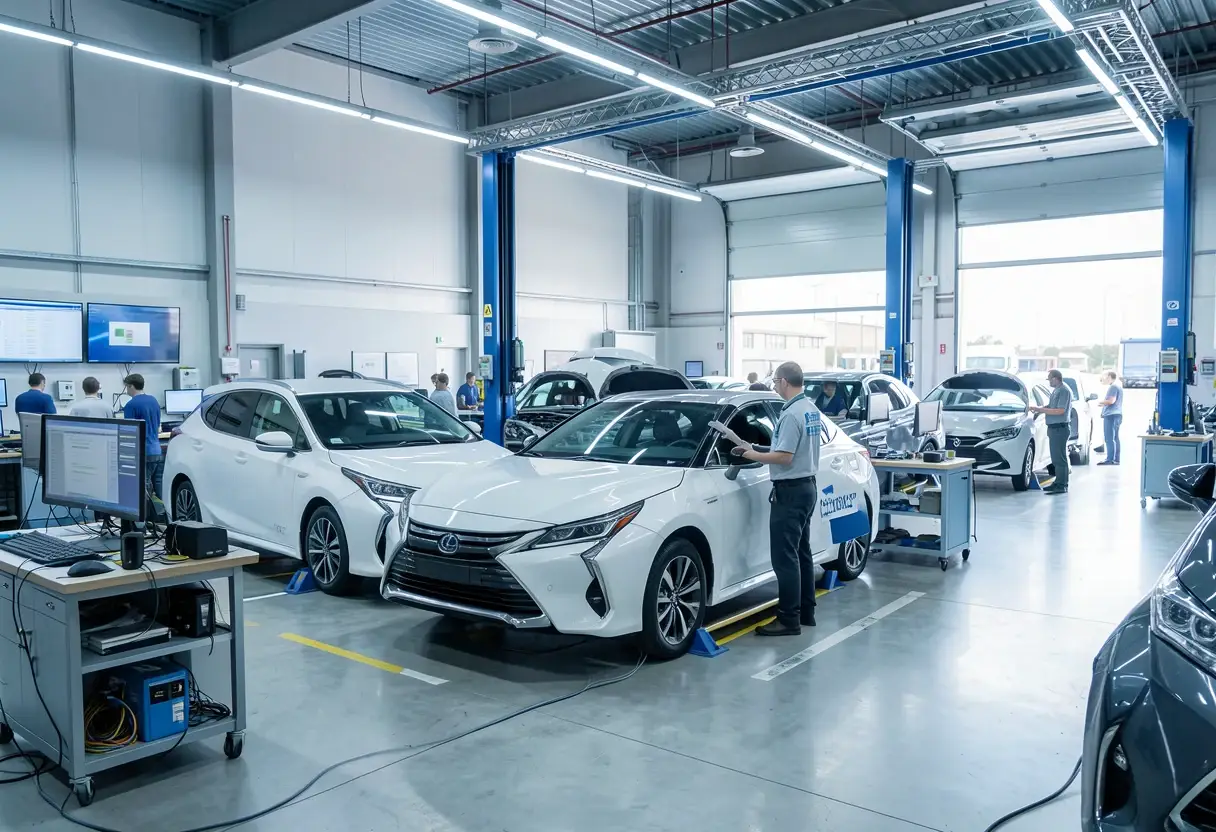
China exported nearly 100,000 PHEV and FHEV vehicles in September 2026, up 18.9% from August and 204.2% from September 2025. GlobalData associates the surge with manufacturers front-loading stock toward Europe before the anticipated EU deadline, while European port and inland logistics data mirror the spike and reinforce that timing explanation.
Shipment growth does not prove retail demand. GlobalData calls the EU measure a proposed quota and says it remained under discussion when September trade was measured. That leaves the final design and operational effect open to confirmation.
What changes on December 1?
Because the voyage from China takes time, BYD, SAIC, Chery and Geely could not wait for EU confirmation before moving vehicles, although storage costs may restrain how aggressively they front-load through October and November.
GlobalData expects a Q4 2026 mini-boom rather than “rocketing” performance. The analysis says the effect could extend into H1 2027 as European inventory clears. That is a forecast, not a reported sales result, and no quota volume appears in the analysis.
Where is the inventory accumulating?
Port of Zeebrugge and Port of Bremerhaven, two major European automotive import hubs, have faced prolonged inland vehicle logistics bottlenecks, and Chinese brands have increasingly used those terminals as de facto distribution warehouses. Cars that cleared customs before December 1 sit in European inventory yards.
That stock could support fourth-quarter sales and carry into H1 2027 as inventory clears. Visibility remains poor. Trade-flow data do not clearly show where each vehicle is held or which market will ultimately sell it. The analysis expects storage-related costs to limit the front-loading pace.
Will Chinese makers localize faster in Europe?
GlobalData expects Chinese sales groups to push harder into other global markets to replace lost European volume, especially South America and Africa, where they have displaced incumbents, while localized manufacturing in Europe accelerates.
That outlook remains directional. The analysis provides no plant capacity, investment size, hiring plan or production start date. It also flags uncertainty around UK demand and the tension between PHEV demand and EU pressure to adopt the quota. No company-specific target lets readers test the scale.
What does this mean for established automakers?
The proposed quota could support traditional European OEMs by slowing Chinese hybrid import growth. GlobalData argues that aggressive 2026 front-loading, compared with forecast sales, could leave enough inventory headroom to cover 2027 Chinese hybrid sales and back-fill stocks, mitigating rather than removing the quota’s effect.
This argument depends on inventory and sales forecasts that the analysis does not disclose. Shipments already inside Europe can serve demand even when new imports face restrictions. That cushion could give established automakers room to adjust, but it does not establish how many vehicles are involved.
Traditional OEMs may also import used hybrids under an EU exemption, because a vehicle qualifies as used if it has covered more than 6,000 km or is more than six months old. Such imports are exempt from both the hybrid quota and countervailing tariffs.
GlobalData identifies no company commitment or volume for this route. The rule creates an option, not evidence that established automakers will use it. Import records and company announcements would be needed to test the claim.
What should readers watch next?
October and November export data will show whether front-loading continues, while port dwell times and sales through H1 2027 will show whether inventory becomes a sales lift or a storage problem. Chinese plant announcements and output in South America, Africa and Europe will test the localization and market-diversion claims.
The key policy checkpoint is EU confirmation of the quota and its December 1 operation. GlobalData provides no product launch date, quota size or plant capacity milestone. Without those figures, the most supportable conclusion is a timing shift in hybrid trade, not a measured change in European demand.
via just-auto (Source)
More from Amara Osei
Show full bio
Market editor covering technology and product news in Automotive manufacturing and vehicle production at Autoplant Brief.
336 articles
Also circulated
- EU, China claim hybrid-export deal — but the baseline is unpublished
- Automotive World releases January 2026 light vehicle production data
- EU weighs tariff-rate quotas on China-made hybrids as imports surge 13-fold
- China's 68.4% NEV share masks a shrinking home market
- China LV sales fall 24% in August as exports absorb production gap