ECO-3132 · REV M · effective November 13, 2026
Industry Analysis & MarketsAPPROVEDEngineering notice
China's 68.4% NEV share masks a shrinking home market
China's NEVs hit a record 68.4% of October sales, yet exports drove all growth as the home market shrank. Audi, Geely and Chery reposition for overseas demand.
Scope of change
- NEVs took a record 68.4% of China's domestic sales in October 2026
- Exports accounted for all of October's NEV growth amid a contracting home market
- Audi and SAIC opened a Shanghai centre to develop every future AUDI model
- Geely plans a global rollout of its i-HEV full hybrid technology
- Chery targets 70% overseas assembly of its exports by 2030
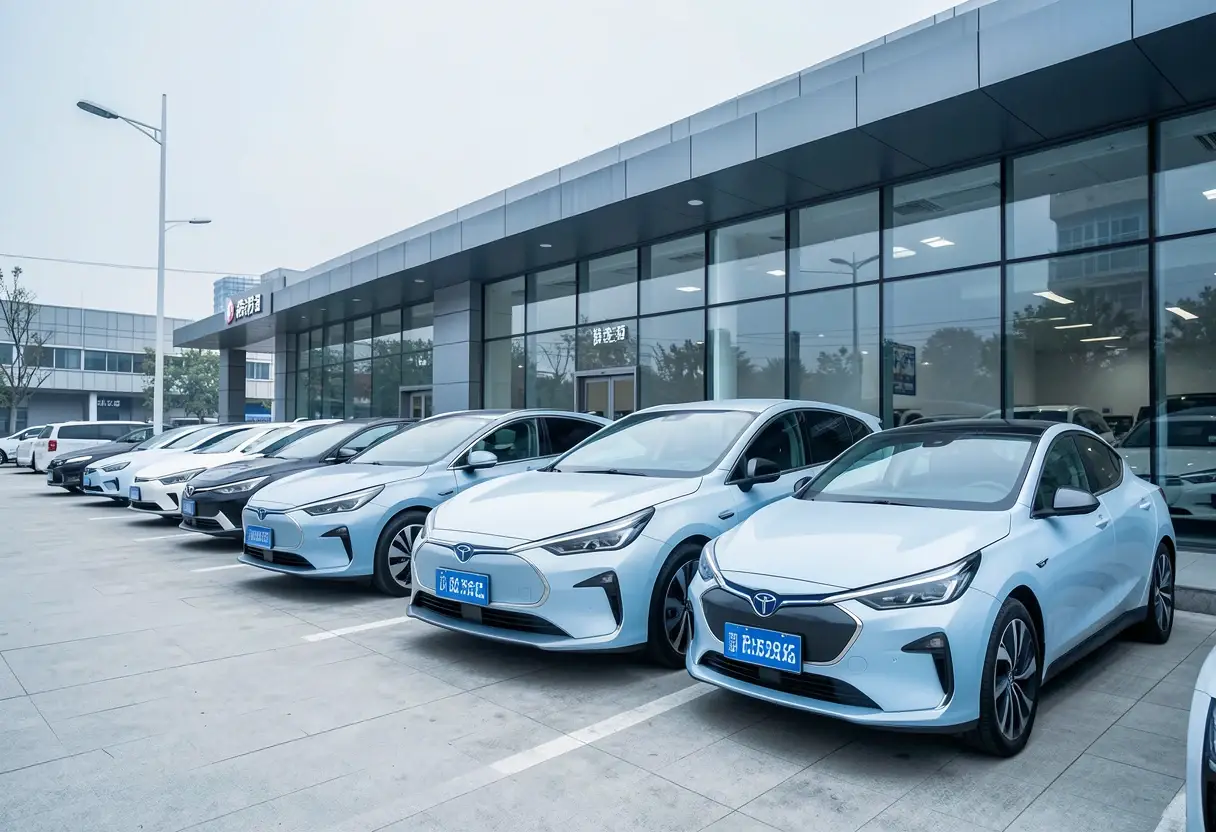
China's new energy vehicles (NEVs — the umbrella term for battery-electric, plug-in hybrid and fuel-cell models) reached a record 68.4% of domestic sales in October. The headline number, reported in the November 12 edition of Automotive World's China Automotive Intelligence Brief, conceals a harder truth: the home market is contracting, and exports accounted for all of the month's NEV growth.
For manufacturers and suppliers running plants against China volume assumptions, that split matters more than the share record itself. A domestic segment can post a record share while shrinking in absolute terms if the total market falls faster than the segment does. Surplus output built for domestic demand is now flowing abroad, and the destination markets are responding with regulatory measures designed to constrain Chinese vehicle imports.
What does this change for production planning?
For tier-one suppliers and OEM planners, the shift means capacity allocated to China-market programs no longer clears domestically at historic rates. The growth engine has moved to export logistics, homologation (the certification process for entering foreign markets) and destination-market compliance. Plants that once served domestic orders are increasingly feeding ports rather than dealerships.
The brief's editors frame the export surge as structural rather than cyclical. Markets receiving Chinese vehicles are actively regulating to hold back the inflow, which puts a premium on local assembly and market-specific compliance strategies rather than pure export volume.
Audi and SAIC open Shanghai development centre
Audi and SAIC have opened a centre in Shanghai that will develop every future AUDI-badged model. The move consolidates the brand's engineering footprint in China rather than relying on imported development work from Germany.
For engineering suppliers and software vendors, a single Shanghai centre responsible for the full future model portfolio concentrates decision-making and sourcing in one location. Vendors previously bidding into separate programs will now face one gateway.
Geely plots global rollout of i-HEV full hybrid
Geely plans a global rollout of its i-HEV full hybrid technology. Full hybrids — vehicles that pair a combustion engine with an electric motor but cannot be plugged in — occupy a segment where Chinese brands have historically trailed Toyota's system in overseas markets.
A global hybrid push gives Geely a product for markets where charging infrastructure is thin or where NEV incentives do not apply. Suppliers to the hybrid powertrain chain should watch which regions receive the first allocations.
Chery targets 70% overseas assembly by 2030
Chery aims to assemble 70% of its export volume overseas by 2030. That target, stated as a plan rather than a confirmed capacity figure, would mark a decisive turn from exporting finished vehicles from Chinese plants toward building them in destination markets.
The strategy reads as a direct answer to the trade barriers the intelligence brief describes. Local assembly sidesteps import restrictions that target Chinese-built vehicles, and it converts Chery from an exporter into a multinational manufacturer with regional footprints. Whether the 70% figure holds depends on how many overseas plants reach signed, funded status over the next four years.
What to watch next
Three dates and milestones will test these plans: the first AUDI model to emerge from the Shanghai centre, the initial markets named for Geely's i-HEV rollout, and the pace of Chery's overseas assembly announcements against its 2030 deadline. Watch too for the next monthly NEV data release — if exports again carry all growth while the home market contracts, the rebalancing is structural.
via mailchi.mp (Original)
More from Marcus Bennett
Show full bio
News editor covering regulation, policy and their impact on Automotive manufacturing and vehicle production at Autoplant Brief.
299 articles
Also circulated
- China NEV sales hit 1.823 million in September as exports jump 160%
- China NEV exports jump 140 per cent to 606,000 units in October
- Six U.S. Auto Groups Urge Trump to Keep Chinese Market Block
- China cuts export tax rebates for EVs, hybrids
- Tariffs, Chinese Rivals and EV Slowdown Drag Auto Sector Into Losses