ECO-7555 · REV L · effective October 17, 2026
EV Manufacturing TransitionRELEASEDEngineering notice
Chinese Firm Plans $10M EV Manufacturing Push in Pakistan
A Chinese company plans to invest $10 million in electric-vehicle manufacturing and infrastructure in Pakistan, Bloom Pakistan reports, though the firm's identity, host city and commissioning timeline remain undisclosed.
Scope of change
- $10 million planned investment by unnamed Chinese firm in Pakistan's EV manufacturing and infrastructure sector
- Bloom Pakistan report omits firm identity, host city, vehicle class and commissioning date
- Capital pattern points to a $10m CKD/SKD kit-assembly operation rather than a greenfield body-in-white plant
- Pakistan's successive auto policies offer reduced duties on EV CBU imports and CKD kits
- Domestic electrification has moved fastest on two and three wheels; four-wheeler passenger EV adoption lags
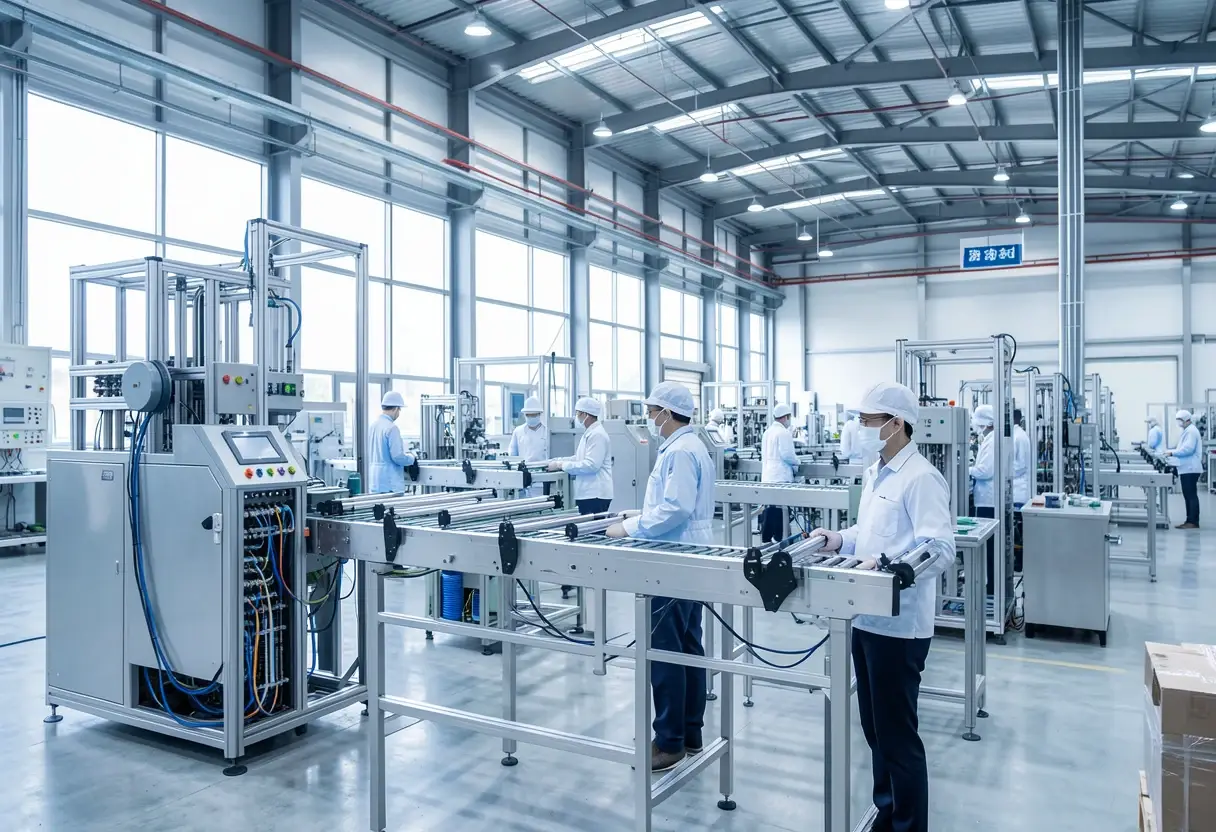
A Chinese company plans to invest $10 million in electric-vehicle manufacturing and supporting infrastructure in Pakistan, according to a Bloom Pakistan report that did not name the firm, the host city, or the commissioning date.
What is actually on the table?
The headline-stage announcement adds another entry to a lengthening list of Chinese auto-sector memoranda of understanding (non-binding agreements signaling intent) with South Asian counterparties.
It also lands as Pakistan accelerates an EV (electric-vehicle) policy push aimed at trimming a chronic fuel-import bill that weighs on foreign-exchange reserves.
What does this change for Pakistan's EV sector?
On paper, $10 million is a modest sum by global battery-vehicle standards. It buys enough for a small assembly hall, jigs (custom tooling that holds parts for welding), fixtures, and limited component sourcing.
That sum falls well short of the $50m-$150m typically required for a greenfield (built-from-scratch) plant with body-in-white (the stage where sheet metal joins into a complete car body) capability.
The capital pattern points to a contract-assembly or SKD/CKD (semi- or completely-knocked-down kit) operation rather than full vertical integration. A smaller footprint, however, lowers execution risk.
A $10m kit-assembly shop can realistically reach first-vehicle-off-line within nine to twelve months if the CKD supply line is secured and a provincial site is selected.
The trade-off: limited local content, thin margins on the import spread, and minimal tier-2 (sub-supplier) demand.
What's missing from the announcement?
- The investing firm's name
- The host industrial estate or province
- The vehicle class (two-, three-, or four-wheeler)
- The local joint-venture partner, if any
- The commissioning timeline
- The battery sourcing plan
What to watch next
- Formal MoU signing with a disclosed Pakistani counterparty, likely under the Board of Investment or a provincial EV policy framework
- A launch date for first units
- Annual volume targets and model type
- Clarification on whether the $10m is equity, debt, or grant funding
- Any bilateral readout from Beijing or Islamabad
Policy backdrop
Pakistan's successive auto policies have offered reduced import duties on EV CBU (completely built unit) shipments and CKD (completely knocked down) kits, opening space for low-volume entrants.
Several Chinese automakers have explored South Asian assembly in recent quarters, drawn by tariff differentials and a population base that makes two- and three-wheeler electrification commercially obvious.
Domestic electrification has moved fastest on two and three wheels. Pakistani assemblers already produce electric motorcycles and rickshaws locally.
The Chinese $10m commitment, if it materializes into a tier-1 (direct-to-OEM, or original equipment manufacturer) partnership, would lift the four-wheeler conversation that has so far lagged.
What suppliers want to know
For component suppliers, the unresolved question is whether this seed capital creates a tier-1 opportunity or only a tier-2 (sub-supplier feeding a tier-1) play.
Without a disclosed OEM partner or program timing, contract structures stay opaque and procurement pipelines cannot be planned.
The intent-to-invest figure should be treated as a claim pending verification against any subsequent binding agreement. Pakistan's Board of Investment and the Ministry of Industries typically publish signed MoUs and FDI (foreign direct investment) inflows.
Those bulletins will provide the next credible read on whether the $10m converts into committed capital.
via Google News: EV manufacturing (Source)
More from Grace Kim
Show full bio
Staff writer covering people, launches and day-to-day practice in Automotive manufacturing and vehicle production at Autoplant Brief.
195 articles
Also circulated
- Pakistan Auto Industry Warns Export Plans Depend on Policy Support
- Proton opens Malaysia's first dedicated EV assembly plant
- Malaysia Positions Itself As Southeast Asia's Next EV Build Hub
- India Extends EV Traction Motor Localisation Deadline by Six Months
- China's Battery Profit Boom Lays Bare India's EV Manufacturing Gap