ECO-7622 · REV A · effective September 26, 2026
Auto Industry PolicyAPPROVEDEngineering notice
Pakistan Auto Industry Warns Export Plans Depend on Policy Support
Pakistan's automakers warn export targets depend on sustained government policy support, with underutilized plants waiting on credible incentives before committing capital.
Scope of change
- Pakistan's auto industry says export ambitions hinge on government policy support
- Sector operates with significant idle capacity tied to weak domestic demand
- No export commitments expected without credible multi-year policy certainty
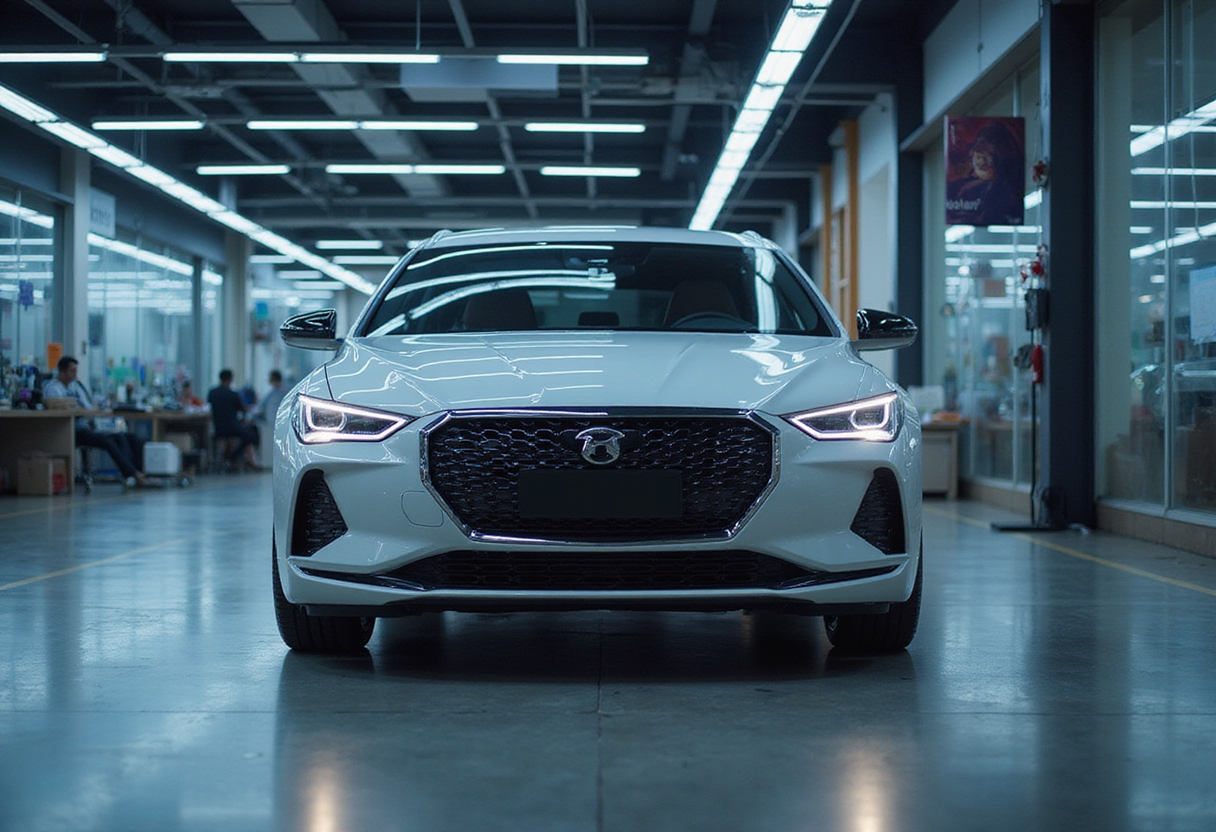
Pakistan's automotive industry has warned that its export ambitions depend directly on continued government policy support, according to a report by Arab News Pakistan.
The warning signals that the country's vehicle manufacturers, which have built their business almost entirely on domestic sales, see exports as achievable only if Islamabad sustains the incentives and regulatory framework that make overseas shipments viable. Without that support, industry representatives argue, export targets will remain out of reach.
The caution comes as Pakistan's auto sector continues to operate well below its installed capacity, a chronic problem in a market where assembly plants were sized for stronger demand than the economy has delivered in recent years. Industry figures have repeatedly pointed to underutilization as both a burden and an opportunity: idle lines represent lost revenue, but they also leave room to scale output for foreign buyers if conditions align.
Export-oriented growth has become a central talking point for Pakistani policymakers under successive industrial strategies, with automobiles named among the sectors expected to contribute to foreign exchange earnings. The industry's latest warning underscores the gap between that official ambition and the commercial reality on the plant floor, where manufacturers say they cannot commit to export programs without assurance that policy will not shift underneath them.
For local assembly operations — many of them joint ventures with Japanese and Korean OEM partners producing cars, SUVs and light commercial vehicles — the export question is also a volume question. Domestic sales remain volatile, tied to exchange rates, import restrictions and consumer purchasing power. Exports would give plants a steadier base load, but only if parts localization, quality certification and logistics costs are addressed alongside tariff policy.
The industry's position puts the ball in the government's court. Automakers are effectively asking for a credible, multi-year commitment before they commit capital to export programs — a stance that treats policy certainty, not capability, as the binding constraint.
What to watch next: whether Islamabad responds with a concrete export policy for the auto sector, and whether any manufacturer announces a first significant export order or shipment volume target. Those two signals — a policy document and a firm order book — will show whether Pakistan's auto export push is a plan or a pitch.
via Google News: Auto industry policy (Source)
More from Daniel Okafor
Show full bio
Senior reporter covering marketplaces and e-commerce at Autoplant Brief.
111 articles
Also circulated
- ITIF: US Auto Industry Needs National Strategy for China Challenge
- Tariffs and Policy Shifts Risk Walling Off U.S. Auto Industry
- US Car Imports Fall 20% Under Trump Tariffs; Exports Drop in Step
- Western carmakers double down on India despite market uncertainty
- UK Vehicle Production Falls to Lowest Level in Generations, IMechE Reports