ECO-4649 · REV J · effective September 28, 2026
EV Manufacturing TransitionRELEASEDEngineering notice
China Sets 2030 Target for Solid-State Battery Mass Production
Beijing's new five-year battery plan sets 2030 for first large-scale solid-state use, alongside sodium-ion, fast-charging and recycling targets.
Scope of change
- China's new five-year plan targets large-scale solid-state battery use by 2030
- The plan also covers sodium-ion batteries, fast charging, recycling and industry consolidation
- Consolidation language gives regulators a basis to push mergers and steer subsidies toward scale players
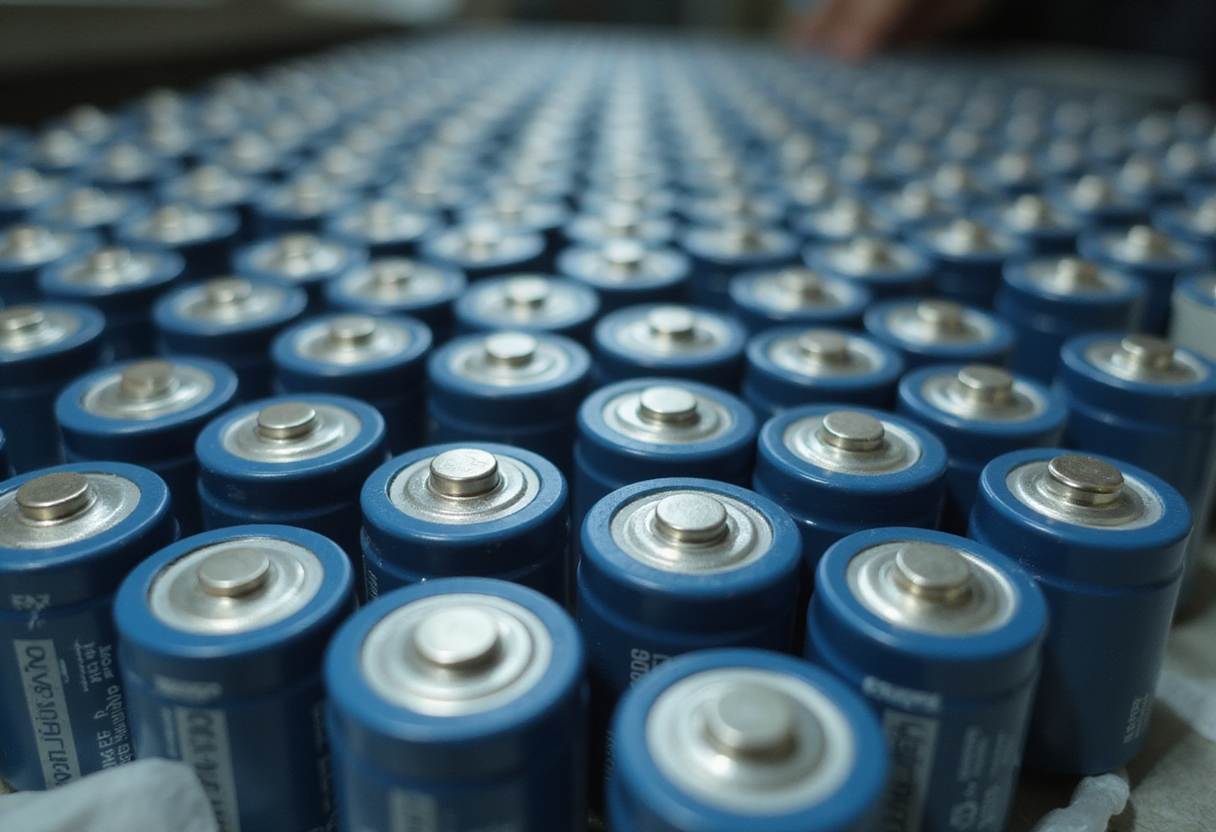
Beijing has set 2030 as the year solid-state batteries move into large-scale use for the first time, according to a new five-year plan for the battery industry presented by the Chinese government.
The target puts a state deadline on a technology that OEMs and cell suppliers in Japan, South Korea, Europe and North America have so far discussed mostly in terms of pilot lines and early-2020s demonstration fleets. China's plan signals that the government expects industrial-scale deployment — not laboratory samples — before the decade turns.
Solid-state cells replace the liquid electrolyte in conventional lithium-ion batteries with a solid material, promising higher energy density and improved safety. The chemistry is not named in the plan's headline goal beyond the 2030 date and the phrase "larger scale," which leaves open how Beijing will measure compliance: vehicles equipped, gigawatt-hours produced, or production capacity installed. That definitional question will matter for suppliers and OEMs trying to benchmark Chinese progress against their own program timing.
The five-year plan does not stop at solid-state chemistry. It names four additional priorities: sodium-ion batteries, fast charging, recycling and consolidation of the industry.
The sodium-ion target extends an existing push. Chinese producers already operate sodium-ion cell plants, including a facility in Anhui province that began producing the chemistry before Western suppliers reached comparable volumes. Sodium-ion cells trade lower energy density for cost advantages and cold-weather performance, positioning them for entry-level vehicles and stationary storage — segments where Chinese cell makers already hold dominant global share.
Fast charging appears as a systems-level goal rather than a cell-level one. China has led deployment of 800-volt platforms and megawatt-class charging infrastructure, and the plan appears designed to lock in that lead as electric vehicle adoption spreads through price-sensitive market segments.
Recycling forms the third pillar. As the first large wave of Chinese EV batteries reaches end of life, Beijing is pushing for closed-loop recovery of lithium, cobalt and nickel — a policy response to both raw material security concerns and the volume of retired cells now accumulating in the domestic fleet.
The consolidation goal may prove the most consequential for suppliers. Chinese authorities have signaled before that they want fewer, larger battery manufacturers rather than continued proliferation of small producers. A five-year planning document that names consolidation as an objective gives regulators a formal basis to push mergers, set technical thresholds for market entry and steer subsidies toward scale players. Tier-2 and Tier-3 cell suppliers in China should expect tighter licensing and capacity oversight as a result.
For Western and Japanese OEMs, the 2030 date sets a competitive clock. Toyota has targeted solid-state batteries for commercialization in the late 2020s. European and North American suppliers have announced pilot production in the same window. If China converts its plan into installed capacity on schedule, the cost curves that already favor Chinese cell production in conventional lithium-ion could repeat in the next-generation chemistry.
What to watch: whether Beijing publishes concrete capacity or deployment benchmarks under the plan, how Chinese cell leaders such as CATL and BYD align their solid-state pilot programs with the 2030 date, and which consolidation measures regulators apply first to the supplier base.
via electrive (Source)
More from Daniel Okafor
Show full bio
Senior reporter covering marketplaces and e-commerce at Autoplant Brief.
111 articles
Also circulated
- China Sets 2030 Target for Large-Scale Solid-State Battery Use
- Gotion targets 400 Wh/kg for Jinshi solid-state cells
- Li Auto targets 2027-28 for first solid-state vehicle fitment
- China Eyes Recycled EVs as Feedstock for Its EV Manufacturing Boom
- Mercedes-Benz gains preferential access to ProLogium Gen4 battery cells for testing