ECO-1366 · REV K · effective November 16, 2026
Auto Industry PolicyAPPROVEDEngineering notice
Carney floats Chinese automakers as USMCA talks strain Canada's auto sector
Carney says Canada will court Chinese, European or Japanese automakers if U.S. talks fail, after cutting the Chinese EV tariff to 6.1% under a January deal.
Scope of change
- Canada cut its tariff on Chinese EVs from 100% to 6.1% in January, allowing up to 49,000 vehicles annually with a rising cap.
- Carney made the comments Nov. 16 in Cambodia ahead of a meeting with Xi Jinping in Shenzhen.
- Canada threatened to sue Stellantis over moving Jeep Compass production from Ontario to Illinois.
- Ontario Premier Doug Ford criticized the deal as exposing Canadian jobs to state-subsidized Chinese cars.
- Carney said Nov. 14 that talks with Washington show progress but differences remain.
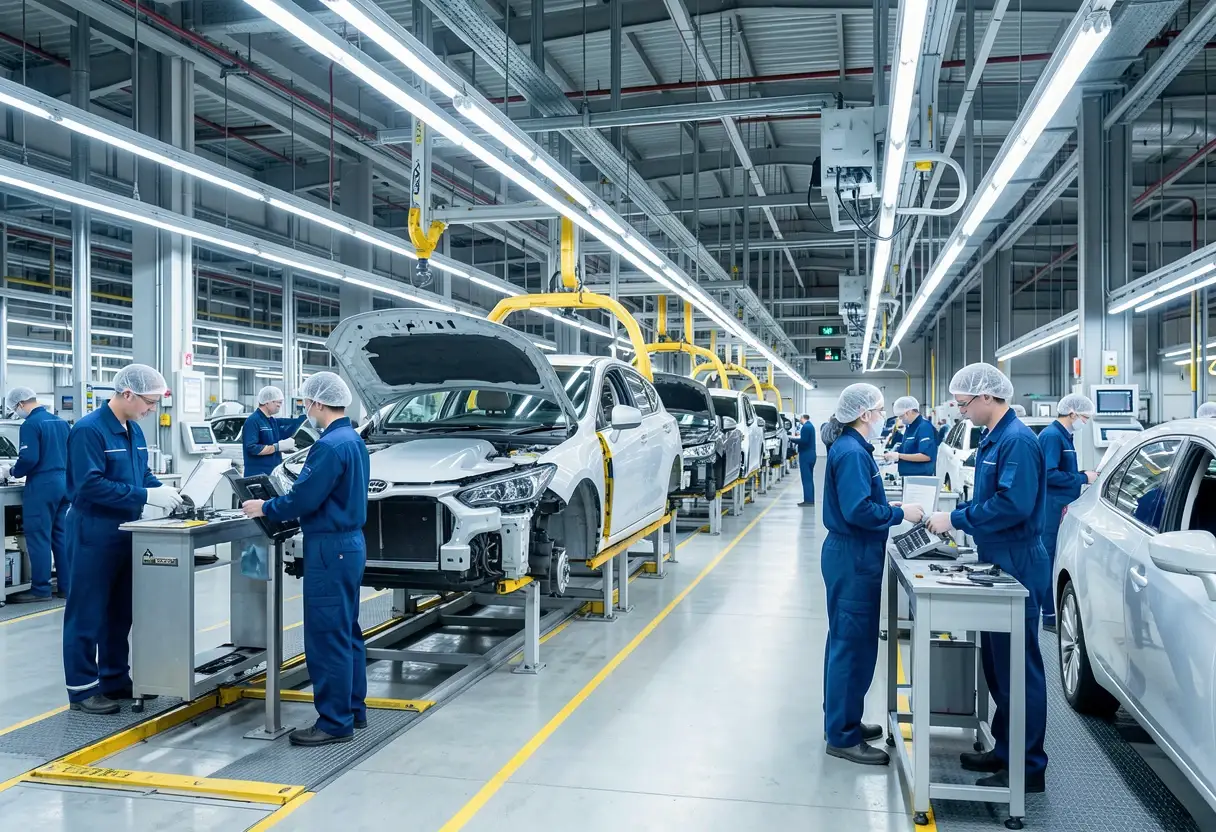
Canada's 100% tariff on Chinese electric vehicles has already been cut to 6.1% under a January deal allowing up to 49,000 vehicles annually — and Prime Minister Mark Carney now says Chinese automakers could play a much larger role if trade talks with Washington fail.
Speaking on Nov. 16 in Cambodia, ahead of a planned meeting with Chinese President Xi Jinping in Shenzhen, Carney framed the Chinese option as a consequence of U.S. trade actions that have made the North American market "less integrated."
"We have the best auto workers in the world, and we want them fully deployed, full opportunity, in an integrated North American market," Carney told reporters.
What does this change for Canadian plants?
Negotiations with the United States remain Ottawa's priority. But Carney said on Nov. 16 that their outcome could determine whether Canada pursues alternatives involving European, Chinese or Japanese automakers. For practitioners running plants in Ontario — the center of Canada's auto industry — the message is that Ottawa is preparing a fallback industrial strategy, not merely bargaining rhetoric.
Asked whether potential Chinese investment was leverage in the U.S. negotiations, Carney replied: "It's not leverage. But action, reaction."
"Canada is going to move forward either way," he said.
Carney set conditions for any Chinese investment. It would have to involve substantial manufacturing in Canada rather than simply assembling imported parts. He said it would require proper labor standards, manufacturing facilities and domestic supply chains that expand over time, including Canadian critical minerals used in electric vehicles.
"It's not just about kit cars," he said. "There has to be a manufacturing aspect involved."
The integration already under strain
The Detroit Three — Ford, General Motors and Stellantis — operate factories across Canada, the United States and Mexico, with parts sometimes crossing borders multiple times before a vehicle is completed. Trump has repeatedly pushed automakers to move production to the United States from Canada.
The strain is showing. Canada recently threatened to sue Stellantis after the company moved planned Jeep Compass production from Ontario to Illinois and agreed to sell its idled Canadian assembly plant. Carney said on Nov. 14 in Manila that any trade agreement with Washington must leave Canada with a viable auto industry.
Under the January agreement with Beijing, the 49,000-vehicle annual cap increases over time. In exchange, China lowered tariffs on Canadian agricultural products, including canola. Carney said at the time he expected the deal to attract Chinese investment in Canada's auto industry and create jobs.
Domestic pushback
Ontario Premier Doug Ford, whose province hosts the bulk of Canada's auto employment, warned the January deal could threaten Canadian jobs and jeopardize access to the U.S. market.
"The federal government's focus needs to be on protecting Canadian auto workers, not undermining them by importing even more state-subsidized cheap Chinese cars," Ford said on social media on Nov. 16.
Carney said on Nov. 14 that he had spoken at length with Trump and senior U.S. officials, and that the two countries were making progress toward a possible trade agreement, although differences remained.
What to watch next: the Carney–Xi meeting in Shenzhen this week, where Chinese auto manufacturing is expected to be discussed; the cap increase schedule under the January EV deal; and any Canadian legal action against Stellantis over the Jeep Compass relocation.
via canadianmanufacturing.com (Source)
More from Marcus Bennett
Show full bio
News editor covering regulation, policy and their impact on Automotive manufacturing and vehicle production at Autoplant Brief.
321 articles
Also circulated
- Canada Courts Chinese EV Makers as Tariffs Fracture Auto Trade
- Canada Draws Red Line: Auto Jobs Must Survive Any U.S. Trade Deal
- 49,000-EV Quota Frames Carney's China Talks as Plants Stay Idle
- Chery weighs Canadian output, targeting 2027 sales launch
- U.S. and Canada Weigh 15% Auto Tariff as Trade Talks Intensify