ECO-9082 · REV K · effective October 9, 2026
Automation & RoboticsAPPROVEDEngineering notice
Atlas Humanoid Robot Training in Auto Plant on Tire, Assembly Tasks
South Korea's Chosun Ilbo reports an Atlas humanoid robot is training inside an automotive assembly plant on tire lifting and assembly tasks, without naming the host OEM, plant location, or deployment timeline.
Scope of change
- Atlas humanoid robot is training in an automotive assembly plant, per South Korea's Chosun Ilbo
- Reported task set covers tire lifting and assembly work
- Source does not name host OEM, plant location, or deployment timeline
- Tire-and-wheel assemblies typically weigh 12 to 15 kilograms and have resisted conventional automation
- Item surfaced via Google News with no attached OEM or vendor confirmation
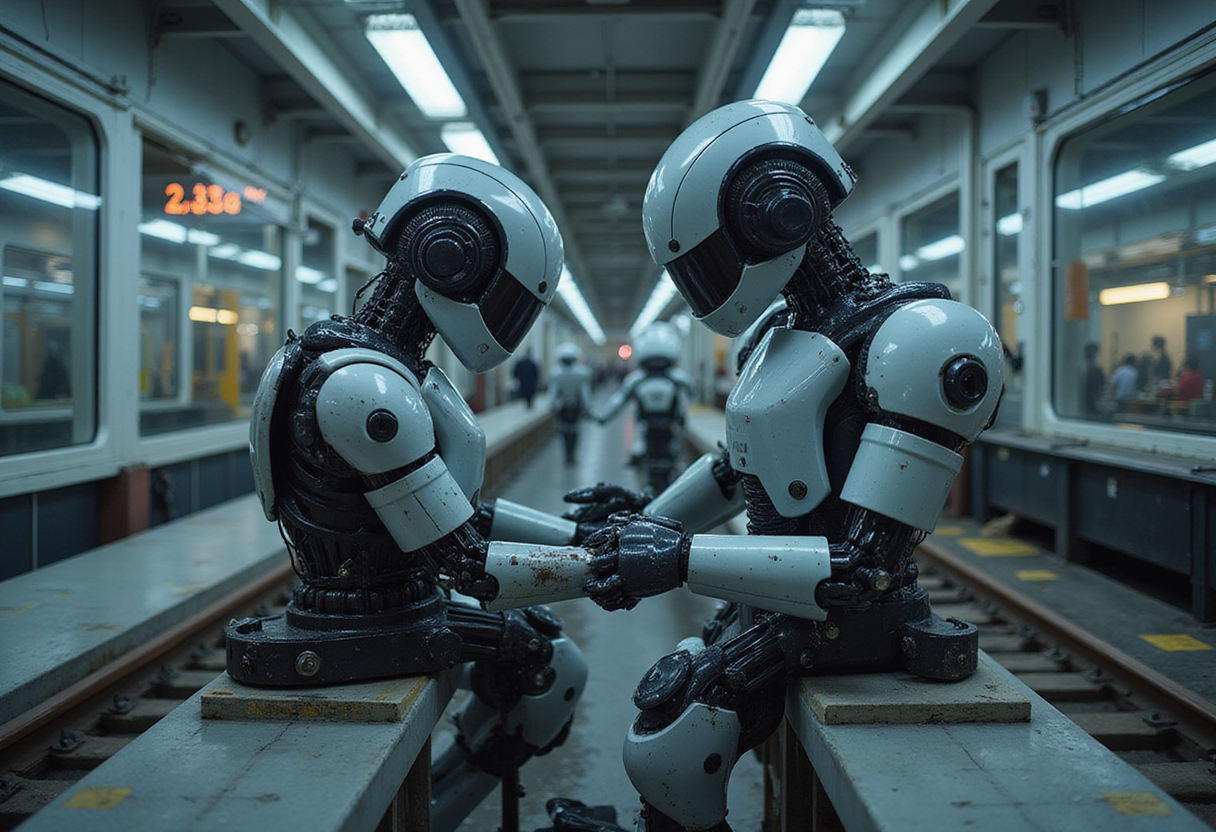
An Atlas humanoid robot has begun training exercises inside an automotive assembly plant, lifting tires and performing assembly tasks, according to a brief item South Korea's Chosun Ilbo published and that Google News later surfaced.
The report names Atlas and lists two functions — tire lifting and assembly work — without identifying the host OEM, the plant location, the production program, or the supplier relationship behind the trial. The disclosure arrives one step removed from any of the parties that would normally confirm a production-line pilot.
Editors should treat the item as a claim pending verification against production data, rather than as a deployment announcement.
What does the Chosun Ilbo report actually confirm?
Three points land on the page, and three do not.
Confirmed:
- Atlas — the bipedal humanoid platform most associated with Boston Dynamics — is operating inside a passenger-vehicle assembly setting.
- The reported task set covers tire handling and a broader assembly function, suggesting evaluation of both material-handling and dexterous-component work.
- The originating outlet is a South Korean national daily, not the OEM or the robot vendor.
Unspecified:
- Host OEM, plant location, and country of operation
- Trial duration and any target production-line deployment date
- Cycle-time, payload, and safety specifications
- Any direct partnership announcement with a Tier 1 or systems integrator
Why the trial draws attention
Automotive body shops and powertrain cells have run on high-payload robotic arms for two decades, and automated Tier 1 material handling is now standard equipment across most volume OEMs. The trim-and-final area, where tires, glass, and interior modules are fitted by a standing operator, has resisted automation because the work envelope, the lift profile, and the surrounding floor layout were all designed around a human body.
Tire-and-wheel assemblies typically weigh 12 to 15 kilograms and require an awkward approach angle, often against a moving vehicle buck. Conventional SCARA and six-axis arms cover the load but not the mobility, which is why tire stations have remained among the lowest-automated cells on a typical assembly line.
A bipedal humanoid changes that calculus only if it can clear three tests in succession: repeatable lifting at line pace, navigation through mixed-traffic aisles without fixed guarding, and a safety case that workplace-safety regulators will accept alongside human workers.
The Chosun Ilbo item confirms the first two functions are under rehearsal. It does not confirm the third, and it does not name the regulator involved.
What trade-press readers should verify
Boston Dynamics has demonstrated Atlas in factory settings before, but those demonstrations have not translated into disclosed production-line programs at a named OEM. Editors should read the Chosun Ilbo report as a training notice, not a deployment commitment, and check four things before assigning it program status:
- An OEM or Boston Dynamics statement naming the partner plant
- A published cycle-time figure against the host plant's tire-station takt time
- A safety filing with the relevant workplace-safety regulator in the operating jurisdiction
- A vendor-roster update at the host plant, since tire-station automation typically runs through established robotics Tier 1s rather than humanoid vendors in the near term
What to watch next
The milestones that would convert a training notice into a deployable program:
- A joint statement from Boston Dynamics and the host OEM identifying the pilot plant and the production program affected
- A cycle-time benchmark from a tire-handling exercise, expressed against the host plant's existing tire-station takt time
- A safety certification or risk-assessment filing in the operating jurisdiction, naming the regulator and the approved working envelope
- A line-handover date tied to a specific vehicle launch, indicating a transition from pilot to production status
Until any of those appear, the Chosun Ilbo report stands as evidence that bipedal humanoid training has reached an automotive assembly environment. Trade-press readers should expect the named parties to issue more concrete program disclosures in the coming weeks — or, in their absence, a quiet retraction of the original training claim.
via Google News: Auto plant and vehicle production (Source)
More from Grace Kim
Show full bio
Staff writer covering industry trends and analytics at Autoplant Brief.
130 articles
Also circulated
- Humanoid Robots Assigned New Role at BMW's U.S. Assembly Plant
- Humanoid Robots Complete Trial Run at BMW Assembly Plant
- Hyundai Targets 25,000 Atlas Humanoids as Boston Dynamics Opens Metaplant Center
- Boston Dynamics Plans US Plant for 30,000 Robots a Year
- Chinese robotics firms near end of auto-plant trials: Türkiye Today