ECO-1160 · REV I · effective November 13, 2026
Industry Analysis & MarketsAPPROVEDEngineering notice
AI boom drives second chip squeeze, SDV brief warns
Automakers hold under 10% of global DRAM demand, and the Nov 12 brief warns AI-driven memory costs could delay SDV roadmaps and erode margins.
Scope of change
- Auto industry accounts for under 10% of global DRAM demand, per the Nov 12, 2026 brief
- Audi and SAIC move full development of future AUDI models to Shanghai
- Finland is the 11th European country to provisionally approve Tesla Assisted Driving
- Valeo secures Chinese design wins for a QNX-based smart camera
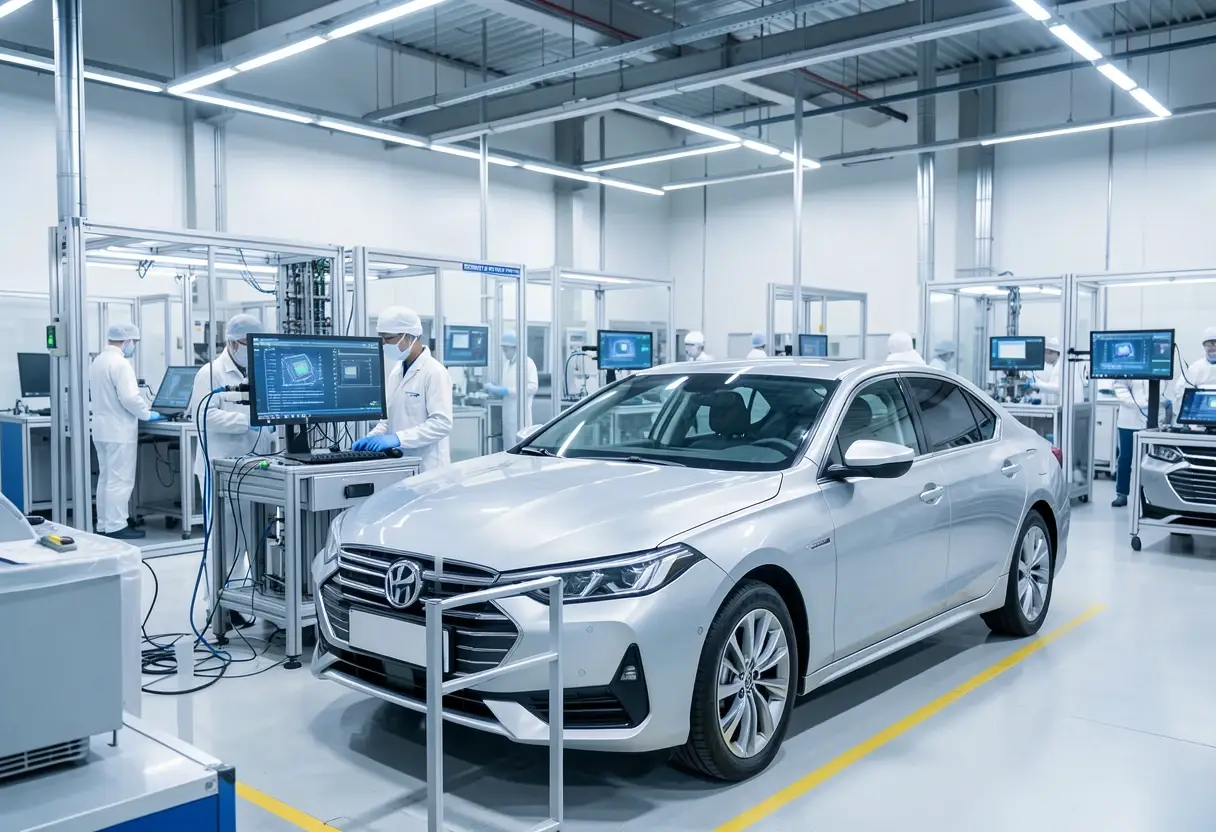
Automakers buy less than 10% of global DRAM output, and the Software-Defined Vehicle Intelligence Brief of November 12, 2026 says that mismatch now triggers a second chip squeeze. The culprit this time is the AI investment boom. Data-center builders are bidding up memory supply, and carmakers sit at the wrong end of the queue. The likely result, per the brief, is higher component costs. Those costs could delay software-defined vehicle feature roadmaps and erode supplier and OEM margins.
The first squeeze, readers will recall, came from pandemic-era consumer electronics. This one is different in scale and duration. The brief does not quantify the cost increase. It does not name the memory suppliers involved. Both omissions matter for anyone modeling SDV program budgets over the next 24 months.
Why does a DRAM squeeze threaten SDV roadmaps?
Software-defined vehicles depend on dense memory. Features such as driver monitoring, AI inference and over-the-air update stacks consume DRAM at rates legacy vehicle electronics never did. The brief's framing is blunt: the auto industry accounts for less than 10% of global DRAM demand. Small buyers rarely set prices. The brief states higher costs "could delay SDV feature roadmaps and erode margins" — conditional language, and correctly so. No OEM has yet confirmed a program slip tied to memory pricing. Watch for that confirmation in supplier earnings calls before treating the warning as settled fact.
Where is Audi moving future model development?
Audi and its Chinese partner SAIC are shifting full development of future AUDI-brand models to Shanghai. The move, reported in the same November 12 brief, marks a structural transfer of engineering responsibility to China rather than another joint localization program. The brief offers no headcount figures for Ingolstadt. It gives no timing for the first Shanghai-developed model. Both gaps will test whether this is a full development migration or a rebadged China-market effort.
The stakes for Audi's German engineering base are obvious. The brief does not say whether Europe-based roles shift, shrink or stay. Until Audi specifies program timing and staffing, treat the announcement as an intention, not a completed transfer.
What changed for Tesla in Europe?
Finland has become the 11th European country to provisionally approve Tesla Assisted Driving. The approval is provisional, not final. That distinction carries regulatory weight: conditions or geographic limits can attach to provisional clearances, and 11 countries still leave most of the European market outside the approval zone. The brief lists no conditions Finland attached. The pace — roughly one country at a time — suggests full EU-wide clearance remains distant.
What did Valeo win?
Valeo has secured Chinese design wins for a QNX-based smart camera. Tier-one suppliers rarely disclose win values, and Valeo did not break precedent here. The brief confirms the wins exist and names the platform: QNX. It does not state launch dates, volumes or the Chinese OEMs involved. A design win is a claim about the future. Production volumes will verify it, and until then the revenue remains projected.
What to watch next
Three markers will confirm or undercut this brief's warnings. First, memory contract pricing disclosures from DRAM makers, which will show whether automotive costs actually rose. Second, the first concrete Shanghai-developed AUDI model timing announcement. Third, a 12th European approval for Tesla Assisted Driving — or a refusal, which would matter more.
via mailchi.mp (Original)
More from Amara Osei
Show full bio
Market editor covering technology and product news in Automotive manufacturing and vehicle production at Autoplant Brief.
312 articles
Also circulated
- Seven Auto Suppliers Join Micron to Plan Future Memory Supply
- Micron signs memory deals with seven Tier 1 automotive suppliers
- Nissan, Mercedes Add Warnings to Auto Chip Supply Crisis
- IoT Analytics Frames SDV Race Around Four Adoption Dimensions
- Nexperia 'totally oversubscribed' as AI demand squeezes automotive chips